


What are the signs of hard water?
The giveaway is a white or chalky residue wherever water dries. That residue is calcium and magnesium left behind when the water evaporates, and once you know what it looks like you'll spot it all over the house.
- Cloudy spots on drinking glasses and dishes, even straight out of the dishwasher.
- A white crust around faucets, on the showerhead and on the glass shower door.
- A ring or film in the tub and sink that comes back days after you clean.
- Shampoo, soap and dish liquid that don't lather much, so you use more.
- Towels and clothes that come out of the wash stiff or scratchy.
- A layer of scale inside the kettle or coffee maker.
- Showerheads and faucet aerators that slowly lose pressure as they clog.
How hard is "hard"?
Hardness is measured in milligrams per liter (mg/L, which is the same as parts per million, or ppm) or in grains per gallon (gpg), the unit softener makers use. One grain per gallon equals 17.1 mg/L, so divide a mg/L number by 17.1 to get grains.
The U.S. Geological Survey groups water into four bands. Most softener sizing advice starts at the "hard" band.
| Class | mg/L (ppm) | Grains per gallon | What you'll notice |
|---|---|---|---|
| Soft | 0–60 | 0–3.5 | Nothing much. You don't need a softener. |
| Moderately hard | 61–120 | 3.5–7 | Light spotting on glasses and some scale over time. |
| Hard | 121–180 | 7–10.5 | Spots, crusty fixtures, more soap, stiffer laundry. |
| Very hard | Over 180 | Over 10.5 | Heavy scale on everything, and appliances wear faster. |
How do I find my city's hardness for free?
If you're on city water, your utility already measures hardness. Every community water system has to publish a yearly water quality report, called a Consumer Confidence Report (CCR), and most post it online. Search for your utility's name plus "water quality report".
Hardness isn't a regulated contaminant, so it's sometimes tucked into a table of "other" or "secondary" measurements, listed as "total hardness" or "hardness as CaCO3". If you can't find it, call the utility; they'll usually tell you over the phone.
We've already pulled the numbers for some cities in our city water reports. If yours gives a mg/L or ppm figure, the hardness converter turns it into grains.
How do I test my own water?
Testing at the tap is worth doing even if your city publishes a number, because the report is an average and hardness can change with the season or the source. In Tampa, for example, the utility reports a range of roughly 8 to 17 grains depending on the time of year.
Nebraska's extension service notes that home kits and strips vary in accuracy and a lab is the most reliable. For city water, though, a drop-count kit like the Hach 5-B, where one drop equals one grain, is accurate enough to size a softener.
| Test | How it works | How precise | Good for |
|---|---|---|---|
| Hardness test strips (about $5–$10) | Dip a strip, match the color to the chart | A rough range | A quick check on whether water is hard |
| Drop-count titration kit (about $35) | Add drops to a water sample until it changes color; each drop is 1 grain | Within about 1 grain | Sizing a softener and checking it's working |
| Free strips from a salt or softener brand | Same as store strips; Morton mails one free | A rough range | A free first look |
| Certified lab test | Mail a sample to a lab | The most reliable, plus other results | Private wells, where you need iron, pH and bacteria too |
How do I turn my result into a decision?
Say your city's report lists hardness at 250 mg/L. Divide by 17.1 and you get about 14.6 grains per gallon, which is very hard. A family of four at that hardness would want a softener of roughly 32,000 to 40,000 grains, set to clean itself about once a week.
As a rule of thumb: under 3.5 grains, skip the softener. Virginia Tech's extension service says water under 7 grains doesn't need treatment, so between 3.5 and 7 it's optional; it's most worth it if you have a tankless water heater or the spots drive you mad. Over 7 grains, a softener usually pays for itself in cleaning time, soap and appliance life. Over 10.5, it's an easy call.
What if I'm on a private well?
Wells don't come with a city report, and well water often has iron, manganese, low pH or bacteria along with hardness. A hardness strip alone isn't enough. Get a lab test first; our well water testing guide covers what to test for and why it changes which system you buy.
What should I do next?
If your water is hard, put your number and household size into the softener size calculator to see what size you need and how much salt you'll use. Then compare our best water softeners. If you're not sure a softener is even the right kind of system, the system finder asks three questions and points you to the right category.
If your water is hard: the softeners we'd buy
We may earn a commission when you buy through links on this page, at no extra cost to you. How we make money
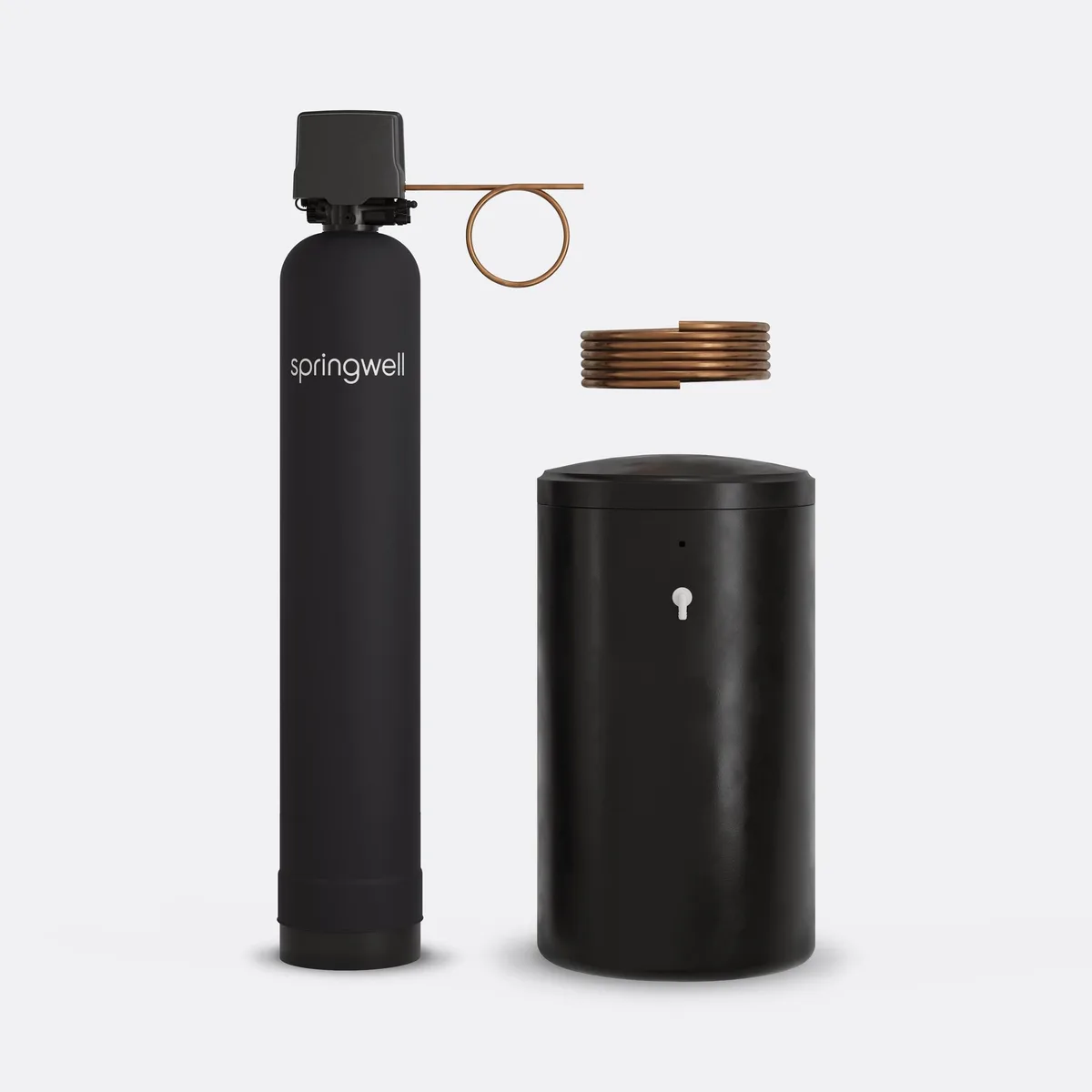
SpringWell SS1 Salt-Based Water Softener
A 32,000-grain salt softener for the whole house. It uses tougher 10% crosslink resin and an 11 GPM valve that cleans itself only when it needs to.
$1,890 list price
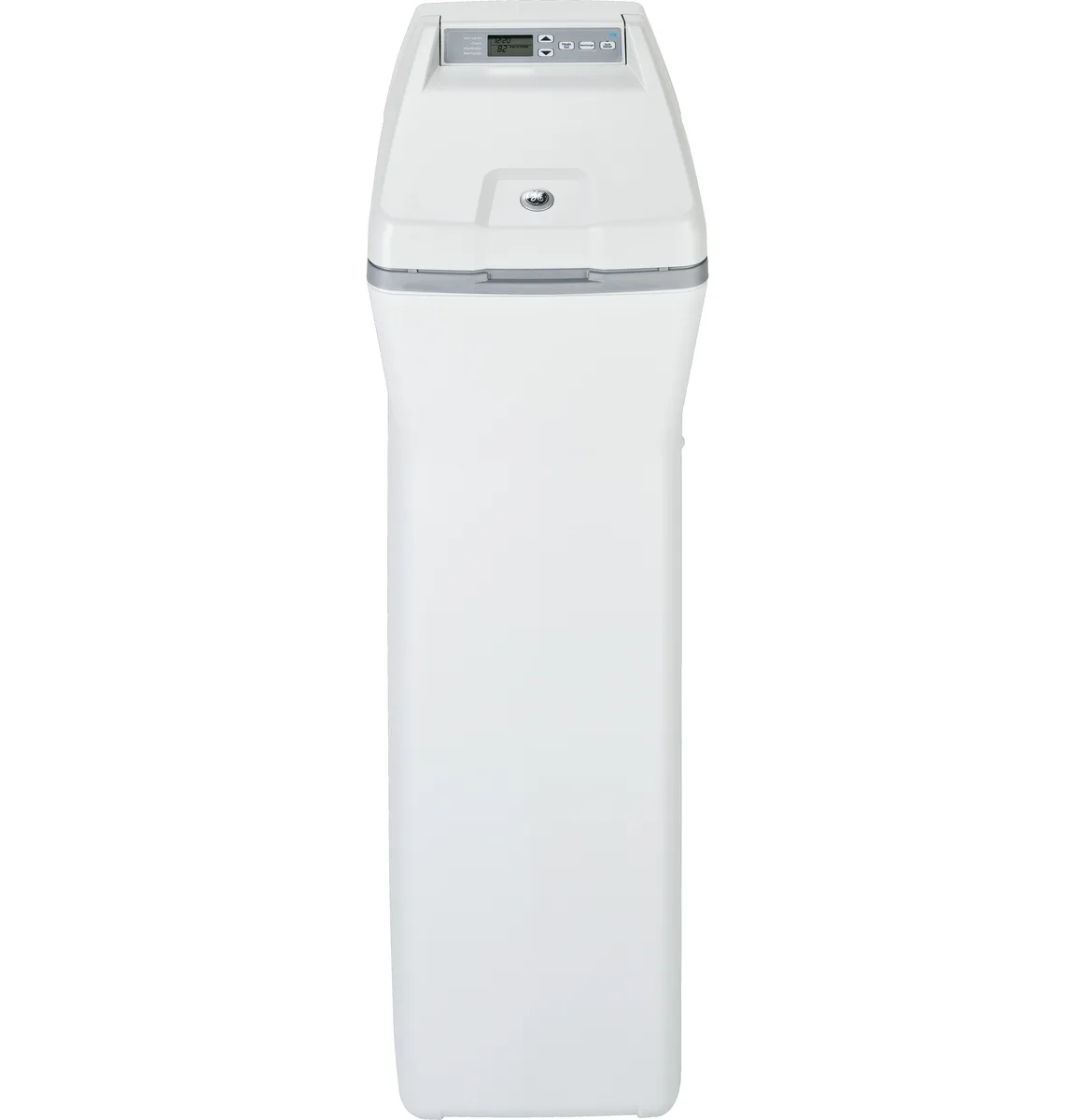
GE GXSH40V 40,000-Grain Water Softener
A 40,000-grain softener sold at Home Depot, certified to NSF/ANSI 44, with 9.5 GPM of flow. GE's manual explains how to size it if you have iron.
$649 list price
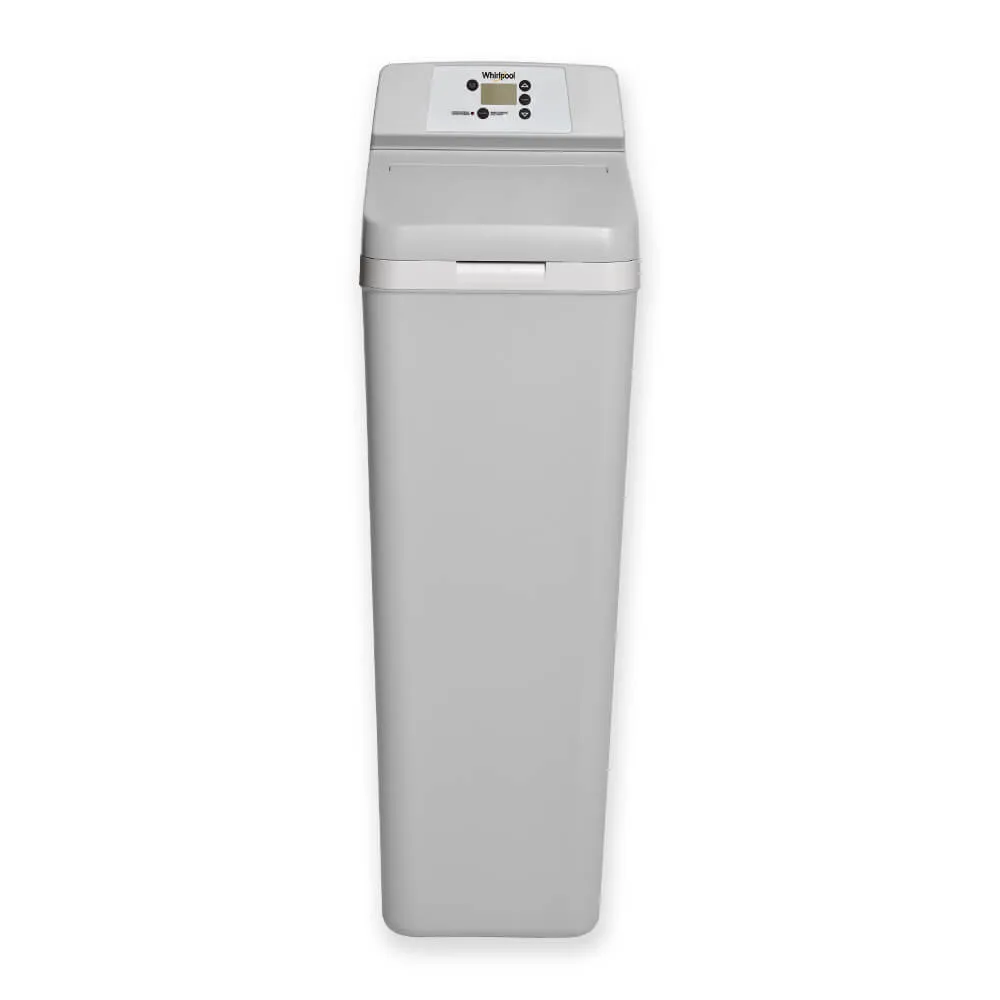
Whirlpool WHES33 33,000-Grain Water Softener
A compact, all-in-one cabinet softener you can buy at a big-box store. It's certified to NSF/ANSI 44 and very easy on salt at its lowest setting.
$519 list price
Turn your hardness number into the right softener size.
Convert mg/L or ppm from your water report into grains per gallon.
Not sure what's in your tap or well water? Test it first.
Municipal CCRs summarize utility-wide averages and ranges, while private wells have no municipal report at all. Spending $15–$200 on the right test upfront prevents buying an undersized softener or unnecessary treatment stage.
1. Municipal Hardness Check (~$10–$15)
Use a drop-titration kit (such as a Hach 5-B) at your kitchen cold tap. Each drop equals 1 GPG—far more accurate than color dip strips.
2. Well Water, Lead, or PFAS Lab Panel
If you have a private well, pre-1986 plumbing, or want tap-level PFAS/iron data, order an accredited mail-in drinking-water lab test before sizing hardware.
Common questions
- Is hard water bad for your health?
- No. Hard water is not considered a health risk; calcium and magnesium are minerals you also get from food. The problems are practical: scale, spots, more soap and shorter appliance life.
- Can you see or taste hard water?
- Not in the glass. Hard water looks perfectly clear, and most people can't taste the difference. You see it in what it leaves behind once it dries.
- Does boiling water remove hardness?
- Only partly. Boiling drops some of the calcium out as scale, which is exactly the crust you find inside a kettle, but it won't soften the water coming out of your taps.
- Are hardness test strips accurate?
- They're accurate enough to tell soft from hard, but they read in wide bands. For sizing a softener, a drop-count kit that counts grains one at a time is more reliable.
- Does water hardness change during the year?
- It can. Utilities that blend groundwater and surface water often report a seasonal range. Size a softener for the hardest months so you don't get spots halfway through the week.
Sources
Luke Ferguson · Founder & Editor
Luke reads the spec sheets, certification listings, city water reports and owner reviews, then writes up what matters and what doesn't. Reviews are research-based, not hands-on lab tests, and a commission never moves a pick.
How we review