


What is a water quality report?
It's a yearly report card from your water utility, officially called a Consumer Confidence Report. By law, community water systems have to send one to customers every year by July 1. It covers where your water comes from, which regulated contaminants were found and at what levels, any violations, and who to call with questions.
Under rule changes EPA made in 2024, systems serving more than 10,000 people will send reports twice a year starting in 2027, with more information about lead.
How do I find my report?
Search your utility's name with "water quality report" or "CCR"; most post a PDF. You can also use EPA's CCR search tool, or call the number on your water bill. If you rent, the utility may send the report to your landlord, but you can still read it online.
For a few Central Florida cities, we've already pulled the key numbers into our city water reports.
What do the columns mean?
Most reports use the same layout: one row per contaminant and a set of columns comparing what was found with the limits. These are the terms you'll see.
| Term | What it means | What to look for |
|---|---|---|
| MCL (Maximum Contaminant Level) | The legal limit for that contaminant | Is the detected level below it? |
| MCLG (goal) | The level with no known health risk; not enforceable | For lead and some others, the goal is zero |
| Action level (lead and copper) | If more than 10% of homes tested exceed it, the utility must act | The 90th percentile result against the action level |
| Detected level / average | What the utility measured | Compare with the MCL |
| Range | Lowest to highest result during the year | A high top end is worth noticing |
| Violation (Y/N) | Whether the utility broke a rule | Any "Y" should come with an explanation |
| ppm, ppb, ppt | Parts per million, billion, trillion | 1 ppb = 1,000 ppt; PFAS limits are in ppt |
How do I know if there's lead in my water?
The report shows lead results from a sample of homes, usually as a "90th percentile" figure compared with the action level. The current action level is 15 parts per billion. Under EPA's Lead and Copper Rule Improvements it drops to 10 ppb after November 1, 2027, and utilities have ten years to replace lead and galvanized service lines.
Here's the catch: lead rarely comes from the treatment plant. EPA says lead pipes, where they exist, are the main source, along with older faucets and fixtures. So a good city average doesn't tell you what's coming out of your tap, and EPA is clear that there's no safe level of lead.
What to do: ask your utility whether your address has a lead service line (utilities keep an inventory), and ask whether they offer free lead testing. Many do. If you're in an older home or have young children, testing your own tap is worth it. A filter certified to NSF/ANSI 53 for lead, or an RO system certified to NSF/ANSI 58, reduces it at the kitchen sink.
How do I check for PFAS?
PFAS are a large family of long-lasting chemicals, sometimes called "forever chemicals". In April 2024 EPA set the first national limits: 4 parts per trillion each for PFOA and PFOS, 10 ppt each for PFHxS, PFNA and HFPO-DA (GenX), and a combined limit for mixtures. Utilities have to finish their first round of PFAS monitoring by 2027 and meet the limits by 2029.
The rules are moving. In May 2025 EPA said it would keep the PFOA and PFOS limits. In May 2026 it proposed letting systems opt into a deadline extension to 2031 for PFOA and PFOS, and proposed dropping the limits for the other four PFAS. As of this update, those proposals aren't final, so the 2024 limits still apply.
Because monitoring is still rolling out, your report may not list PFAS yet. If it does, compare PFOA and PFOS with 4 ppt. If it doesn't, ask the utility whether they've tested. Our guide to removing PFAS from tap water explains which filters are certified for it.
What should I do with what I find?
Most reports show water that meets every standard. If something does concern you, the fix is usually at the kitchen tap rather than the whole house.
| What you found | What it means | What we'd do |
|---|---|---|
| Lead action level exceeded, or an older home | Lead may be coming from pipes | Test your tap; use a filter certified for lead (NSF/ANSI 53) or RO (NSF/ANSI 58) |
| PFOA or PFOS above 4 ppt | Above the 2024 federal limit | RO or a carbon filter certified for PFOA/PFOS |
| Chlorine or chloramine taste | Normal disinfection | Carbon filter; whole-house if it bothers you in the shower |
| High hardness | Not a health issue | A softener, if you're tired of spots and scale |
| Any violation | The utility broke a rule | Read their explanation and call with questions |
Filters certified for lead and PFOA/PFOS
We may earn a commission when you buy through links on this page, at no extra cost to you. How we make money
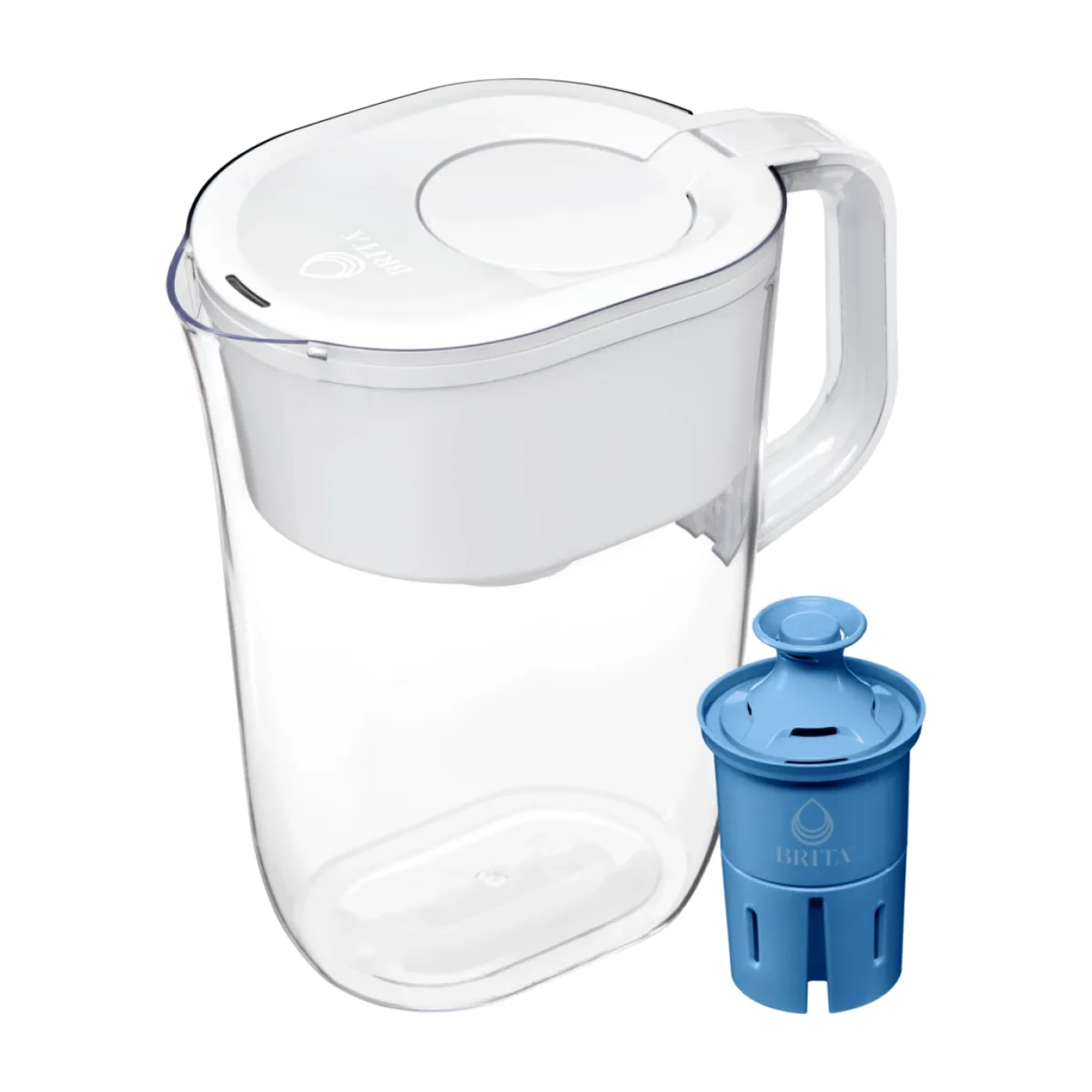
Brita Tahoe 10-Cup Pitcher with Elite Filter
A 10-cup pitcher whose Elite filter is certified to NSF/ANSI 42, 53 and 401 for 120 gallons, including PFOA/PFOS reduction.
$41.99 list price
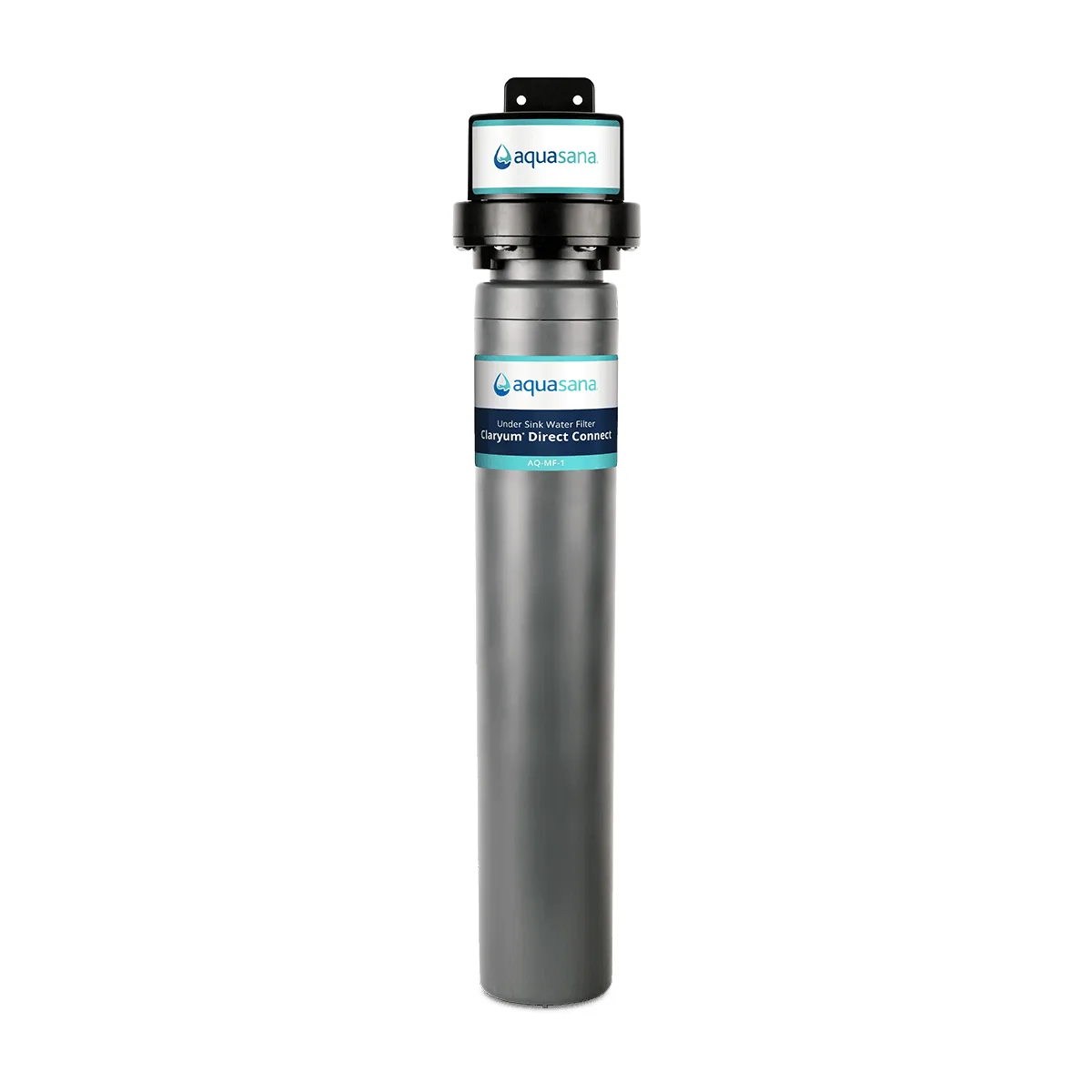
Aquasana Claryum Direct Connect Under-Sink Filter
A one-cartridge under-sink filter that runs through your existing faucet at 1.5 GPM, certified by IAPMO to NSF/ANSI 42, 53 (including PFOA/PFOS) and 401.
$249.99 list price
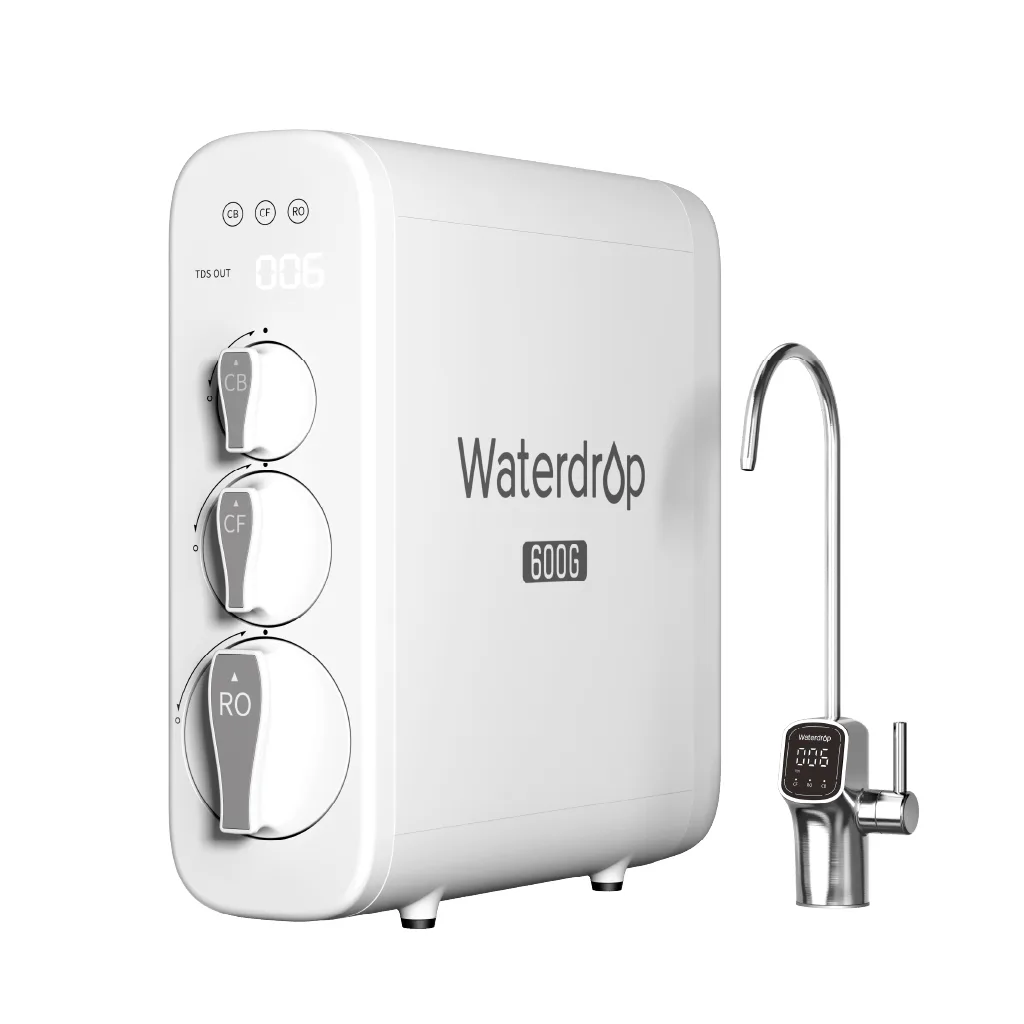
Waterdrop G3P600 Tankless Reverse Osmosis System
A slim, tankless under-sink reverse osmosis system with a pump, a 2:1 clean-to-drain ratio and a faucet that shows water quality. Certified to NSF/ANSI 58 and to 53 for PFOA/PFOS.
$539 list price
Find the right kind of filter for lead or PFAS, whether you own or rent.
Turn the hardness number in your report into grains per gallon.
Common questions
- My report says the water meets all standards. Do I still need a filter?
- Not necessarily. But the report is a system-wide picture; lead in particular can come from pipes at your address. If your home is older or you have young children, test your own tap before deciding.
- Does boiling water remove lead or PFAS?
- No. Boiling doesn't remove lead or PFAS, and as water evaporates it can slightly concentrate them. Use a filter certified for the contaminant instead.
- What's the difference between ppb and ppt?
- Parts per billion (ppb) and parts per trillion (ppt) are both tiny concentrations. One ppb equals 1,000 ppt. Lead is usually reported in ppb and PFAS in ppt.
- Will a water softener remove lead or PFAS?
- No. Softeners are built to remove hardness minerals. For lead or PFAS, use a filter certified to NSF/ANSI 53 or 58 for those specific contaminants.
- How do I know a filter actually removes PFAS?
- Check the packaging or the certifier's listing for NSF/ANSI 53 or 58 and the specific PFAS claim (such as PFOA/PFOS). "Tested" or "reduces up to" claims without a certification listing aren't the same thing.
Sources
Luke Ferguson · Founder & Editor
Luke reads the spec sheets, certification listings, city water reports and owner reviews, then writes up what matters and what doesn't. Reviews are research-based, not hands-on lab tests, and a commission never moves a pick.
How we review