


What causes hard water spots?
Hard water carries dissolved calcium and magnesium. When a droplet dries on glass or chrome, the water evaporates and the minerals stay behind as a chalky white mark. Do that a few hundred times and the marks build into a crust.
Because the deposit is alkaline, a mild acid breaks it down. That's why the cheapest fix in the house, white vinegar, works better than most scrubbing.
What should I use on each surface?
Start with the gentlest option and give it time to soak. Most of the work happens while you wait.
| Surface | What to use | How long | Watch out for |
|---|---|---|---|
| Drinking glasses | Soak in warm white vinegar, then wash | 15–30 minutes | If the cloudiness doesn't shift, it may be etching (see below) |
| Glass shower door | Spray vinegar with a little dish soap, then wipe | 15–30 minutes | Abrasive pads scratch glass |
| Faucets and fixtures | Rag or paper towel soaked in vinegar wrapped around the deposit, then an old toothbrush | About 1 hour | Test special finishes first |
| Showerhead | Plastic bag of vinegar tied around the head | 1 hour to overnight | Check the maker's advice for plated or colored finishes |
| Kettle or coffee maker | Vinegar or citric acid descaling cycle, then rinse runs | As the maker directs | Run plain water through afterward |
| Dishwasher | Citric acid in the detergent cup, empty cycle, no detergent or metal items | One cycle | Follow your dishwasher manual |
How do I get the cloudy film off glasses and dishes?
Soak the glasses in warm white vinegar for 15 to 30 minutes, then wash and rinse as usual. Most of the film wipes straight off.
To stop it coming back, keep the dishwasher's rinse aid topped up; KitchenAid calls rinse aid "very important" for spotting. GE, which says white film is most common in hard-water areas, suggests two fixes: add a cup of white vinegar just after the detergent cup opens, or put citric acid in the detergent cup and run a full cycle with no detergent and no metal items. KitchenAid recommends a softener once water is over 15 grains.
Here's a useful test: if vinegar doesn't touch the cloudiness, it isn't minerals. It's etching, tiny pits in the glass that are permanent. Etching usually comes from too much detergent in soft water, the opposite problem, so use less detergent rather than more.
How do I clean hard water off a glass shower door?
Mix white vinegar with a squirt of dish soap in a spray bottle. The soap helps the vinegar cling to vertical glass. Spray it on, leave it 15 to 30 minutes, then wipe with a non-scratch sponge and rinse.
For thick buildup, repeat rather than scrubbing hard. A commercial calcium and lime remover works faster, but read the label: many aren't safe on natural stone or some metal finishes.
The best prevention costs nothing: a squeegee after each shower takes off the water before it can dry into spots. It takes about 20 seconds.
How do I descale faucets and showerheads?
Wrap a rag or paper towel soaked in vinegar around the crusty part of a faucet and leave it for about an hour, then scrub with an old toothbrush. That's the University of Georgia extension service's method. For a showerhead, fill a plastic bag with vinegar, pull it up so the face is submerged, and tie it on with a rubber band. Leave it an hour or overnight, then run hot water through it.
Chrome and stainless steel handle this well. Brass, gold-tone, matte black and oil-rubbed bronze finishes can be damaged by acid, so check the manufacturer's care instructions and test a hidden spot first.
What should I avoid?
A few habits do more harm than the spots themselves.
- Never use vinegar, lemon or other acids on marble, travertine, limestone or other natural stone. The Natural Stone Institute warns they can dull or etch the surface.
- Never mix vinegar (or any acid) with bleach. Together they can release chlorine gas.
- Skip steel wool and abrasive powders on glass and polished fixtures; they leave scratches that hold onto future spots.
- Don't keep adding more detergent to get glasses clean. Extra detergent doesn't remove minerals and can etch glass over time.
How do I stop the spots for good?
Cleaning treats the symptom. If you're scrubbing the shower door every week, the water itself is the problem, and a water softener is the only home system that takes the calcium and magnesium out. Our guide to telling if you have hard water shows how to get your number, and the softener size calculator tells you what size you'd need.
A salt-free conditioner won't help here: it changes how scale forms inside pipes but leaves the minerals in the water, so droplets still dry into spots. Our salt vs. salt-free guide explains the difference.
Softeners that stop the spots at the source
We may earn a commission when you buy through links on this page, at no extra cost to you. How we make money
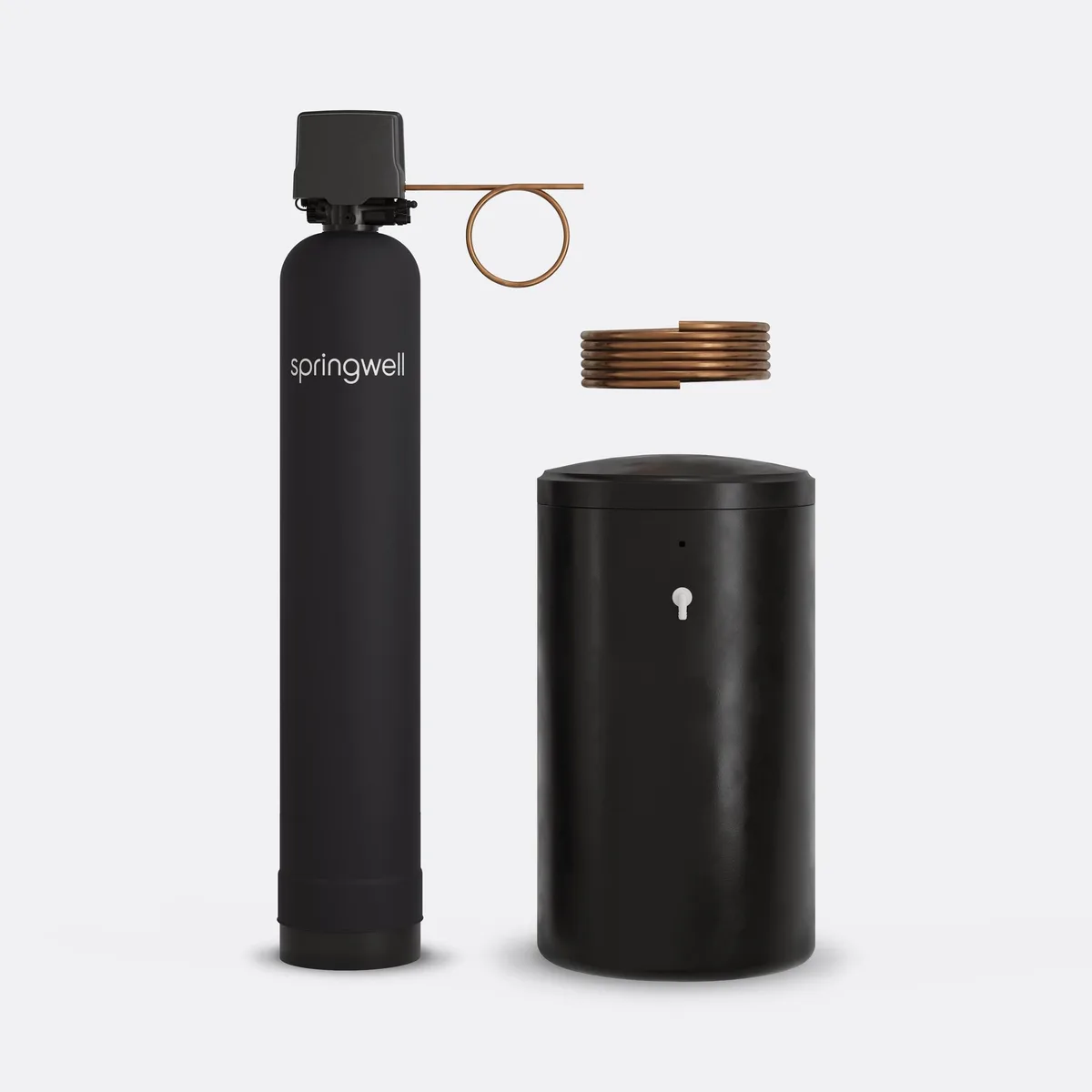
SpringWell SS1 Salt-Based Water Softener
A 32,000-grain salt softener for the whole house. It uses tougher 10% crosslink resin and an 11 GPM valve that cleans itself only when it needs to.
$1,890 list price
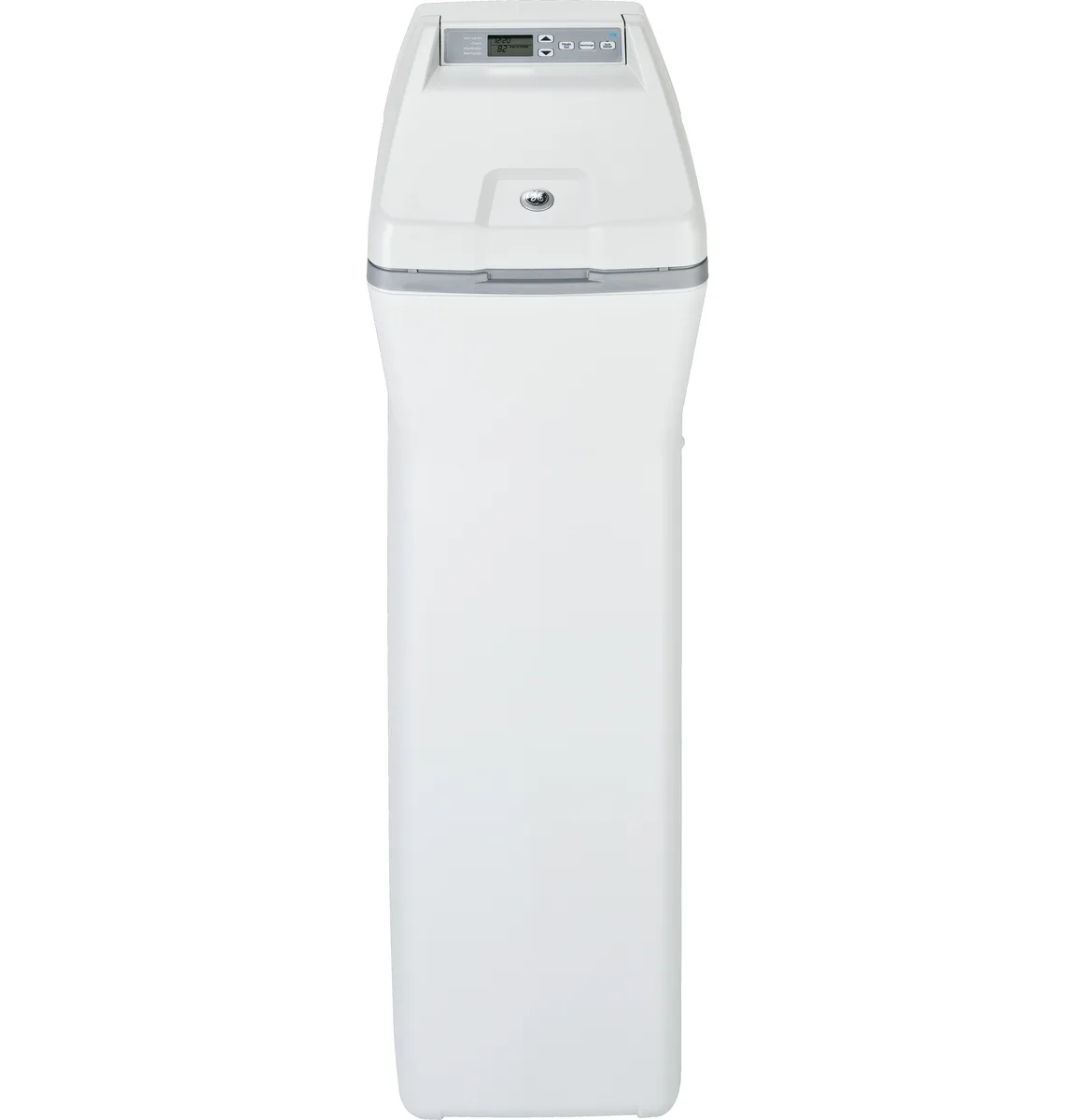
GE GXSH40V 40,000-Grain Water Softener
A 40,000-grain softener sold at Home Depot, certified to NSF/ANSI 44, with 9.5 GPM of flow. GE's manual explains how to size it if you have iron.
$649 list price
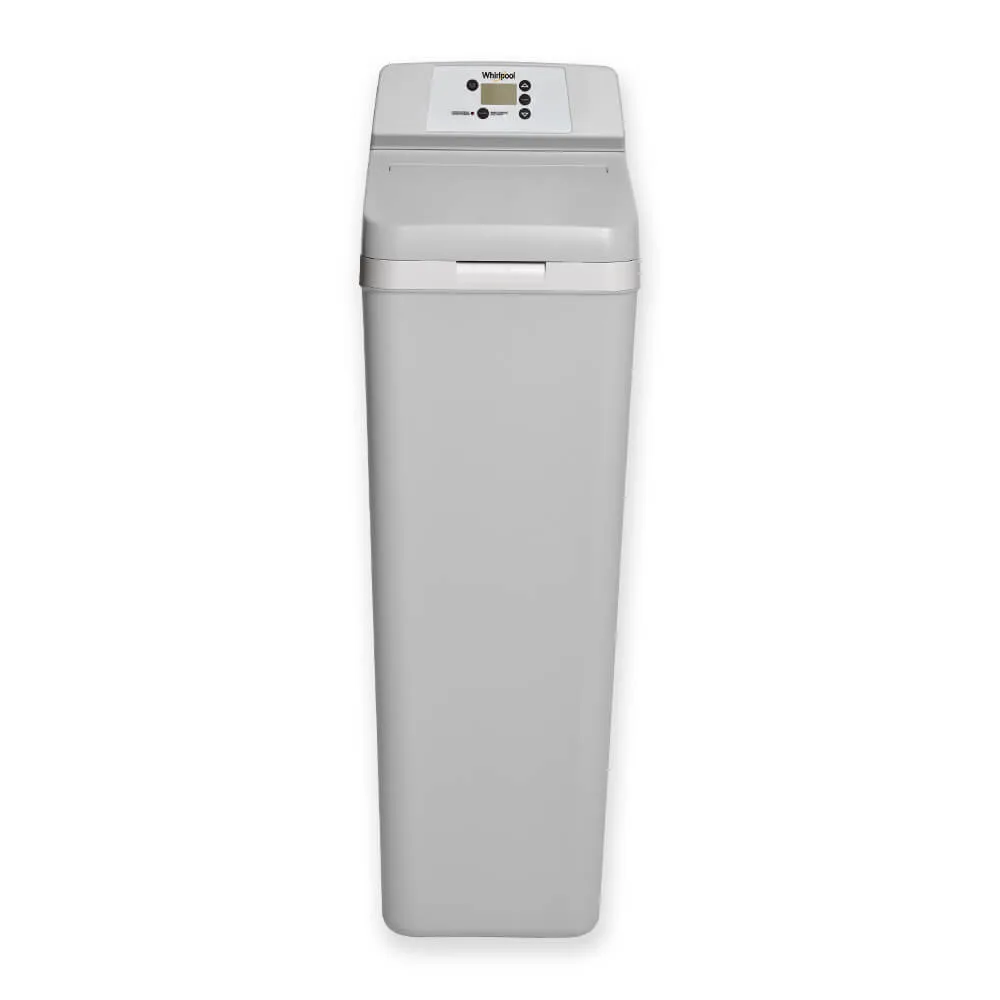
Whirlpool WHES33 33,000-Grain Water Softener
A compact, all-in-one cabinet softener you can buy at a big-box store. It's certified to NSF/ANSI 44 and very easy on salt at its lowest setting.
$519 list price
See what size softener your household needs.
Three questions to confirm a softener is the right fix.
Common questions
- Does vinegar damage glass?
- No. White vinegar is safe on ordinary glass, including shower doors and drinking glasses. Just keep it away from natural stone and check the care instructions for colored or plated metal finishes.
- Why are my glasses still cloudy after soaking them in vinegar?
- If vinegar doesn't remove it, the cloudiness is probably etching: permanent pitting in the glass, often from too much detergent in soft water. It can't be cleaned off, but using less detergent stops it getting worse.
- Do calcium and lime removers work better than vinegar?
- They're usually faster on heavy buildup because they're stronger acids. Follow the label exactly, ventilate the room, and don't use them on stone or finishes the label excludes.
- Will a filter pitcher stop hard water spots?
- No. Most pitchers use carbon, which improves taste but doesn't remove calcium and magnesium. And a pitcher only treats the water you pour from it, not the water in your shower or dishwasher.
- How do I keep a shower door spot-free?
- Squeegee the glass after every shower, and give it a vinegar spray once a week. If the water is very hard, a softener is what makes the glass stay clear without the routine.
Sources
Luke Ferguson · Founder & Editor
Luke reads the spec sheets, certification listings, city water reports and owner reviews, then writes up what matters and what doesn't. Reviews are research-based, not hands-on lab tests, and a commission never moves a pick.
How we review