


Why does hard water feel different in the shower?
Calcium and magnesium in hard water react with soap and form scum, the same gray film you see on a bathtub. Some of it stays on your skin and hair, and less of your soap or shampoo turns into lather, so you tend to use more.
That residue is why hard water can leave skin feeling tight and hair feeling coated, dull or straw-like. In soft water, soap lathers easily and rinses away without the film, which is why softened water can feel slippery at first.
Does hard water cause dry skin or eczema?
Many people with hard water say their skin feels drier, and the soap-scum residue is a plausible reason. Whether a softener improves eczema is a different question, and the best evidence so far says not much.
The largest trial, the Softened Water Eczema Trial in the UK, gave 336 children with moderate to severe eczema either a water softener or usual care for 12 weeks. Eczema improved by about 20% with the softener and 22% without it, so the softener added nothing measurable. Parents did report improvements, but the researchers thought that was likely because they knew they had the softener.
Research on babies is more nuanced. A UK study of 1,303 three-month-old infants found visible eczema was more common in homes with very hard, low-chlorine water. When the same group was followed to age three, hard water alone wasn't linked to eczema overall, but babies with a particular skin-barrier gene (filaggrin) were at higher risk in hard-water areas.
What have studies actually found?
Here are the main studies in plain terms. Links are in the sources at the bottom.
| Study | Who | What it found |
|---|---|---|
| Softened Water Eczema Trial (UK, 2011) | 336 children with eczema in hard-water areas | A softener gave no added improvement over 12 weeks |
| Perkin et al. (UK, 2016) | 1,303 three-month-old babies | More visible eczema in very hard, low-chlorine water areas |
| Jabbar-Lopez et al. (UK, 2020) | Same babies followed to 3 years | No overall link; higher risk for babies with a filaggrin gene variant |
| Srinivasan et al. (2013) | Hair from 15 volunteers soaked 30 days | No significant difference in hair strength or elasticity |
| Luqman et al. (2018) | Hair from 70 men | Hard water lowered hair tensile strength |
Does hard water damage hair?
The two lab studies point in different directions. One soaked hair samples in hard water for a month and found no real change in strength or stretch. Another tested hair from 70 men and found hard water made it measurably weaker. Neither looked at hair loss, and there's no good evidence that hard water makes hair fall out.
What's easier to see is buildup. Minerals and soap scum can coat hair, making it look dull, feel rough and hold color less well. That's a cleaning problem you can work on.
What helps without a softener?
A few small changes make a real difference.
- Use a clarifying or chelating shampoo once a week or so to lift mineral buildup, then a good conditioner.
- Use less soap and choose a gentle, moisturizing body wash rather than bar soap, which forms more scum.
- Moisturize right after you shower, while your skin is still slightly damp.
- Keep showers warm rather than hot.
- If eczema is the concern, follow your doctor or dermatologist's plan; water treatment isn't a substitute.
Do shower filters help?
Most shower filters use carbon or a similar medium to reduce chlorine, which some people find drying. That can help if chlorine is your issue. But a small cartridge can't soften water at shower flow rates, so it won't remove the calcium and magnesium behind the soap scum, whatever the box says.
Will a water softener help my hair and skin?
A softener does change how showers feel: soap and shampoo lather properly, there's no scum, and hair isn't coated in minerals. Many owners love that, and it's a fair reason to buy one if your water is hard. Just go in with honest expectations; it isn't a proven treatment for eczema or other skin conditions.
First check whether your water is actually hard with our guide to testing for hard water, then see what size you'd need in the softener size calculator.
If your water is hard: softeners we'd buy
We may earn a commission when you buy through links on this page, at no extra cost to you. How we make money
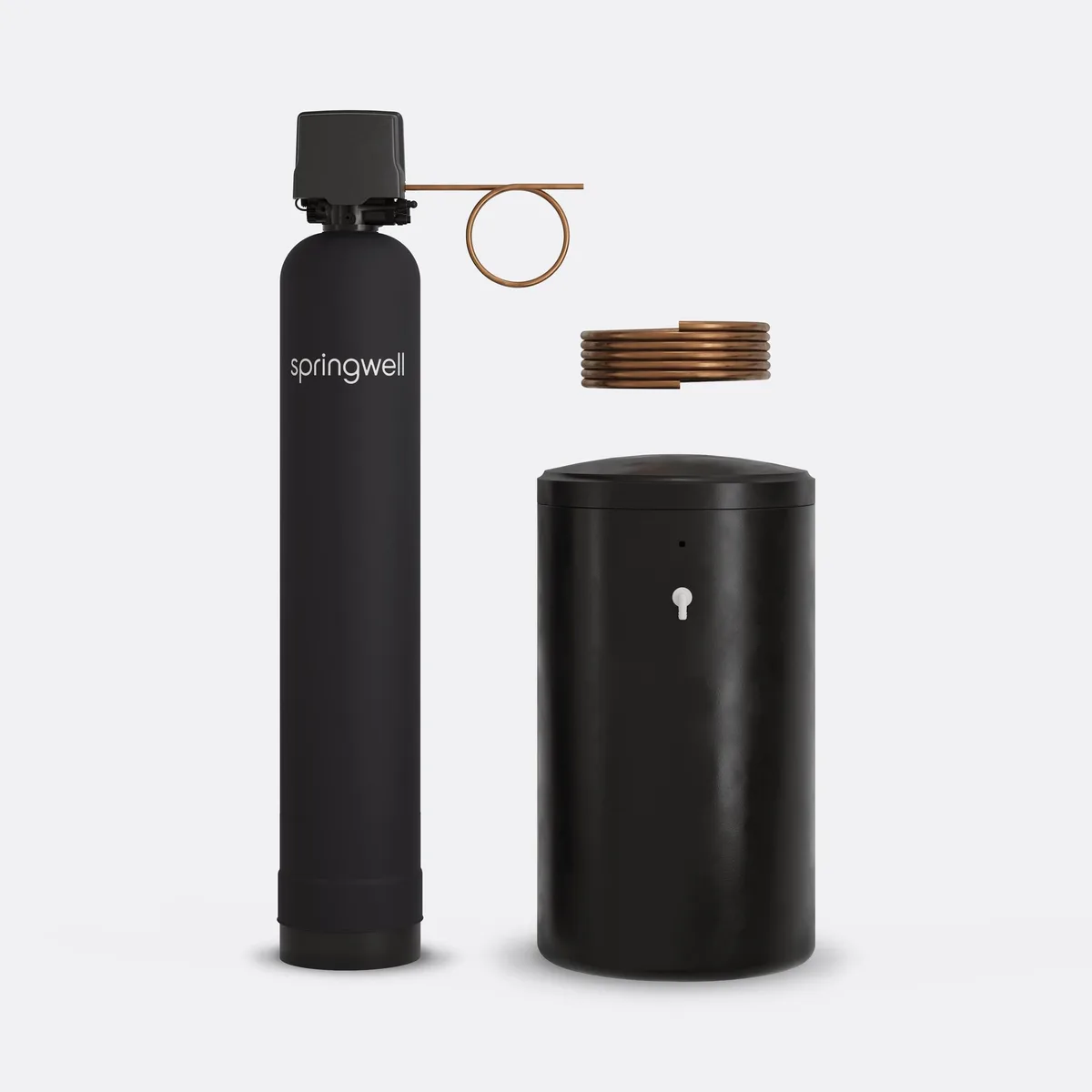
SpringWell SS1 Salt-Based Water Softener
A 32,000-grain salt softener for the whole house. It uses tougher 10% crosslink resin and an 11 GPM valve that cleans itself only when it needs to.
$1,890 list price
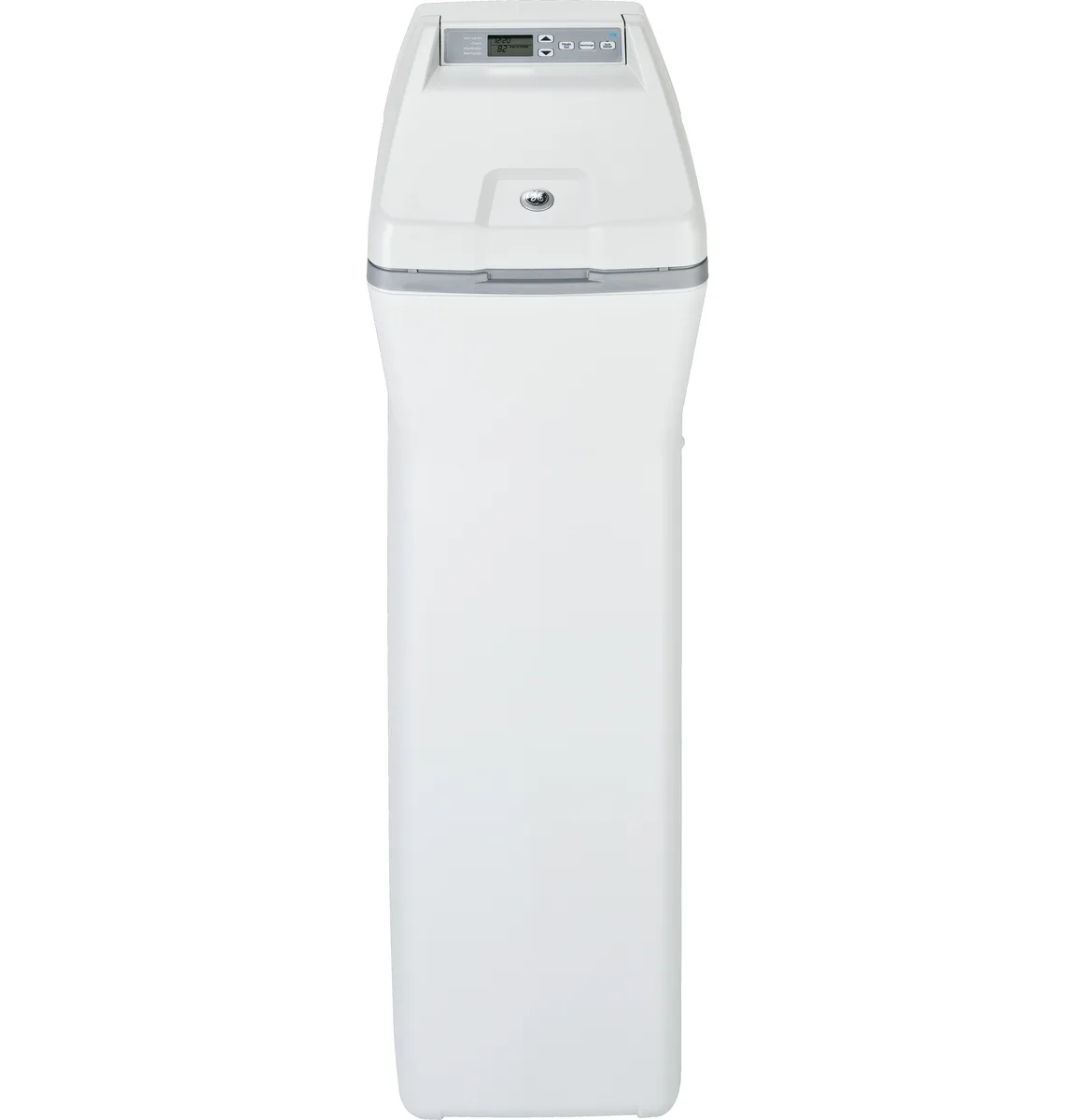
GE GXSH40V 40,000-Grain Water Softener
A 40,000-grain softener sold at Home Depot, certified to NSF/ANSI 44, with 9.5 GPM of flow. GE's manual explains how to size it if you have iron.
$649 list price
See what size softener your household would need.
Check how hard your water is in grains per gallon.
Common questions
- Is soft water better for eczema?
- The best trial so far found no extra benefit from a softener for children with eczema. Some people still find soft water more comfortable, but follow your doctor's treatment plan rather than relying on water treatment.
- Does hard water cause hair loss?
- There's no good evidence that it does. Hard water can leave hair dull and rough from mineral buildup, and one study found it weakened hair strands, but that isn't the same as hair falling out.
- Why does softened water feel slippery?
- Soap lathers fully and rinses off without forming scum, so your skin doesn't have the slightly squeaky film hard water leaves. It isn't soap left behind; it's the absence of the residue.
- Can a shower head filter soften water?
- No. Shower filters mostly reduce chlorine. Softening needs a resin tank that's recharged with salt, which a small cartridge can't do at shower flow rates.
- Does hard water fade hair color?
- Mineral buildup can make color look dull and change how it takes, and many stylists recommend a clarifying or chelating shampoo for color-treated hair in hard-water areas.
Sources
- Thomas KS et al. Softened Water Eczema Trial (SWET), PLoS Medicine 2011
- Perkin MR et al. Water hardness and eczema at 3 months, J Allergy Clin Immunol 2016
- Jabbar-Lopez ZK et al. Water hardness and atopic dermatitis to 36 months, Br J Dermatol 2020
- Srinivasan G et al. Hard water and hair strength, Int J Trichology 2013
- Luqman MW et al. Hard water and hair tensile strength, Int J Trichology 2018
Luke Ferguson · Founder & Editor
Luke reads the spec sheets, certification listings, city water reports and owner reviews, then writes up what matters and what doesn't. Reviews are research-based, not hands-on lab tests, and a commission never moves a pick.
How we review