


What does reverse osmosis remove?
An RO system pushes tap water through a membrane with pores so small that most dissolved substances can't get through. The clean water goes to a tank or straight to a faucet, and the rest carries the leftovers down the drain. Most systems add carbon filters before and after the membrane to handle chlorine and taste.
The CDC lists calcium, magnesium, sulfate, fluoride, arsenic and radium among the things RO may reduce. Certified systems are also commonly listed for lead, nitrate and PFOA/PFOS. Every RO system certified to NSF/ANSI 58 has to reduce total dissolved solids (TDS); other claims, like lead or PFAS, are listed individually, so check the certification for the specific contaminant you care about.
When is RO worth it, and when isn't it?
RO earns its place when your water report or your own test shows something you want gone that a carbon filter doesn't reliably handle.
| Your situation | RO worth it? | Why |
|---|---|---|
| PFAS (PFOA/PFOS) in your water report | Yes | RO certified to NSF/ANSI 58 is one of the strongest options |
| Older home, worried about lead | Yes, or a certified carbon filter | Both can be certified for lead; RO also covers more |
| Fluoride, nitrate or arsenic | Yes | Carbon filters generally don't reduce these well |
| Very high TDS or salty taste | Yes | RO is built to remove dissolved solids |
| Just want less chlorine taste | Usually not | A certified carbon pitcher or under-sink filter is cheaper |
| Want soft water in the shower | No | RO only treats one tap; you need a softener |
How much water does RO waste?
More than most people expect. EPA says a typical RO system sends 5 or more gallons down the drain for every gallon of treated water. Systems that earn EPA's WaterSense label waste 2.3 gallons or less, which EPA says saves more than 3,100 gallons a year. To qualify, they need NSF/ANSI 58 certification, an automatic shut-off and an efficiency rating of at least 30%.
Newer tankless systems with a booster pump are much better. The systems we review list these drain ratios:
| System | Type | Pure water to drain water |
|---|---|---|
| Waterdrop G3P800 | Tankless, pumped | 3:1 (3 gallons pure for 1 to drain) |
| Waterdrop G3P600 | Tankless, pumped | 2:1 |
| Aquasana HealthShield | Tankless, pumped | 1.8:1 |
| Typical older tank RO | Tank, no pump | Often 1:5 or worse, per EPA |
Does RO remove healthy minerals?
Yes, along with nearly everything else dissolved in the water. Delta, which makes RO faucets and filters, puts it simply: RO removes most dissolved minerals. That's why RO water can taste flat or slightly sharp compared with tap water.
If you'd like the taste of mineral water, pick a system with a remineralization stage, which adds calcium and magnesium back. The Home Master Artesian and iSpring RCC7AK both include one. It's optional, and many people are happy without it.
Tank, tankless or countertop: which type should I get?
All three types make the same kind of water. The differences are speed, space, wastewater and whether you can install them.
| Type | Price we've seen | Filters per year | Good for | Downsides |
|---|---|---|---|---|
| Under-sink with tank | $231–$330 | About $47–$102 | Lowest cost; no power needed | Tank takes space; slower; more wastewater |
| Tankless under-sink | $539–$1,300 | About $145–$350 | Fast flow; less waste; slim | Needs an outlet under the sink; pricier filters |
| Countertop (no plumbing) | $454–$475 | About $115–$130 | Renters; no tools needed | You fill it by hand; takes counter space |
What does RO cost over five years?
Filters add up, so look past the sticker price. Using list prices and yearly filter costs for the systems we review: the APEC ROES-50 comes to about $465 over five years ($231 plus about $47 a year), the Waterdrop G3P600 about $1,265 ($539 plus about $145 a year), and the AquaTru Classic about $1,125 ($475 plus about $130 a year). Add a little for the water that goes down the drain.
For comparison, a certified carbon pitcher like the Brita Elite is about $42 plus roughly $33 a year in filters. It won't do what RO does, but it's the right answer if taste is the only problem.
Who should skip RO?
If your water report looks clean and you just want it to taste better, RO is more than you need. If you rent, a countertop RO unit or a certified pitcher avoids any plumbing. And if your real complaint is spots and scale in the shower, RO won't help; that's a job for a water softener.
If you do want RO, compare our best reverse osmosis systems, or our best water filters for PFAS if that's the main concern.
RO systems we'd buy: tankless, budget and countertop
We may earn a commission when you buy through links on this page, at no extra cost to you. How we make money
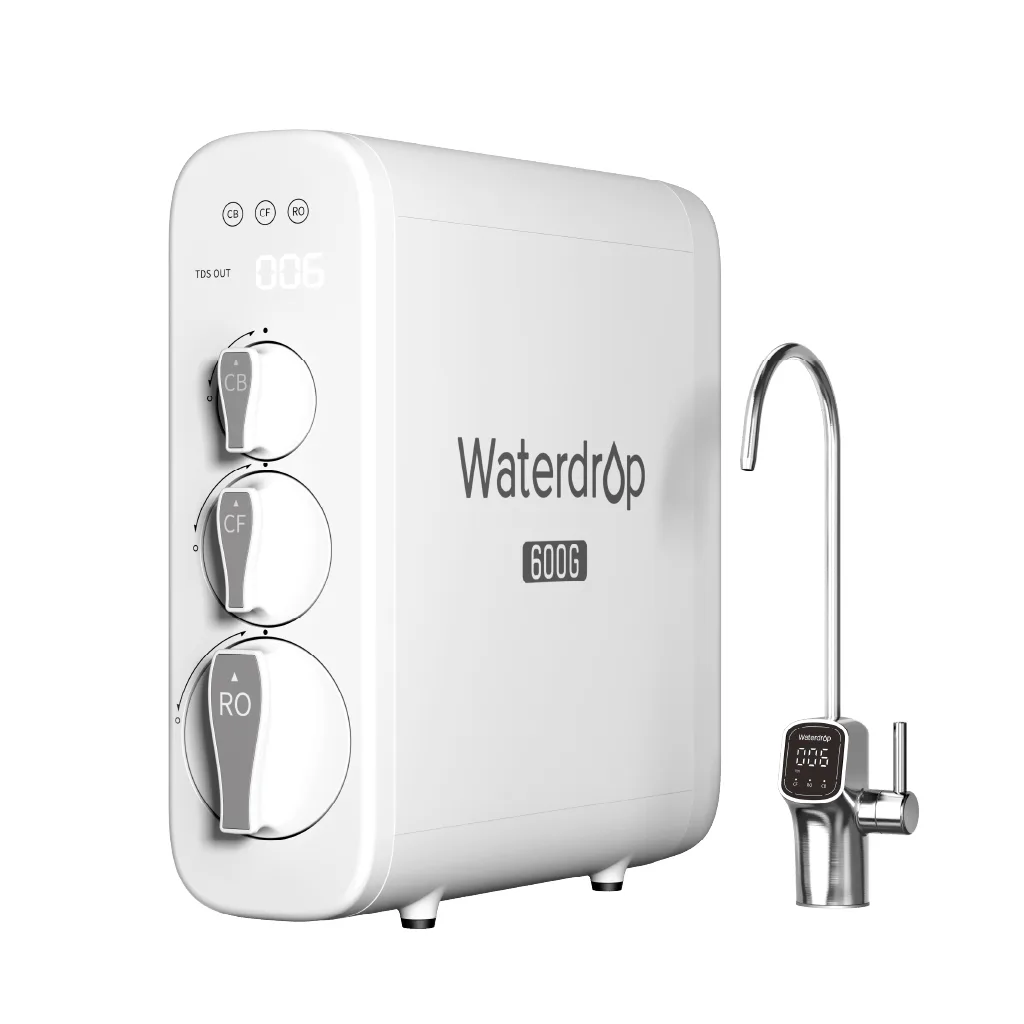
Waterdrop G3P600 Tankless Reverse Osmosis System
A slim, tankless under-sink reverse osmosis system with a pump, a 2:1 clean-to-drain ratio and a faucet that shows water quality. Certified to NSF/ANSI 58 and to 53 for PFOA/PFOS.
$539 list price
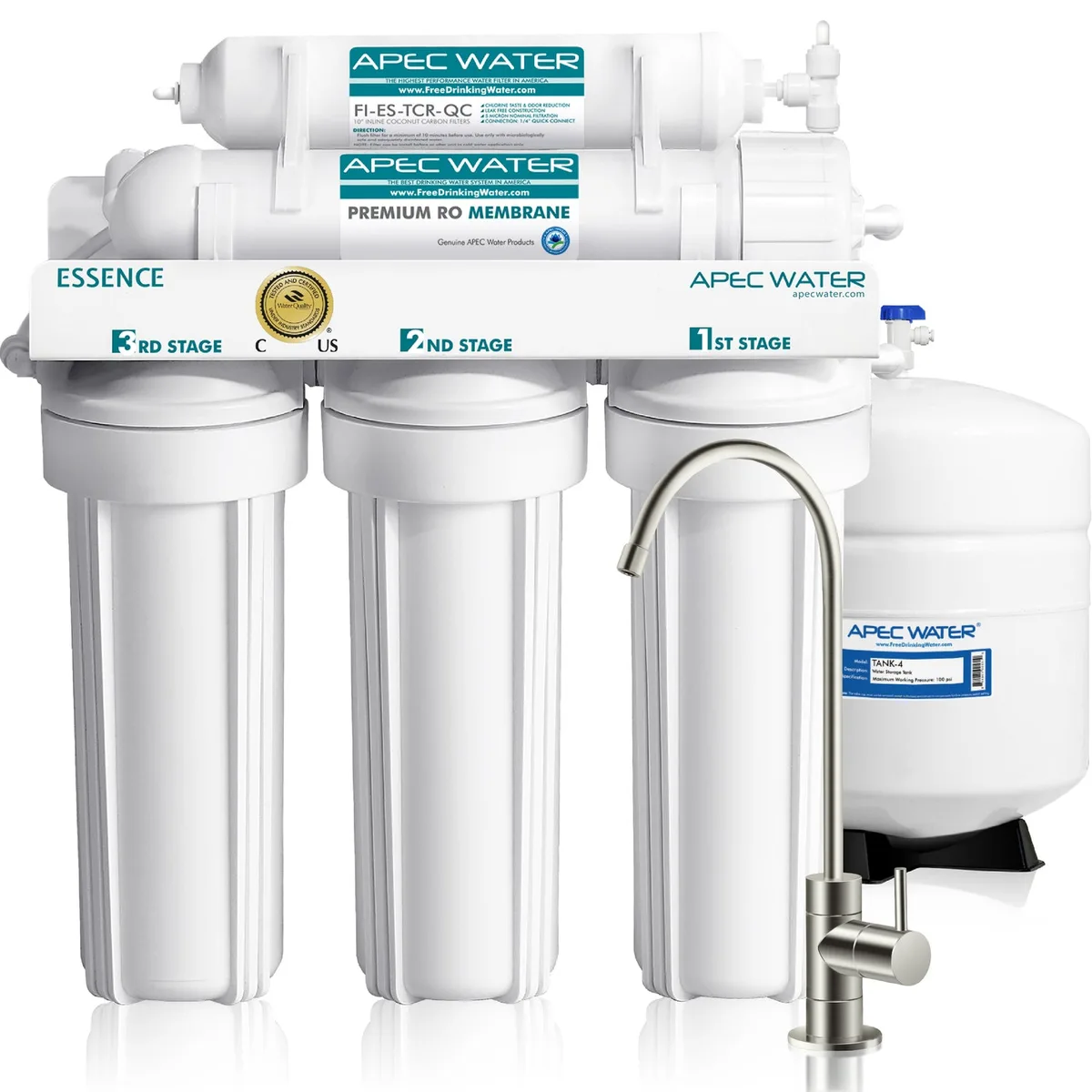
APEC Essence ROES-50 5-Stage Reverse Osmosis System
A classic five-stage under-sink reverse osmosis system with a 4-gallon tank, standard filters and no electricity needed. WQA certified to NSF/ANSI 58.
$230.99 list price
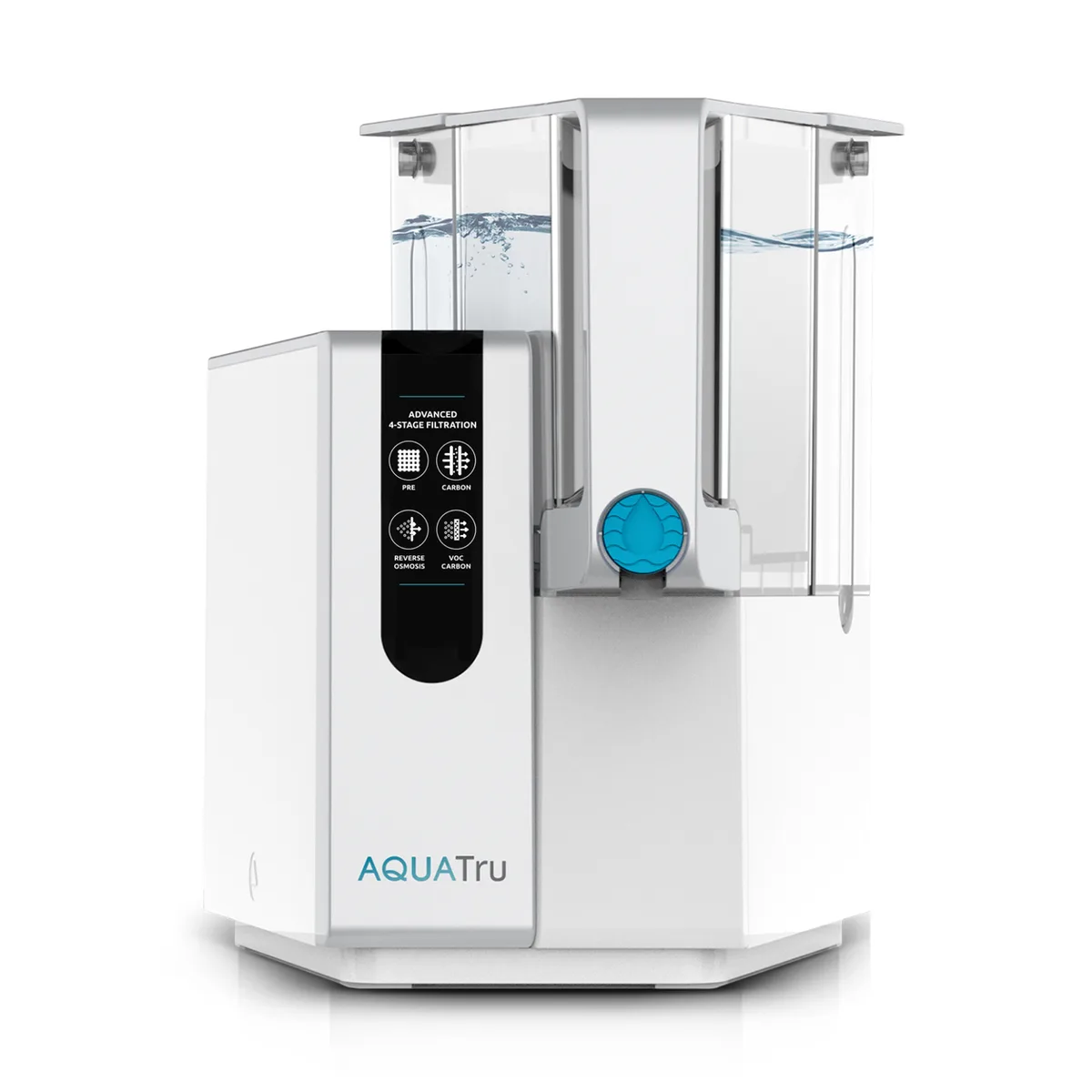
AquaTru Classic Countertop Reverse Osmosis Purifier
A plug-in countertop reverse osmosis purifier with a 0.75-gallon clean-water tank. Certified by IAPMO to NSF/ANSI 42, 53, 58 and 401, including PFOA/PFOS.
$475 list price
Check whether RO or a carbon filter fits your situation.
Compare purchase price, filters and installation over five years.
Common questions
- Is reverse osmosis water safe to drink every day?
- Yes. RO water is widely used for everyday drinking and cooking. If you don't like the flat taste, choose a system with a remineralization stage.
- How often do RO filters need changing?
- Pre- and post-filters are usually changed every 6 to 12 months and the membrane every 2 to 3 years, depending on the model and your water. Check the maker's schedule; many tankless units have a filter-life indicator.
- Can I install an RO system myself?
- Most under-sink systems are designed for DIY install if you're comfortable with basic plumbing; some need a hole drilled for the faucet. Tankless models also need an outlet under the sink. Countertop units need no install at all.
- Does RO remove bacteria?
- RO isn't sold as a disinfection system for unsafe water. If you're on a private well with bacteria concerns, test first and look at UV treatment; some RO units, like the Bluevua, add a UV stage.
- Will a water softener help my RO system?
- Yes. Hardness is what scales up RO membranes, so softened water usually makes the membrane last longer.
Sources
Luke Ferguson · Founder & Editor
Luke reads the spec sheets, certification listings, city water reports and owner reviews, then writes up what matters and what doesn't. Reviews are research-based, not hands-on lab tests, and a commission never moves a pick.
How we review