


Is softened water safe to drink?
For most healthy adults and children, yes. A softener doesn't add chemicals or remove anything you need from tap water; it trades the hardness minerals, calcium and magnesium, for sodium. The question is really how much sodium, and whether that matters for anyone in your house.
It's also worth knowing what a softener doesn't do. It isn't designed to remove lead, PFAS, chlorine or bacteria, so softened water is only as safe as the tap water going into it. If that's your worry, see our guide to reading your water report.
How much sodium does a water softener add?
University extension services at Nebraska and North Dakota State put it at about 8 mg of sodium per liter for every grain per gallon of hardness removed. So the harder your water, the more sodium ends up in it.
Here's what that means per glass. These are our calculations from the extension figure, for an 8-ounce (237 mL) glass:
| Your hardness | Sodium added per liter | Per 8-oz glass (calculated) |
|---|---|---|
| 5 grains (moderately hard) | About 40 mg | About 9 mg |
| 10 grains (hard) | About 80 mg | About 19 mg |
| 15 grains (very hard) | About 120 mg | About 28 mg |
| 20 grains (very hard) | About 160 mg | About 38 mg |
Who should be careful with softened water?
Anyone a doctor has put on a strict low-sodium diet, for example for high blood pressure, heart failure or kidney disease, should ask about drinking softened water, especially if the water is very hard. Penn State Extension names low-sodium diets as the main drawback of softening.
For everyone else, the sodium from softened water is small next to food. Eight glasses a day at 10 grains adds roughly 150 mg.
Can I use softened water for baby formula?
Advice differs by country. The UK's National Health Service says plainly not to use artificially softened water for formula, and to use fresh tap water that's been boiled instead. The CDC says tap water is usually fine for powdered formula and suggests asking your local health department if you're unsure, but it doesn't mention softened water either way.
The simple, cautious route is to mix formula with water from a tap that bypasses the softener, or from a reverse osmosis filter, and to check with your pediatrician. Many softener installs leave the kitchen cold tap unsoftened for exactly this reason.
What about houseplants, the garden and pets?
Skip softened water for plants. Both the Nebraska and North Dakota State extension services advise against using it on houseplants, lawns and gardens, because the sodium builds up in the soil over time. Most installers leave outdoor spigots on unsoftened water; if yours aren't, ask a plumber to add a bypass.
There's little research on pets. For a healthy dog or cat the extra sodium is small, but if your pet is on a low-sodium diet for heart or kidney problems, ask your vet and use unsoftened or RO water for their bowl.
How do I keep the sodium out of drinking water?
You've got three good options, and you can combine them.
- Leave the kitchen cold tap unsoftened. A plumber can tee it off before the softener. This is the cheapest fix and the one Vermont's health department suggests.
- Add a reverse osmosis filter at the sink. RO removes most of the sodium along with lead, PFAS and other dissolved solids. See our best reverse osmosis systems.
- Switch to potassium chloride. It adds potassium instead of sodium, but it costs more and you'll use about 10% more of it. Our softener salt guide compares the options.
If you'd like low-sodium drinking water: two RO picks
We may earn a commission when you buy through links on this page, at no extra cost to you. How we make money
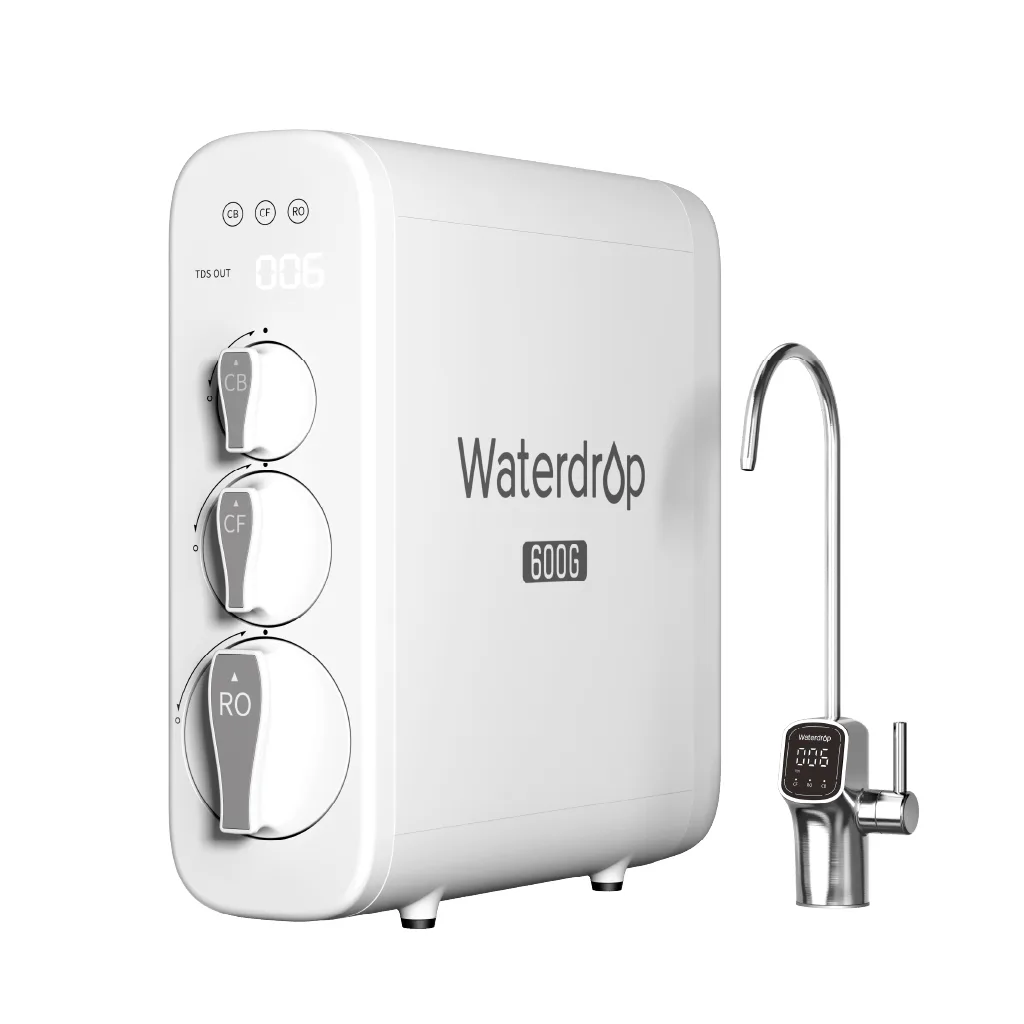
Waterdrop G3P600 Tankless Reverse Osmosis System
A slim, tankless under-sink reverse osmosis system with a pump, a 2:1 clean-to-drain ratio and a faucet that shows water quality. Certified to NSF/ANSI 58 and to 53 for PFOA/PFOS.
$539 list price
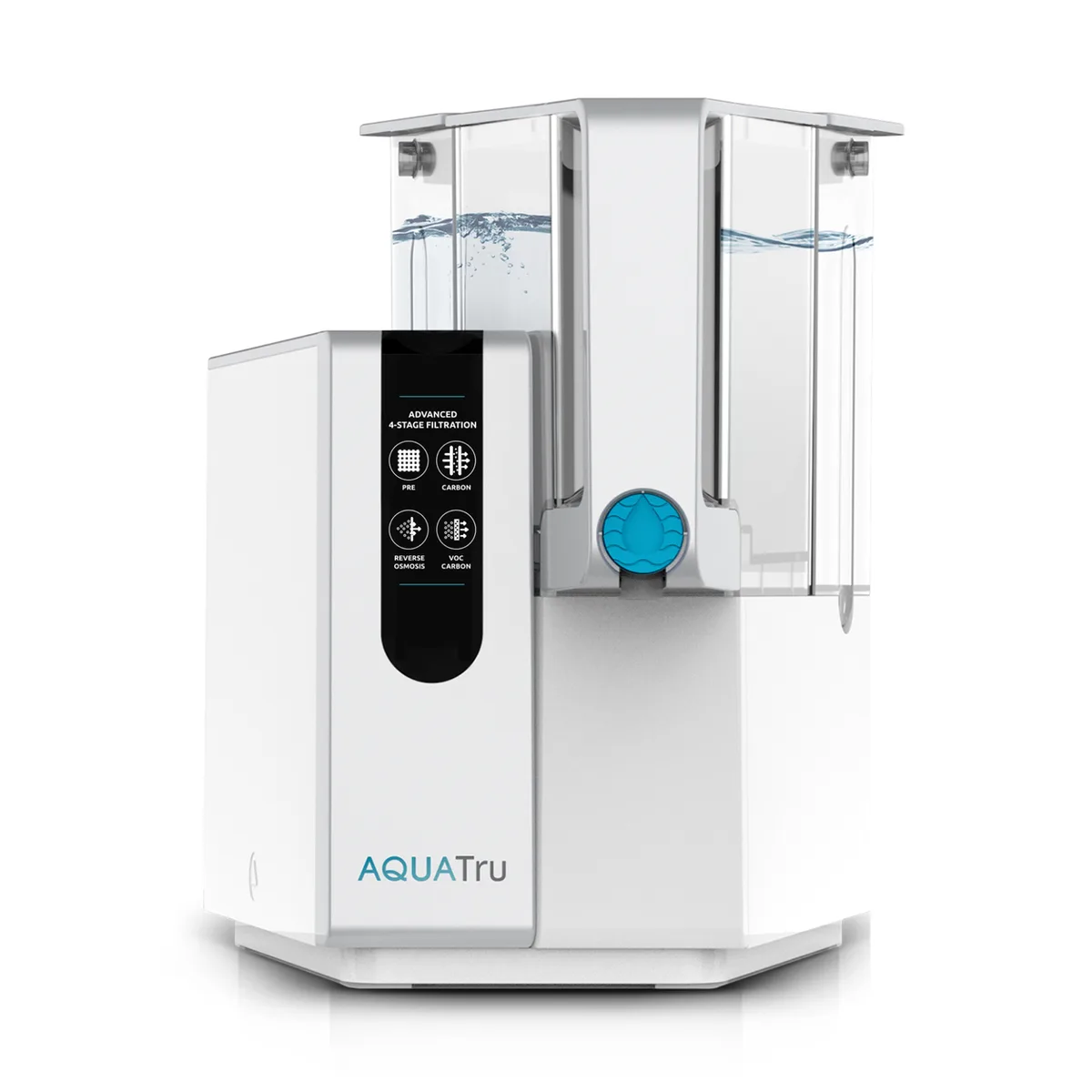
AquaTru Classic Countertop Reverse Osmosis Purifier
A plug-in countertop reverse osmosis purifier with a 0.75-gallon clean-water tank. Certified by IAPMO to NSF/ANSI 42, 53, 58 and 401, including PFOA/PFOS.
$475 list price
Find your hardness in grains to estimate the sodium a softener would add.
See which drinking-water filter fits your home.
Common questions
- Does softened water taste salty?
- Usually not. At typical hardness levels the added sodium is too low for most people to taste. Some people notice a slightly different, softer taste.
- Is softened water bad for your heart?
- For most people the sodium from softened water is small compared with food. If you've been told to limit sodium for a heart or blood pressure condition, ask your doctor and drink from an unsoftened tap or an RO filter.
- Can I cook with softened water?
- Yes. Pasta, soups and coffee are fine. If you're cutting sodium, use the unsoftened or RO tap for cooking too.
- Does reverse osmosis remove the sodium from softened water?
- Yes, RO removes most dissolved salts, including sodium. That's why a softener plus an RO filter at the kitchen sink is such a common setup.
- Is potassium chloride safe to drink?
- Yes for most people, but people with kidney problems or on certain heart medications are sometimes told to limit potassium. Check with a doctor if that applies to you.
Sources
Luke Ferguson · Founder & Editor
Luke reads the spec sheets, certification listings, city water reports and owner reviews, then writes up what matters and what doesn't. Reviews are research-based, not hands-on lab tests, and a commission never moves a pick.
How we review