

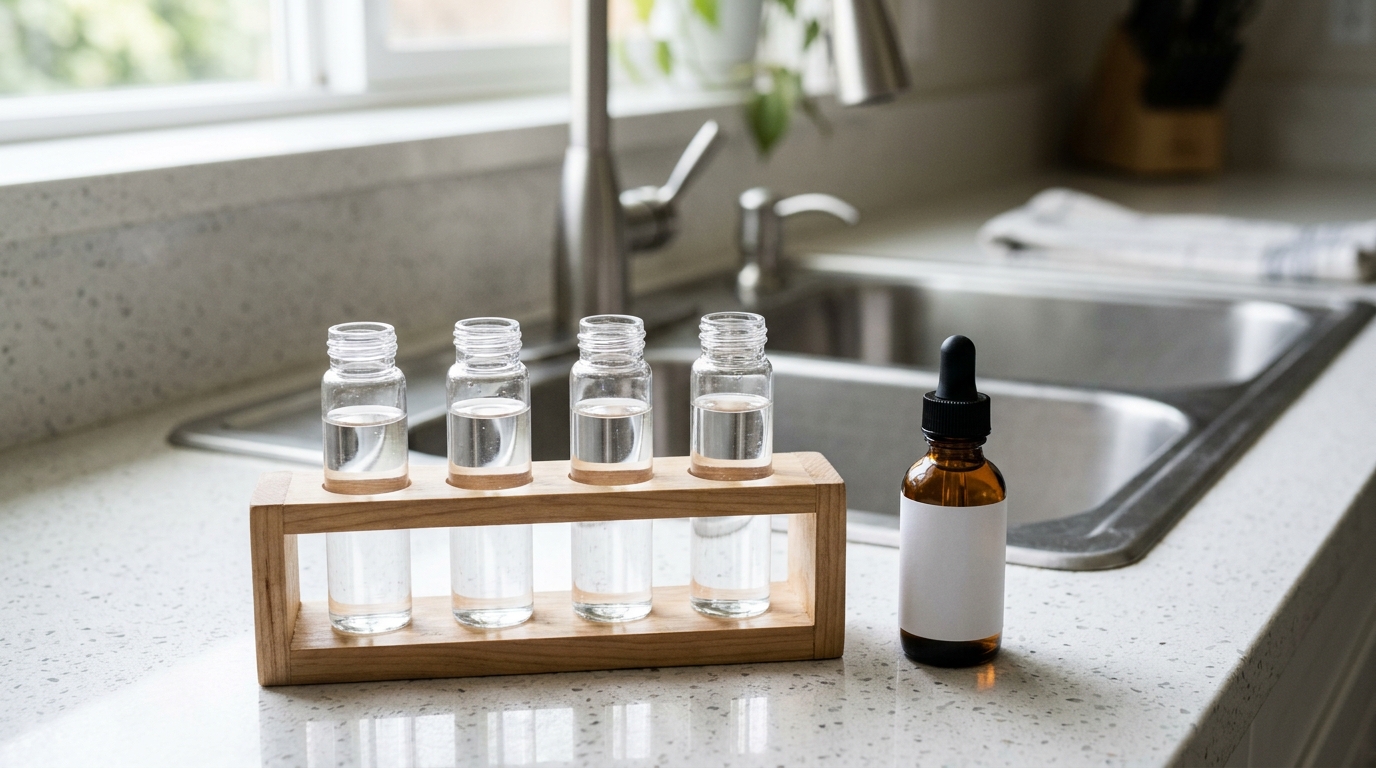
Why Private Wells Cannot Use Municipal Assumptions
Public water systems publish annual Consumer Confidence Reports regulated under the Safe Drinking Water Act. Private wells have no municipal oversight—and groundwater chemistry can shift dramatically even between neighboring parcels depending on well depth and aquifer strata.
Installing a standard carbon filter or ion-exchange softener without lab numbers is the fastest way to ruin expensive media. High ferric iron plugs resin beds, low pH (< 6.8) corrodes copper pipes and impairs iron removal, and biological contaminants require dedicated UV or chlorination rather than softening.
The 7 Lab Parameters That Govern Equipment Selection
An accredited mail-in well water panel typically costs $150–$250 and saves multiples of that by preventing mis-sized equipment. Ensure your lab panel reports these exact metrics:
| Parameter | Units | Action Threshold | Impact on System Sizing & Selection |
|---|---|---|---|
| Total Hardness | mg/L as CaCO₃ or GPG | > 7.0 GPG (120 mg/L) | Sets daily grain load; convert mg/L ÷ 17.1 = GPG |
| Ferrous vs. Ferric Iron | mg/L (ppm) | > 0.3 ppm | Adds 4×–5× GPG/ppm to softener load; > 3 ppm or ferric rust needs dedicated iron filter upstream |
| Manganese | mg/L (ppm) | > 0.05 ppm | Causes black staining; adds 4×–5× GPG/ppm compensated hardness |
| pH | pH units | < 6.8 or > 8.5 | Acidic water (< 6.8) needs calcite neutralizer before iron/softener stages |
| Hydrogen Sulfide (H₂S) | mg/L (ppm) / odor | Any rotten-egg smell | Requires aeration, catalytic carbon, or oxidizing filter (not a standard softener) |
| Coliform & E. coli Bacteria | Present / Absent | Any detection | Requires shock chlorination + certified UV disinfection after sediment pre-filtration |
| Nitrates, Arsenic & Lead | mg/L or µg/L | Any health-based detection | Requires certified NSF/ANSI 58 RO or specialized point-of-use media |
Ferrous (Clear-Water) vs. Ferric (Red-Water) Iron
Draw a clear glass of cold water directly from your well pressure tank or kitchen tap. If the water comes out crystal clear and turns orange/rusty after sitting for 15–30 minutes, you have dissolved ferrous (clear-water) iron. If it comes out visibly cloudy orange immediately, oxidized ferric iron is present.
Ion-exchange softeners can remove modest amounts of clear-water ferrous iron—remembering to apply each manufacturer's compensated hardness multiplier (for example, GE's 5× iron rule on the GXSH40V)—but ferric rust particles physically foul softener resin and must be trapped upstream with sediment and oxidation filtration.
Walk through well-water treatment pathways once your lab numbers arrive.
Enter your lab hardness (GPG), ferrous iron (ppm), and manganese (ppm).
Not sure what's in your tap or well water? Test it first.
Municipal CCRs summarize utility-wide averages and ranges, while private wells have no municipal report at all. Spending $15–$200 on the right test upfront prevents buying an undersized softener or unnecessary treatment stage.
1. Municipal Hardness Check (~$10–$15)
Use a drop-titration kit (such as a Hach 5-B) at your kitchen cold tap. Each drop equals 1 GPG—far more accurate than color dip strips.
2. Well Water, Lead, or PFAS Lab Panel
If you have a private well, pre-1986 plumbing, or want tap-level PFAS/iron data, order an accredited mail-in drinking-water lab test before sizing hardware.
Frequently Asked Questions
- Are free in-home water tests from water softener dealers reliable for private wells?
- In-home dealer tests usually measure basic hardness and TDS to pitch equipment, not EPA-certified bacteria, nitrates, arsenic, or exact iron speciation. Always get an independent, accredited laboratory report before buying a multi-thousand-dollar well treatment train.
- How often should private well owners re-test their water?
- The CDC and EPA recommend testing private wells annually for coliform bacteria, nitrates, total dissolved solids, and pH—and re-testing anytime taste, odor, staining, or nearby flooding/septic conditions change.
- Can a water softener remove rotten-egg sulfur smell from well water?
- No. Hydrogen sulfide gas passes straight through ion-exchange resin. Removing sulfur odor requires an air-injection oxidation (AIO) filter, catalytic carbon system, or chlorination/carbon setup depending on H₂S concentration.
Luke reads the spec sheets, NSF/WQA certification listings, municipal water quality reports and owner feedback so you don't have to, then writes it up in plain English with the trade-offs named. Reviews are research-based, not hands-on lab tests, and an affiliate commission never moves a pick.