


What does a water softener do?
A softener swaps the calcium and magnesium in your water for sodium (or potassium) using a tank of resin beads. That's called ion exchange. Every few days it rinses the beads with salty water from the brine tank to recharge them, which is why you add bags of salt.
The result is water that doesn't leave white spots, lets soap lather, and doesn't build scale in your water heater, dishwasher or pipes. Softeners that have been independently tested for this are certified to NSF/ANSI 44.
What a softener doesn't do: Nebraska's extension service lists bacteria, lead, nitrate, pesticides, sand and silt among the things softening doesn't remove, and it isn't designed for chlorine or PFAS either. Soft water isn't the same as clean water.
What does a water filter do?
"Water filter" covers a few different technologies, and each one is good at different things.
- Carbon filters (pitchers, faucet filters, under-sink and whole-house tanks) reduce chlorine, chloramine, bad taste and smell. Some carbon filters are also certified for lead, PFOA/PFOS and other chemicals under NSF/ANSI 53.
- Reverse osmosis (RO) pushes water through a very fine membrane and removes most dissolved solids, including lead, PFAS, fluoride, nitrate and arsenic. Look for NSF/ANSI 58.
- Sediment filters catch sand, rust flakes and grit, mostly on well water.
- UV systems kill bacteria and viruses, again mostly for wells.
Which one fixes my problem?
Find your problem in the left column. If you have two, you may need two systems.
| Your problem | Softener? | Filter? | What to look for |
|---|---|---|---|
| White spots, crusty faucets, scale | Yes | No | Salt-based softener (NSF/ANSI 44) |
| Soap won't lather, stiff laundry | Yes | No | Salt-based softener |
| Chlorine taste or smell | No | Yes | Carbon filter (NSF/ANSI 42) |
| Lead from old pipes | No | Yes | Carbon filter certified for lead (NSF/ANSI 53) or RO (NSF/ANSI 58) |
| PFAS ("forever chemicals") | No | Yes | RO or carbon certified for PFOA/PFOS |
| Fluoride or nitrate | No | Yes | Reverse osmosis |
| Orange or rust stains on a well | Sometimes | Usually | Lab test first, then an iron filter and/or softener |
Should I treat the whole house or just the kitchen sink?
Hardness affects every tap, shower and appliance, so a softener goes on the main line and treats the whole house.
Drinking-water problems are different. Almost all of your water goes to showers, toilets and laundry, so it's usually cheaper and more effective to treat only what you drink and cook with. An under-sink RO or certified carbon filter at the kitchen tap is where the strongest lead and PFAS certifications are. Whole-house carbon makes sense when the chlorine smell in the shower is the complaint.
Do I need both?
If your water is hard and you also want better-tasting or safer drinking water, yes. The usual setup is a softener on the main line plus a filter at the kitchen sink. A softener also helps an RO system: hardness is what scales up RO membranes, so softened water makes the membrane last longer.
If your city uses chlorine or chloramine and the water is hard, a combo system with a carbon tank in front of the softener treats both for the whole house. We compare one in SpringWell CSS1 vs. Aquasana Rhino.
What does each one cost?
Here are list prices for the systems we review, before installation. Whole-house systems usually need a plumber; point-of-use filters are often a DIY job.
| System | Price range | Yearly upkeep | Install |
|---|---|---|---|
| Salt softener | $519–$2,100 | Salt, about $75–$140 | Plumber, or confident DIY |
| Whole-house carbon filter | $517–$1,998 | Cartridges or media | Plumber |
| Filter + softener combo | About $2,625 | Salt plus filter media | Plumber |
| Under-sink RO | $231–$1,300 | Filters, about $47–$350 | Usually DIY |
| Countertop RO | $454–$475 | Filters, about $115–$130 | None, plugs in |
| Filter pitcher | $38–$110 | Filters, about $33 and up | None |
How do I decide in three steps?
First, find your hardness. Our guide to telling if you have hard water shows how. Second, read your city's water quality report for anything you want removed from drinking water, like lead or PFAS; our guide to reading your water report walks through it. Third, decide where you want treated water: everywhere (softener, whole-house filter) or just the kitchen tap (RO, under-sink filter).
Then compare the best water softeners or the best reverse osmosis systems.
A softener, a combo and a drinking-water filter we like
We may earn a commission when you buy through links on this page, at no extra cost to you. How we make money
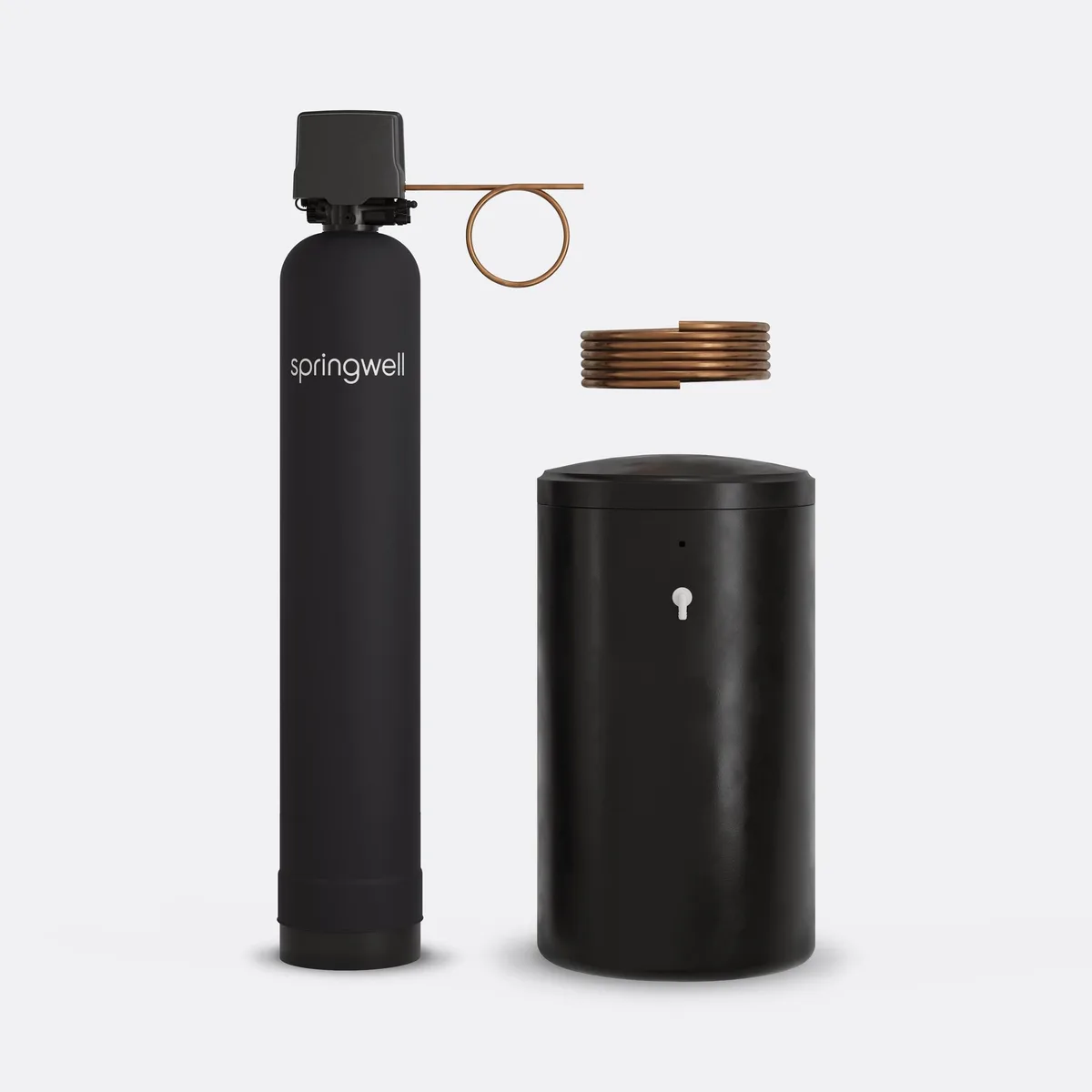
SpringWell SS1 Salt-Based Water Softener
A 32,000-grain salt softener for the whole house. It uses tougher 10% crosslink resin and an 11 GPM valve that cleans itself only when it needs to.
$1,890 list price
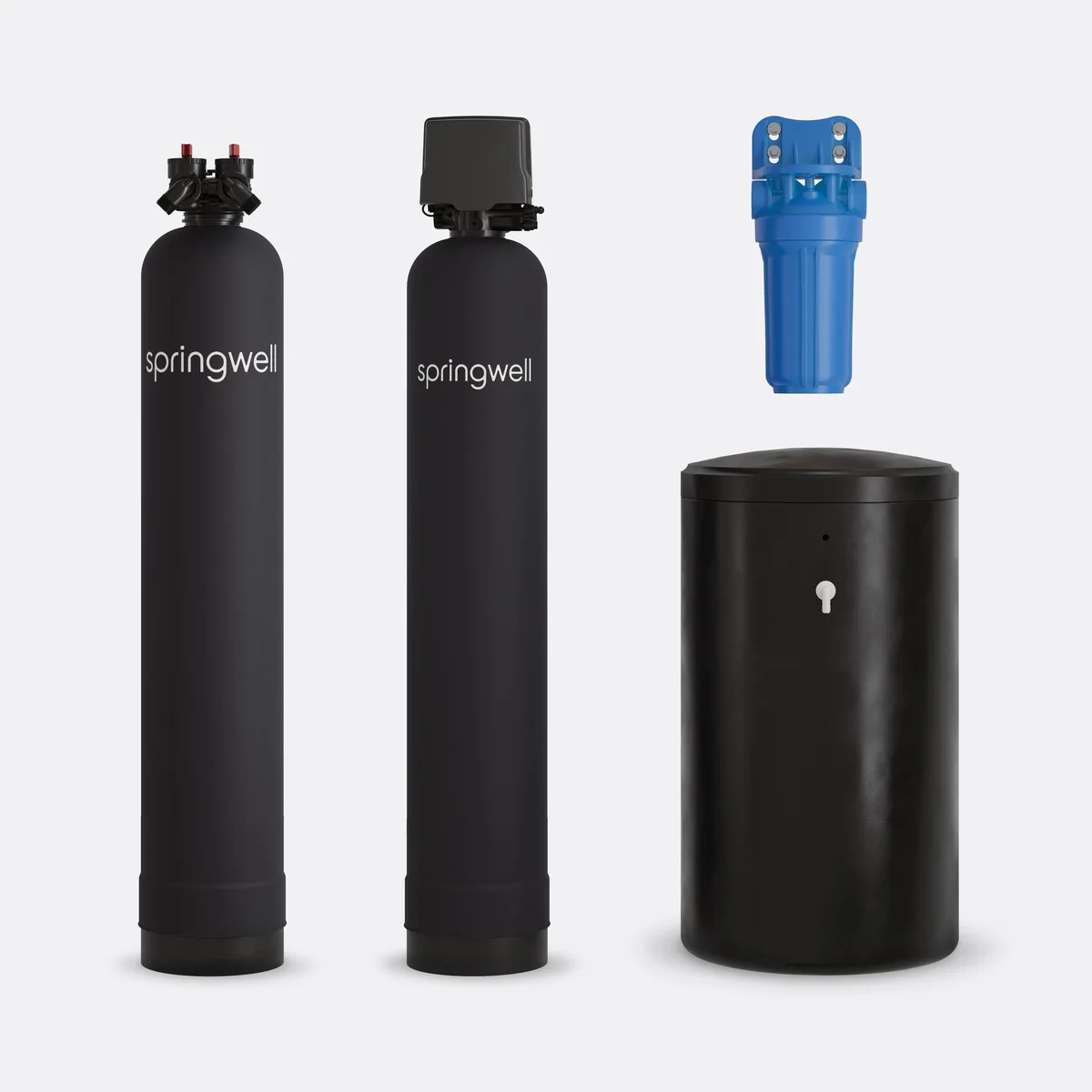
SpringWell CSS1 Whole-House Filter & Softener Combo
Two tanks that treat the whole house: a carbon filter for chlorine and chloramine (the CF1) followed by a 32,000-grain salt softener (the SS1).
$2,625 list price
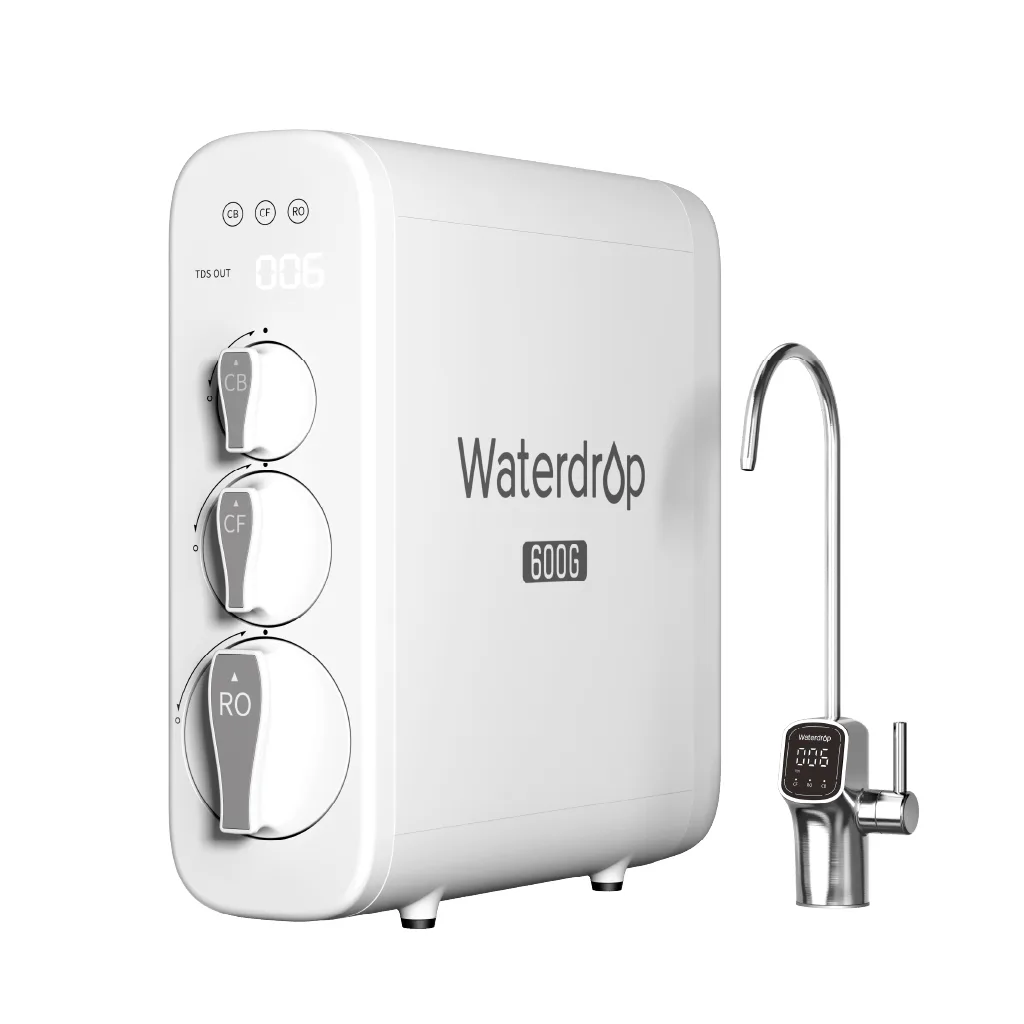
Waterdrop G3P600 Tankless Reverse Osmosis System
A slim, tankless under-sink reverse osmosis system with a pump, a 2:1 clean-to-drain ratio and a faucet that shows water quality. Certified to NSF/ANSI 58 and to 53 for PFOA/PFOS.
$539 list price
Three questions and we'll point you to the right kind of system.
Compare what each option costs to buy, install and run.
Common questions
- Does a water softener make water safe to drink?
- Softened water is fine to drink for most people, but a softener isn't a purifier. It doesn't remove chlorine, lead, PFAS or bacteria. If those are a concern, add a certified filter at the kitchen sink.
- Does a water filter soften water?
- Carbon filters don't. Reverse osmosis does remove hardness from the water it treats, but only at the one tap it's connected to, so it won't stop scale in your shower, dishwasher or water heater.
- Which should I install first?
- Whichever problem bothers you more. If it's spots and scale, start with the softener. If it's what's in your drinking water, start with a certified filter at the sink; it's cheaper and usually a DIY job.
- Can a water softener remove iron?
- Small amounts of dissolved (clear-water) iron, yes, if you size the softener for it. Rust-colored iron or higher levels need a dedicated iron filter in front of the softener.
- Is a salt-free conditioner a softener?
- Not really. It changes how minerals form scale inside pipes but leaves the hardness in the water, so you'll still see spots and the soap won't lather any better.
Sources
Luke Ferguson · Founder & Editor
Luke reads the spec sheets, certification listings, city water reports and owner reviews, then writes up what matters and what doesn't. Reviews are research-based, not hands-on lab tests, and a commission never moves a pick.
How we review