

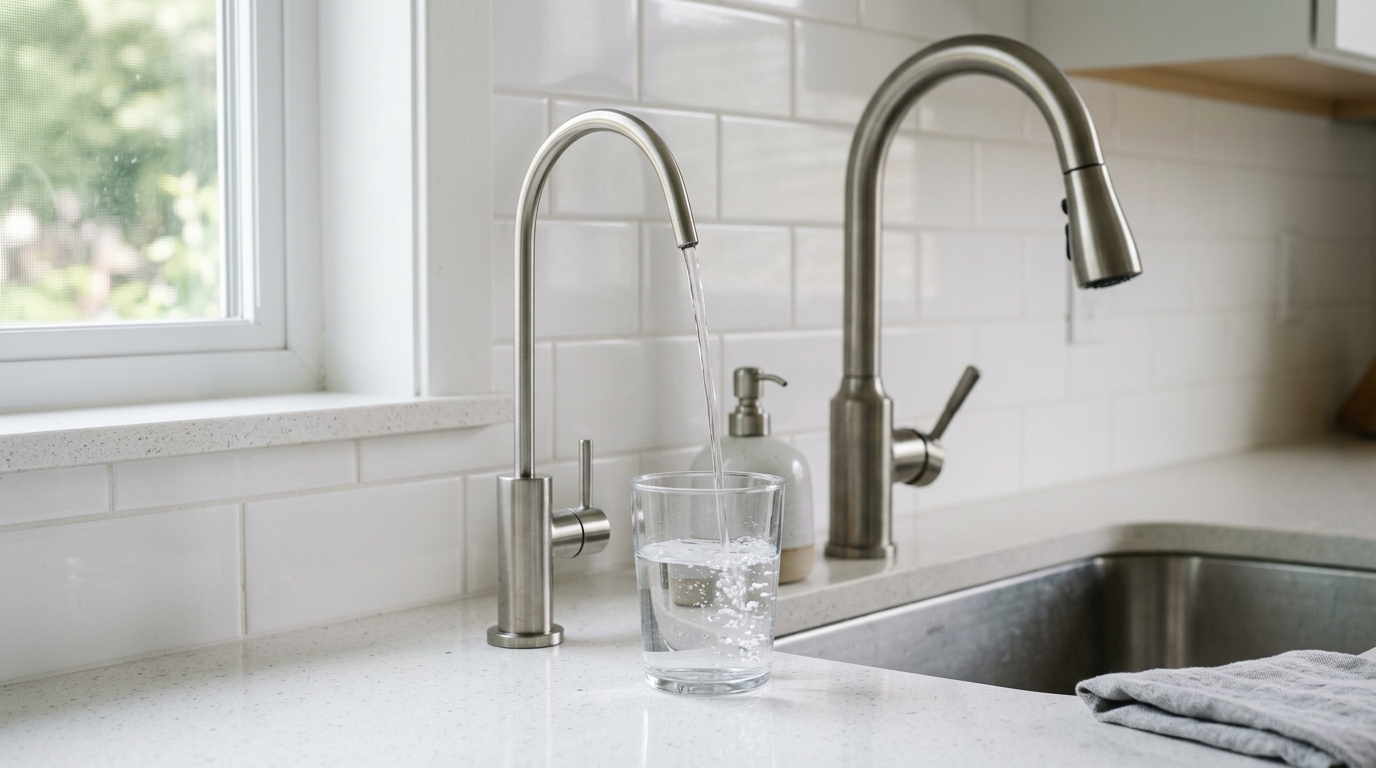
Decoding PFAS Certifications: NSF 53, NSF 58, and P473
Marketing claims like 'reduces 99% of forever chemicals' mean little without independent third-party certification from NSF International, WQA, or IAPMO. Because PFAS molecules are chemically stubborn and regulated at parts-per-trillion (ppt) levels, always check the exact standard on the product's Performance Data Sheet.
Historically, NSF Protocol P473 certified filters to reduce PFOA and PFOS below the EPA's earlier 70 ppt advisory threshold. Modern NSF/ANSI 53 (adsorptive carbon) and NSF/ANSI 58 (reverse osmosis) updates now incorporate stricter PFAS reduction testing aligned with tighter federal drinking-water standards.
| Treatment Technology | Relevant PFAS Certification | Typical PFAS Reduction | Best Use Case |
|---|---|---|---|
| Under-Sink Reverse Osmosis (e.g., Aquasana AQ-RO-3) | NSF/ANSI 58 + NSF/ANSI 53 / P473 | High (broad short- & long-chain PFAS) | Homeowners wanting maximum drinking/cooking tap protection |
| Countertop Reverse Osmosis (e.g., Bluevua RO100ROPOT-UV) | NSF/ANSI 58 tested | High (membrane + carbon stages) | Renters & condos with zero plumbing modifications |
| Certified Carbon Block Filter | NSF/ANSI 53 (PFAS claim listed) | High when fresh (requires strict on-time swaps) | Budget tap or refrigerator protection (verify exact listing) |
| Standard Carbon Pitcher (NSF 42 only) | NSF/ANSI 42 (taste/chlorine only) | Unverified / Low | Chlorine taste only — NOT a PFAS solution |
| Whole-House Salt Water Softener | NSF/ANSI 44 (hardness only) | None | Hard-water scale only — does NOT remove PFAS |
Why Kitchen Point-of-Use Beats Whole-House for Most Homes
Public health exposure to PFAS in tap water occurs overwhelmingly through ingestion (drinking water, coffee, soup, infant formula), not through showering or washing dishes. Treating 100% of household water for parts-per-trillion PFAS requires massive catalytic carbon beds with long empty-bed contact times—often $2,500–$5,000+ installed.
By contrast, a certified under-sink RO system (~$399–$625 installed) or plug-and-play countertop RO (~$429, $0 install) focuses filtration precisely where you consume water while also removing lead, arsenic, fluoride, and dissolved solids.
Why On-Time Filter Changes Matter More for PFAS
Activated carbon captures PFAS by adsorption—meaning contaminants stick to microscopic pores inside the carbon block. Once those sites saturate, PFAS can break through into filtered water without any noticeable change in taste or odor.
Set a recurring calendar reminder for every cartridge stage (typically every 6–12 months for carbon blocks and 12–24 months for RO membranes) so certified performance holds year-round.
See verified homeowner and renter PFAS/lead treatment paths.
Look up exact part codes and download .ics calendar reminders.
Frequently Asked Questions
- Does boiling tap water remove PFAS?
- No—boiling water actually concentrates PFAS because pure water evaporates as steam while PFAS compounds remain behind in the pot. Always use certified filtration (NSF/ANSI 58 RO or PFAS-certified NSF 53 carbon) instead.
- Do whole-house water softeners remove PFOA or PFOS?
- No. Standard cation-exchange water softeners remove positively charged calcium and magnesium ions, whereas PFAS compounds require activated carbon adsorption, reverse osmosis membranes, or specialized anion-exchange resin.
- How can I check if PFAS was detected by my local water utility?
- Look up your utility's Public Water System ID (PWS ID) in its annual Consumer Confidence Report or EPA UCMR 5 monitoring database. For example, our Tampa water report (FL6290327) documents UCMR PFAS detections alongside utility SIX upgrades.
Luke reads the spec sheets, NSF/WQA certification listings, municipal water quality reports and owner feedback so you don't have to, then writes it up in plain English with the trade-offs named. Reviews are research-based, not hands-on lab tests, and an affiliate commission never moves a pick.