

Best Salt-Free Water Softeners (2026)
By Luke FergusonUpdated Nov 27, 2026Research-based, not lab-tested
"Salt-free water softener" is really a marketing name for a water conditioner: the media changes hardness minerals into tiny crystals that don't stick to pipes and heaters, but the minerals stay in the water. That's a great trade if your goal is protecting a water heater and plumbing with no salt, drain or electricity — and the wrong buy if you want slippery-soft water and fewer spots. Here are the two conditioners worth buying, and the certified salt softener to get if you really need soft water.
Paid links: we may earn a commission at no cost to you. How we make money
The best salt-free water softener for most city-water homes is the SpringWell FutureSoft FS1, a 12 GPM template-assisted crystallization (TAC) conditioner that needs no salt, drain or electricity. For moderate hardness under 15 GPG, Aquasana's Salt-Free Conditioner costs less. Remember: salt-free systems prevent scale but don't remove hardness, so water won't feel soft.
Our picks at a glance
| Model | List price | Flow rate | Upkeep / yr | Best for |
|---|---|---|---|---|
| SpringWell FutureSoft FS1 Salt-Free Water Conditioner | $2,100 | 12 GPM | ~$55 | Best overall |
| Aquasana Whole-House Salt-Free Water Conditioner | $1,758 | 7 GPM | ~$148 | Best for moderate hardness |
| GE GXSH40V 40,000-Grain Water Softener | $649 | 40,000 gr · 9.5 GPM | ~$105 | Best if you really need soft water |
List prices as last checked on the date above. Most of these brands run sales constantly, so the buttons show today's actual price.
Key takeaways
- Salt-free = scale prevention, not softening. Hardness, TDS and soap lather stay the same; you protect pipes and heaters, not skin and glassware.
- Check the limits first: TAC media tolerates essentially no iron, manganese or sulfur, so most well water needs pre-treatment. Test your water before buying.
- Neither conditioner here carries a third-party scale-reduction certification; the salt softener pick is NSF/ANSI 44 certified.
- If you want truly soft water, a salt-based softener is still the only way — see our best water softeners.
1. Best overall
SpringWell FutureSoft FS1 Salt-Free Water Conditioner
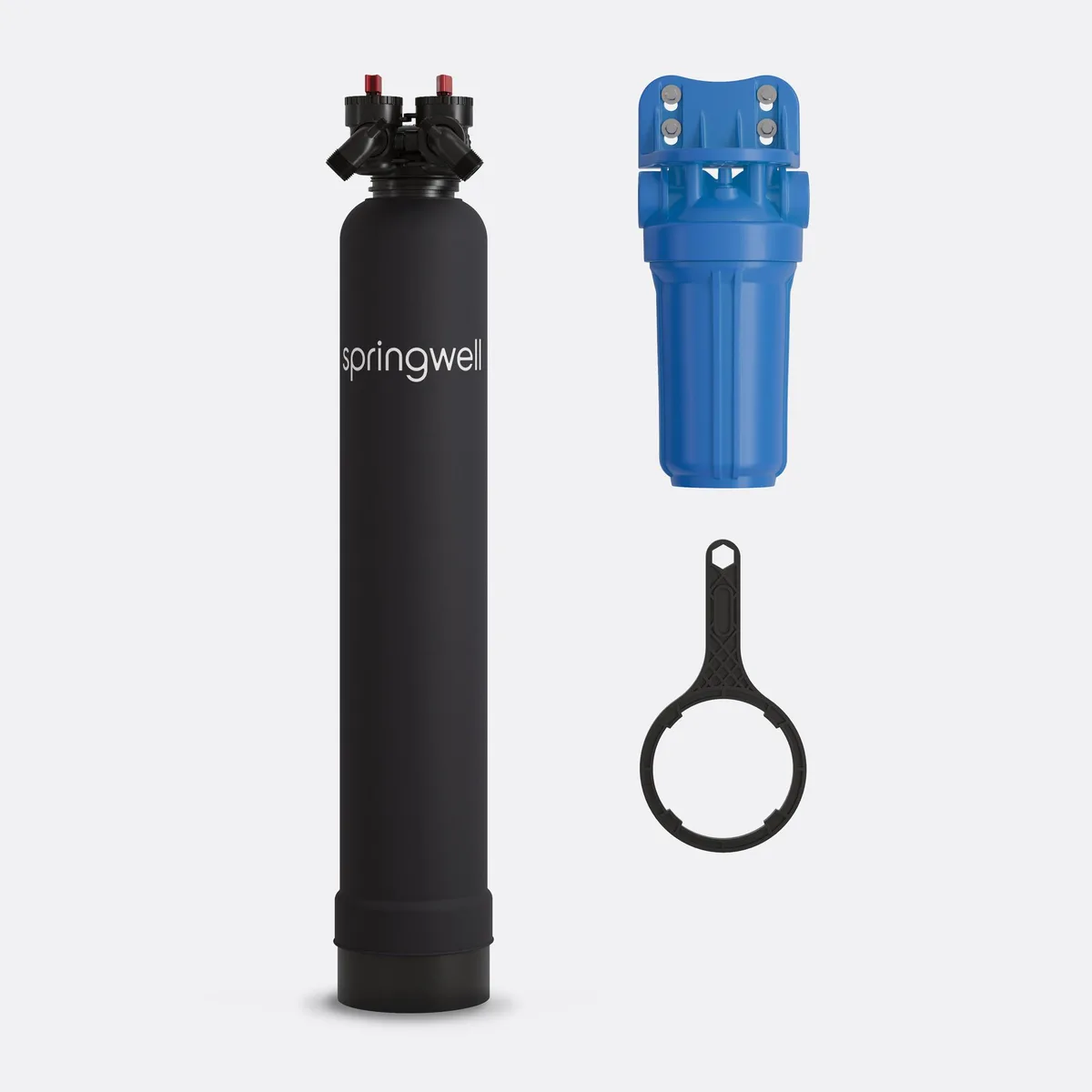
The FutureSoft is the strongest salt-free conditioner we can recommend on paper: a 12 GPM rated flow, a high hardness ceiling (75 GPG per SpringWell's spec) and a lifetime defect warranty that explicitly covers the media. It needs no salt, power, drain or backwash, so installation is a simple bypass loop. Two honest caveats: SpringWell's current claim is "up to 95%" scale prevention with no third-party certification, and it tolerates zero iron or manganese, so it's a city-water product. It was also backordered to mid-December when we checked.
- List price
- $2,100
- Capacity / flow
- 12 GPM
- Upkeep / yr
- ~$55
- No salt, drain line, electricity, backwash or wastewater
- High hardness ceiling (75 gpg max per SpringWell spec) and 12 GPM rated service flow
- Lifetime defect warranty that explicitly covers the FutureSoft media
- Conditions rather than softens: hardness stays in the water, so no 'soft water' feel or soap savings
- Zero tolerance for iron, manganese, H2S, copper or oil; well water usually needs pre-treatment
- No third-party scale-reduction certification, and the current claim is only 'up to 95%' scale prevention
2. Best for moderate hardness
Aquasana Whole-House Salt-Free Water Conditioner
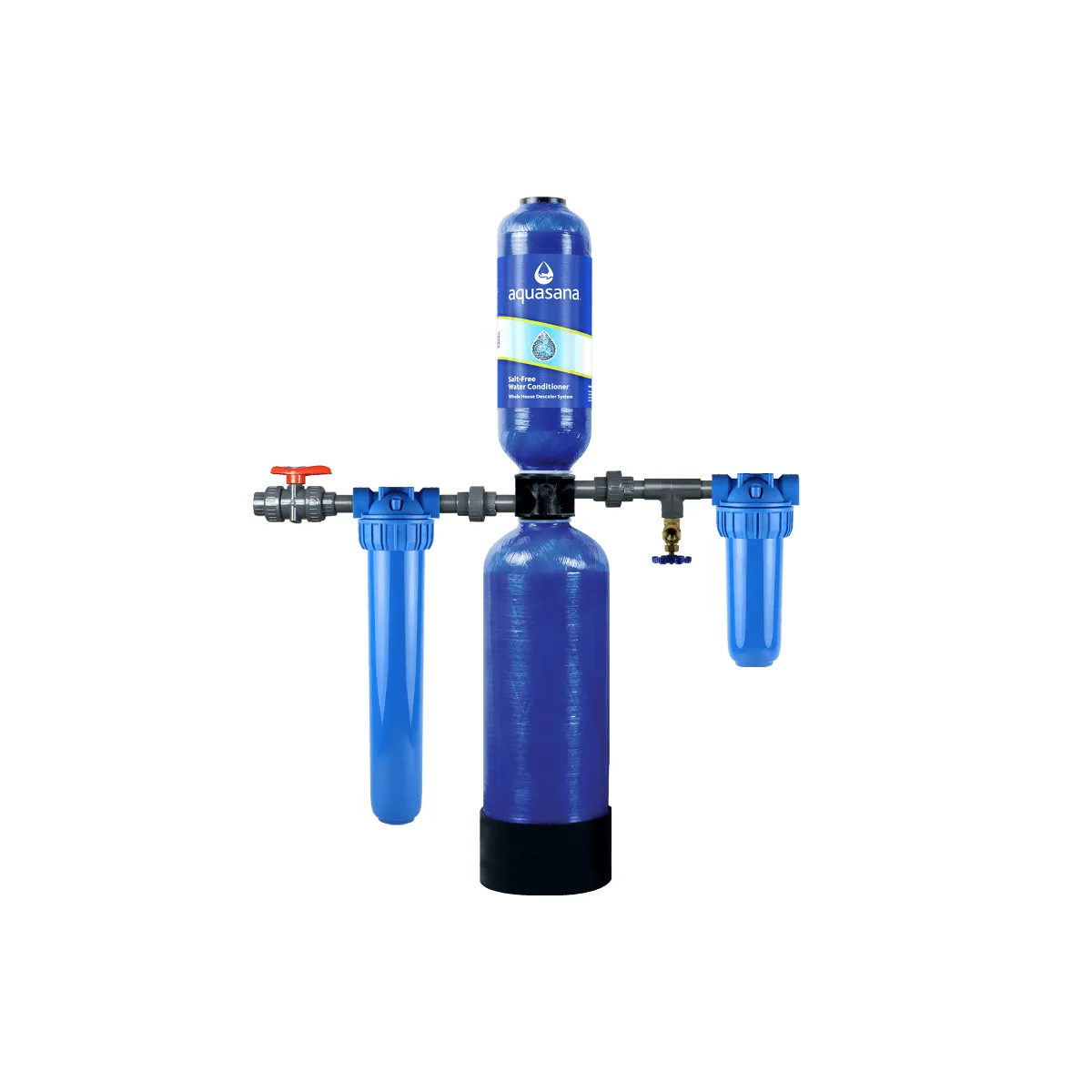
Aquasana's conditioner is the better fit if your water is under 15 GPG and you already own (or want) an Aquasana Rhino whole-house filter — it's designed to sit right after it. It's rated 7 GPM with a 1,000,000-gallon / 10-year tank and ships with pre- and post-filters. The catch is upkeep: the 20-inch pre-filter needs changing about every two months, which pushes yearly cartridge costs to roughly $148 at list. Aquasana's sale prices (often 40–60% off) make the upfront cost far lower than its MSRP.
- List price
- $1,758
- Capacity / flow
- 7 GPM
- Upkeep / yr
- ~$148
- No salt, electricity, drain or backwash; tank rated 10 years / 1,000,000 gallons
- Ships with pre- and post-filters and an assembled install kit for 3/4in or 1in lines
- 10-year limited warranty plus a 90-day satisfaction guarantee
- Conditions rather than softens, and is only suited to water under 15 gpg hardness
- A pre-filter change every 2 months pushes cartridge costs to about $148/yr
- 7.0 GPM rated flow (15.3 GPM peak) and no named third-party certification for scale reduction
3. Best if you really need soft water
GE GXSH40V 40,000-Grain Water Softener
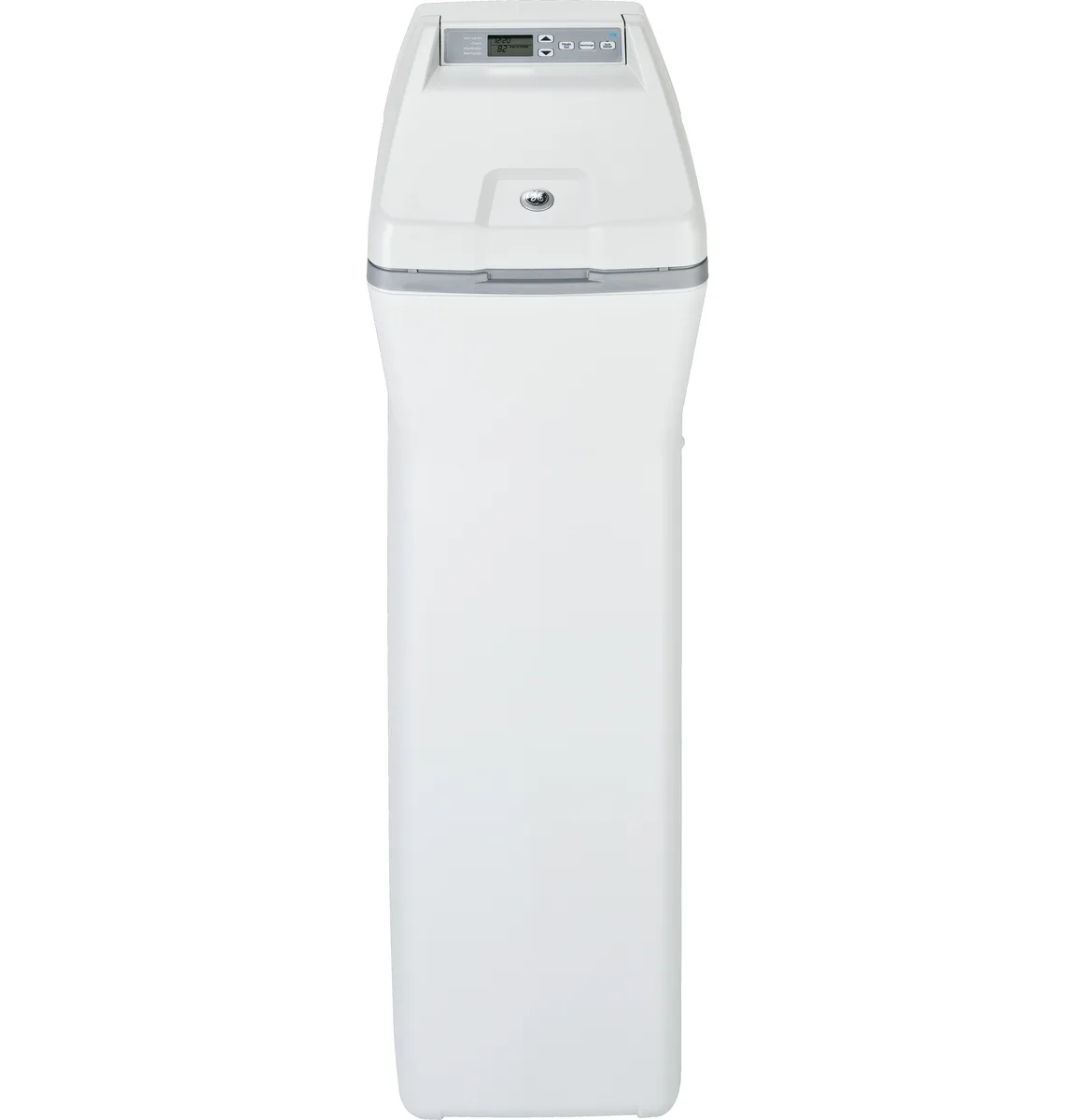
If the reason you're shopping is spotty glasses, dry skin or soap scum, a conditioner won't fix it — you need ion exchange. The GE GXSH40V is a sensible, widely stocked option: 40,000 grains, 9.5 GPM, and certified to NSF/ANSI 44 for hardness reduction and salt efficiency. It does need salt, a drain and an outlet, so run the 5-year cost calculator to compare it against a conditioner.
- List price
- $649
- Capacity / flow
- 40,000 gr · 9.5 GPM
- Upkeep / yr
- ~$105
How to choose the right one
Start with your hardness number. City water customers can look it up on our water quality pages or in their utility's annual report; convert mg/L to grains per gallon with the hardness converter. Under about 7 GPG, you may not need anything. Between 7 and 15 GPG, either conditioner here works. Above 15 GPG, the FutureSoft's higher ceiling or a salt softener makes more sense.
Then decide what you're actually trying to fix. Protecting a tankless water heater and plumbing? A conditioner is a clean, low-maintenance answer. Want soft-feeling water and fewer spots? Only a salt softener does that — size one with the softener size calculator. Our guide to salt vs. salt-free softeners walks through the trade-offs in more detail.
Frequently asked questions
- Do salt-free water softeners actually work?
- They work at what they do — reducing scale buildup — but they don't soften water. TAC media turns calcium and magnesium into microscopic crystals that stay suspended instead of sticking to surfaces. Hardness readings, soap lather and water spots are largely unchanged, and none of the conditioners here has a third-party scale-reduction certification.
- Is a salt-free water softener the same as a water softener?
- No. A true water softener uses ion exchange to remove calcium and magnesium, which requires salt (or potassium) and a drain. A salt-free system is a conditioner. It's often marketed as a softener, but the water still tests hard.
- Can I use a salt-free softener on well water?
- Usually not without pre-treatment. Both conditioners here list very low or zero tolerance for iron, manganese and hydrogen sulfide, which are common in wells. Test the well first, then treat iron with a dedicated well water filter.
- Which costs less over five years, salt or salt-free?
- It depends on hardness and household size. Conditioners have no salt or water-waste costs but need pre-filter changes; salt softeners use salt and some regeneration water. Plug your numbers into the 5-year cost calculator to compare real totals.
Luke reads the spec sheets, NSF/WQA certification listings, municipal water quality reports and owner feedback so you don't have to, then writes it up in plain English with the trade-offs named. Reviews are research-based, not hands-on lab tests, and an affiliate commission never moves a pick.