

Best Water Filters for Well Water (2026)
By Luke FergusonUpdated Nov 27, 2026Research-based, not lab-tested
Well water is where filters get expensive fast — and where buying the wrong one is most common. The right system depends entirely on what's in your well: iron, manganese, hydrogen sulfide (rotten-egg smell), hardness and bacteria each need different treatment. So the first pick on this page isn't a product, it's a lab test. Once you have numbers, these are the systems worth looking at.
Paid links: we may earn a commission at no cost to you. How we make money
Test your well first. For iron, manganese and sulfur smell, the best well water filter is the SpringWell WS1, an air-injection system with no chemicals or cartridges. For light iron (up to 3 ppm) on a budget, the iSpring WGB32BM is a cartridge alternative. Neither removes bacteria or hardness; add UV such as the VIQUA VH410M and a softener.
Our picks at a glance
| Model | List price | Flow rate | Upkeep / yr | Best for |
|---|---|---|---|---|
| SpringWell WS1 Whole House Well Water Filter System | $2,625 | 12 GPM | — | Best overall |
| iSpring WGB32BM 3-Stage Whole House Iron & Manganese Filter | $535.99 | 8 GPM | ~$159.99 | Best budget for light iron |
| VIQUA VH410M Whole Home UV System with UV Sensor | $1,310 | 14 GPM | ~$160 | Best UV for bacteria |
| AFWFilters Fleck 5600SXT 48,000-Grain Water Softener (10% crosslink resin) | $805 | 48,000 gr · 14 GPM | ~$115 | Best softener for well water |
List prices as last checked on the date above. Most of these brands run sales constantly, so the buttons show today's actual price.
Key takeaways
- Test before you buy. Iron, manganese, H2S, hardness, pH and bacteria decide the system. See our well testing guide.
- Air-injection systems (SpringWell WS1) suit moderate iron and sulfur and need a drain, power and a pump that supports backwash.
- Cartridge iron filters (iSpring WGB32BM) are cheap and simple but top out around 3 ppm iron and lower flow.
- None of the iron filters here are certified by NSF, WQA or IAPMO — treat the iron/sulfur limits as manufacturer claims. UV is the only one that disinfects.
1. Best overall
SpringWell WS1 Whole House Well Water Filter System
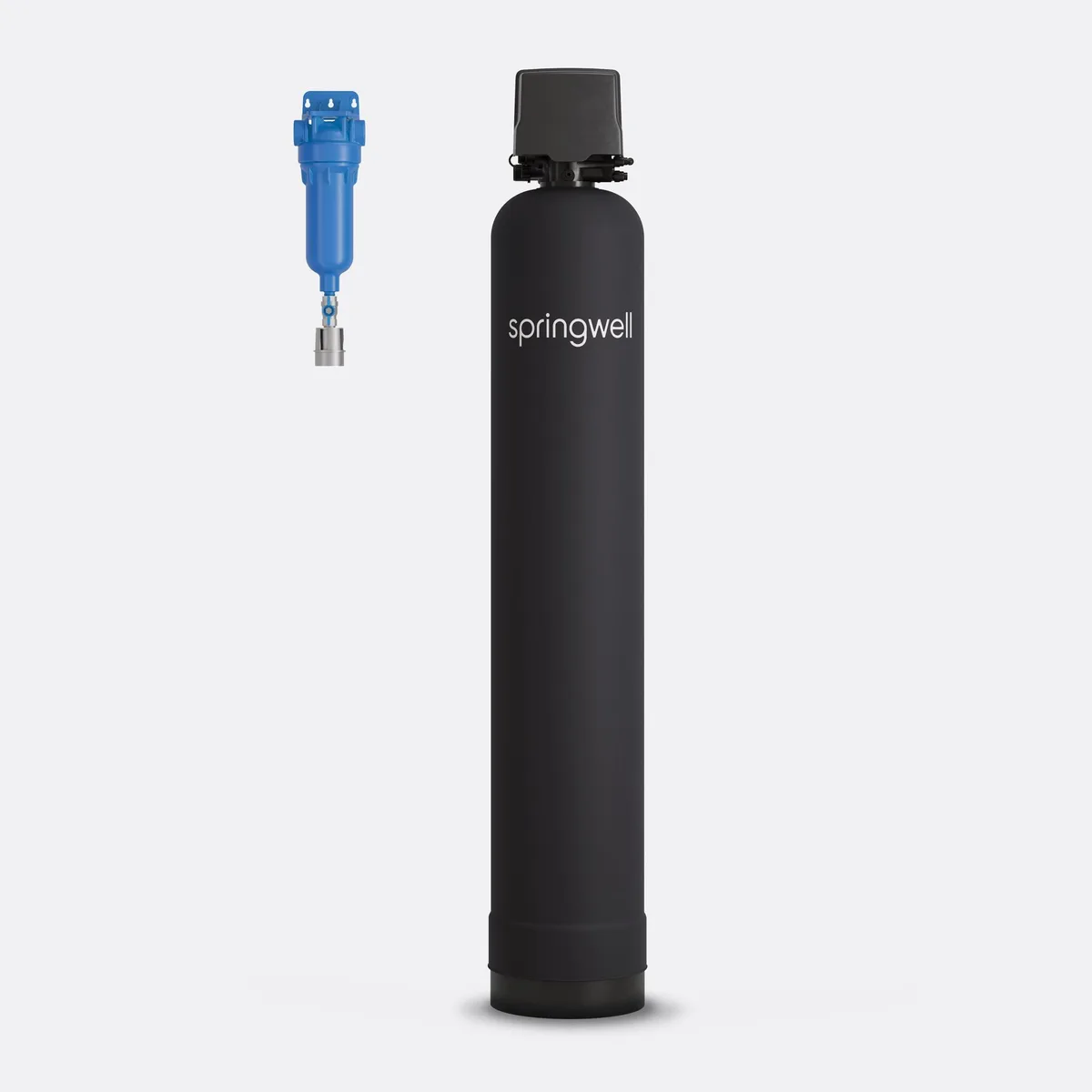
SpringWell's WS1 uses air injection and greensand fusion media to oxidize and trap iron, manganese and hydrogen sulfide in a single tank, then backwashes itself nightly — no salt, chemicals or cartridges. It's rated 12 GPM for 1–4 bathroom homes. SpringWell requires a water test before shipping (a $169 kit, refunded with purchase), which is the right instinct. Its published iron and H2S limits are inconsistent between SpringWell sources, so confirm your numbers with them.
- List price
- $2,625
- Capacity / flow
- 12 GPM
- Upkeep / yr
- ~$0
- Chemical-free air-injection oxidation handles iron, manganese and sulfur odor in one tank
- No salt, cartridges or chemical refills; automatic nightly backwash
- Lifetime defect warranty on tank and valve, 5 years on the electronic head
- Published iron/H2S limits are inconsistent and not third-party verified
- Requires a drain, power and a well pump that can supply ~5 GPM for backwash
- Expensive at regular price, and SpringWell requires a water test before shipping
2. Best budget for light iron
iSpring WGB32BM 3-Stage Whole House Iron & Manganese Filter
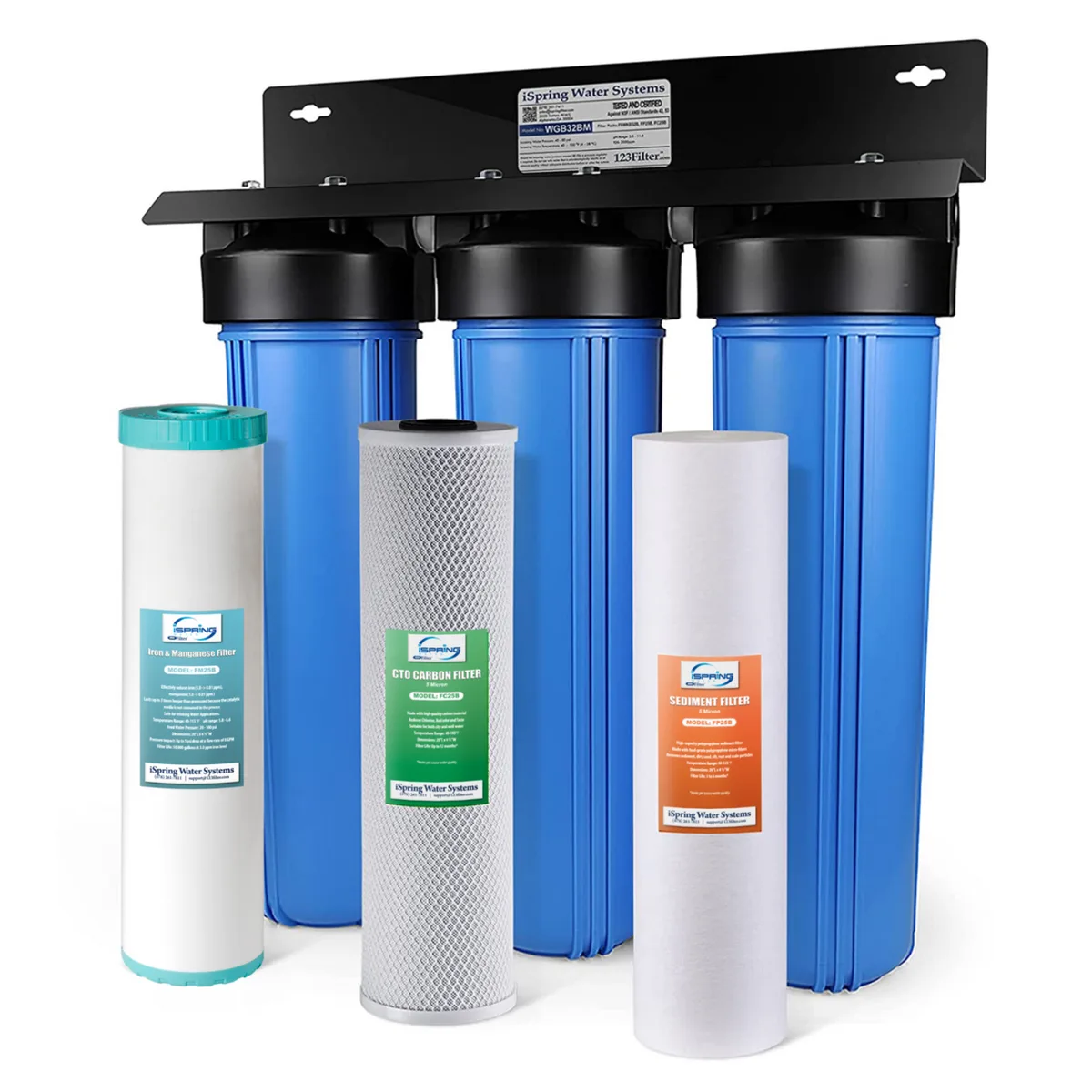
For wells with light iron and manganese staining — up to 3 ppm iron and 1 ppm manganese — iSpring's WGB32BM is a three-cartridge system you can install and maintain yourself for a fraction of an air-injection system's cost. Watch the flow: the iron cartridge is rated for 4–8 GPM, well below the "up to 15 GPM" marketing figure, and its life drops to about 50,000 gallons at 3 ppm iron.
- List price
- $535.99
- Capacity / flow
- 8 GPM
- Upkeep / yr
- ~$159.99
- Adds iron/manganese reduction to a standard 3-stage Big Blue setup
- No backwash drain, electricity or salt needed
- Standard 20 x 4.5 in cartridges keep the hardware upgradeable
- No third-party certification for any stage
- Iron cartridge rated for only 4-8 GPM, well below the marketed 15 GPM
- Handles only light iron (3 ppm) and manganese (1 ppm); higher levels shorten cartridge life or need a backwashing filter
3. Best UV for bacteria
VIQUA VH410M Whole Home UV System with UV Sensor
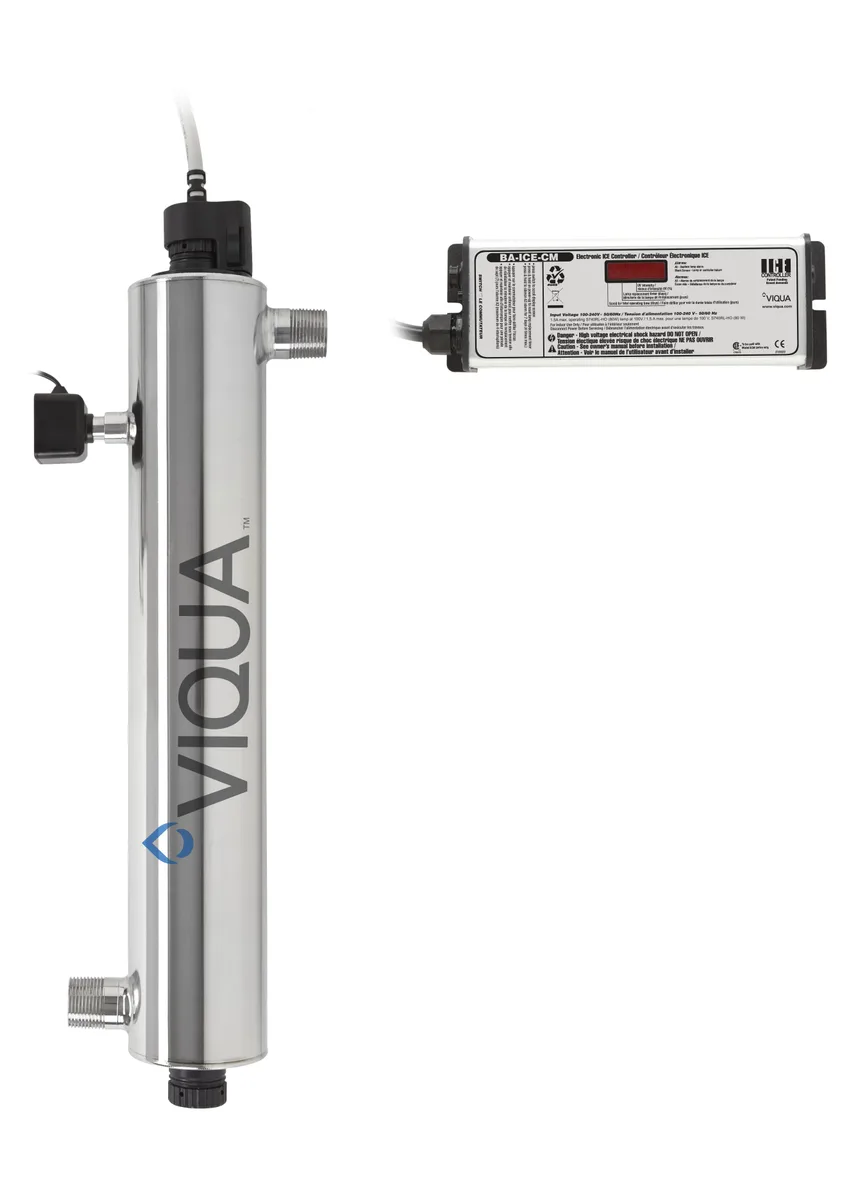
Iron filters don't disinfect. If your test shows coliform bacteria, a whole-home UV system goes last in the treatment train. VIQUA's VH410M is rated 14 GPM at the 40 mJ/cm² dose and includes a UV-intensity sensor that alarms when the lamp or sleeve needs attention. Be aware the plain VH410M is not NSF-listed (the VH410M-V variant is NSF/ANSI 55 Class B), it needs a 5-micron pre-filter, and the lamp costs about $160 a year.
- List price
- $1,310
- Capacity / flow
- 14 GPM
- Upkeep / yr
- ~$160
- Real-time 254 nm UV-intensity sensor with alarm and solenoid output (lamp-timer-only VH410 lacks this)
- High-output lamp gives 14 GPM at 40 mJ/cm2 from a compact 23.5 in. chamber
- 10-year chamber / 3-year controller warranty
- Not NSF/ANSI 55 certified as sold; only the VH410M-V variant is listed, and only Class B
- Requires separate 5-micron pre-filter and pretreatment for iron, hardness >7 gpg or manganese
- ~$160/yr genuine lamp cost and needs continuous power
4. Best softener for well water
AFWFilters Fleck 5600SXT 48,000-Grain Water Softener (10% crosslink resin)
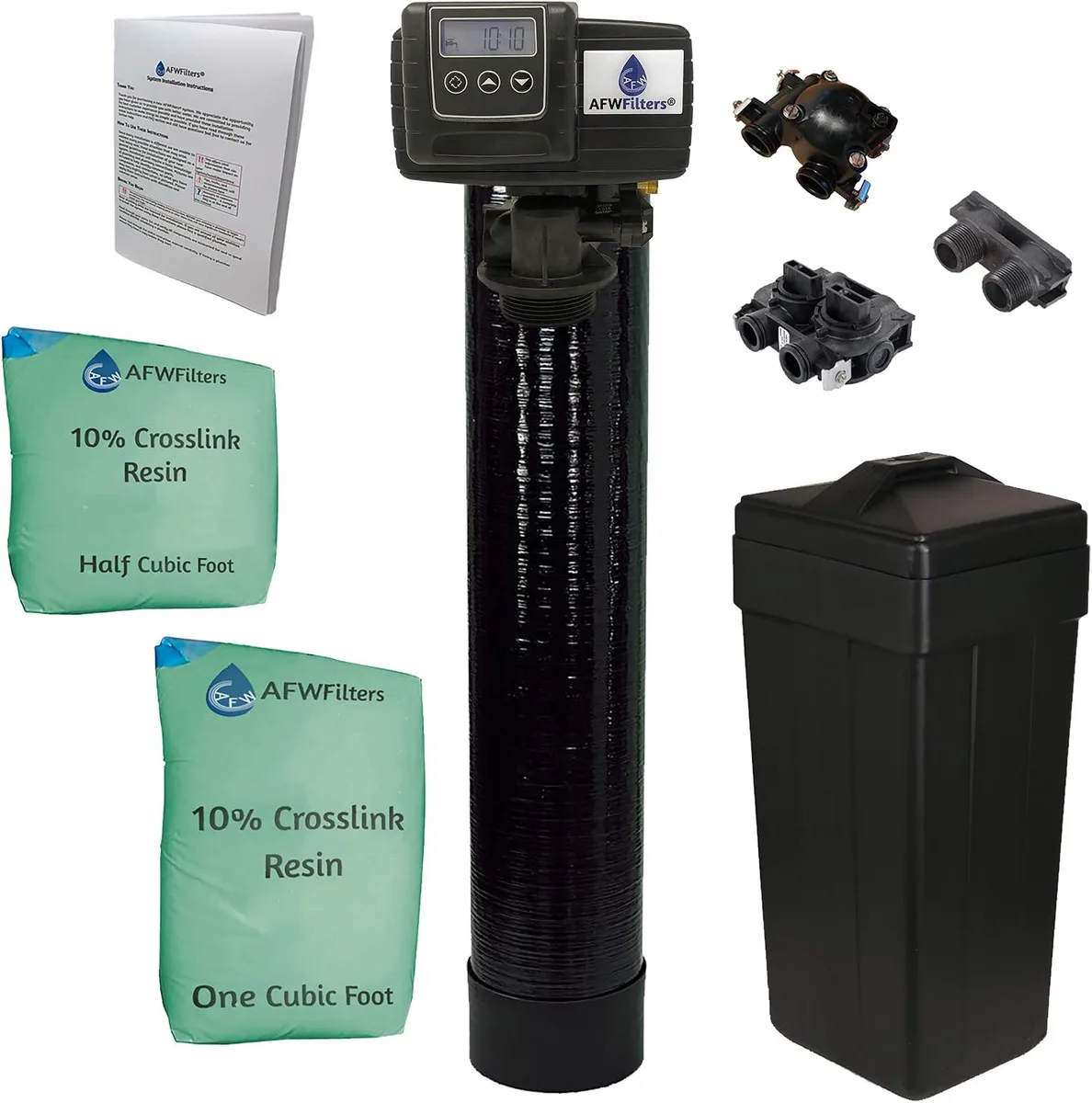
Hard well water still needs a softener after the iron filter. The Fleck 5600SXT is a common choice on wells because the valve is serviceable by almost any water tech. Program it for your hardness plus your remaining iron (each ppm of clear-water iron adds to the sizing) — the softener size calculator handles that.
- List price
- $805
- Capacity / flow
- 48,000 gr · 14 GPM
- Upkeep / yr
- ~$115
- Industry-standard Fleck 5600SXT metered valve; parts and service techs are widely available
- 1.5 cu ft of 10% crosslink resin in a 10x54 tank with 14 GPM max flow for about $805
- Demand-initiated (metered) regeneration with 48-hour internal power backup
- No NSF/ANSI 44 or WQA certification and no published salt-efficiency data
- Reseller-assembled: specs, resin grade and support vary by seller and listing
- The owner must program hardness, capacity and brine settings correctly to get good efficiency
How to choose the right one
Order an accredited lab test that covers iron, manganese, hardness, pH, hydrogen sulfide, TDS and total coliform bacteria. Our well testing guide explains which panel to buy. If bacteria shows up, you need disinfection (UV or chlorination) regardless of which filter you choose.
Then treat in order: sediment → iron/manganese/sulfur → softener → drinking-water RO if needed. If iron is above about 3 ppm or you smell sulfur, skip cartridges and go straight to an air-injection system like the WS1. For drinking water on top, see the best reverse osmosis systems.
Frequently asked questions
- What is the best way to remove iron from well water?
- For moderate iron (roughly 1–7 ppm) and sulfur smell, an air-injection oxidizing filter is the most hands-off option. For light iron under about 3 ppm, an iron-reducing cartridge works. Very high iron or iron bacteria may need chemical oxidation. Test first so you know which you have.
- Do I need a water softener if I have a well?
- Only if your test shows hard water (above about 7 GPG). Many wells are hard, but filters for iron and sulfur don't remove hardness, so you'd put a softener after the iron filter.
- Will these filters make my well water safe to drink?
- Not on their own. Iron and sulfur filters improve staining, taste and smell, but they don't disinfect. If your test shows bacteria or nitrate, add UV and/or a certified reverse osmosis system for drinking water.
Luke reads the spec sheets, NSF/WQA certification listings, municipal water quality reports and owner feedback so you don't have to, then writes it up in plain English with the trade-offs named. Reviews are research-based, not hands-on lab tests, and an affiliate commission never moves a pick.