

Best Whole-House Water Filters (2026)
By Luke FergusonUpdated Nov 27, 2026Research-based, not lab-tested
A whole-house filter treats every tap and shower, mostly to remove chlorine or chloramine taste and smell plus sediment. It is not a softener, and most aren't certified for health contaminants like lead or PFAS — for those, pair it with a drinking-water filter at the kitchen sink. These are the systems worth buying for city water.
Paid links: we may earn a commission at no cost to you. How we make money
The best whole-house water filter for most city homes is the Aquasana Rhino WH-1000, a 1,000,000-gallon carbon tank certified to NSF/ANSI 42 for chlorine reduction. SpringWell's CF1 is the better choice for chloramine and higher flow (9 GPM), and the iSpring WGB32B is the budget cartridge option at a fraction of the price.
Our picks at a glance
| Model | List price | Flow rate | Upkeep / yr | Best for |
|---|---|---|---|---|
| Aquasana Rhino WH-1000 Whole-House Filter | $1,998 | 7 GPM | ~$95 | Best overall |
| SpringWell CF1 Whole House Water Filter System | $1,365 | 9 GPM | ~$55 | Best for chloramine and higher flow |
| iSpring WGB32B 3-Stage Whole House Water Filter | $516.99 | 15 GPM | ~$125.99 | Best budget |
| Express Water 3-Stage Deluxe Whole House Water Filter System - Heavy Metals | $547.99 | 15 GPM | ~$187 | Best budget with a heavy-metal stage |
| SpringWell CSS1 Whole-House Filter & Softener Combo | $2,625 | 32,000 gr · 9 GPM | ~$145 | Best if you also have hard water |
List prices as last checked on the date above. Most of these brands run sales constantly, so the buttons show today's actual price.
Key takeaways
- Whole-house filters don't soften water. If you have scale problems, you need a softener or a combo.
- Tank systems (Rhino, CF1) last about 10 years with only cheap sediment changes; cartridge systems (iSpring) cost less up front but need new cartridges yearly.
- Only the Rhino carries a third-party performance certification (NSF/ANSI 42, chlorine). Health claims like PFAS on whole-house systems here are not certified.
- For drinking water, add a certified under-sink filter — it's cheaper than certifying the whole house.
1. Best overall
Aquasana Rhino WH-1000 Whole-House Filter
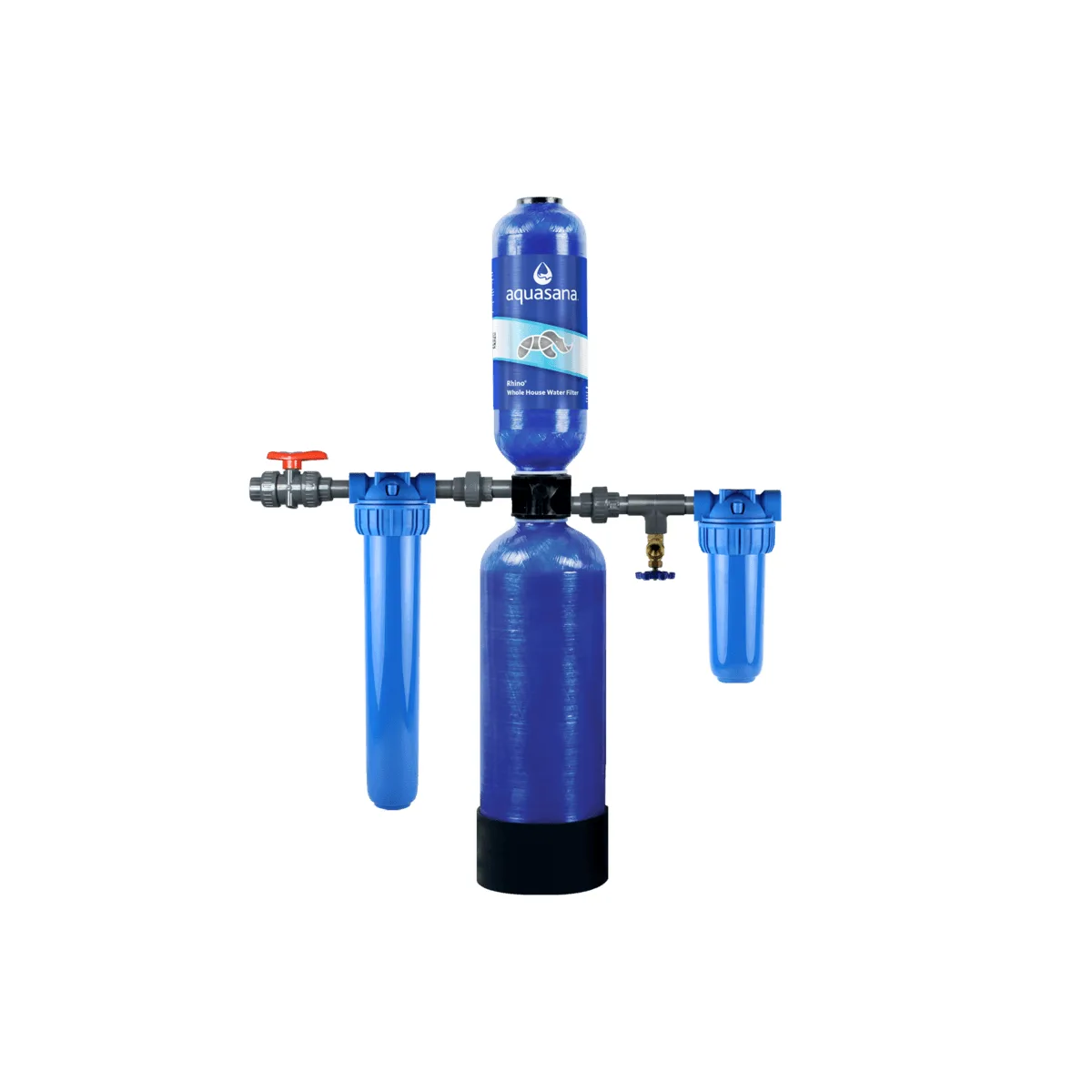
Aquasana's Rhino (now model WH-1000, formerly EQ-1000) is a 1,000,000-gallon / 10-year carbon tank with pre- and post-filters, and it's tested to NSF/ANSI 42 for up to 97% chlorine reduction. Its 7 GPM rated flow suits most 1–3 bathroom homes. Aquasana's MSRP is high, but it's discounted most of the year — it was $799 during Black Friday 2026.
- List price
- $1,998
- Capacity / flow
- 7 GPM
- Upkeep / yr
- ~$95
2. Best for chloramine and higher flow
SpringWell CF1 Whole House Water Filter System
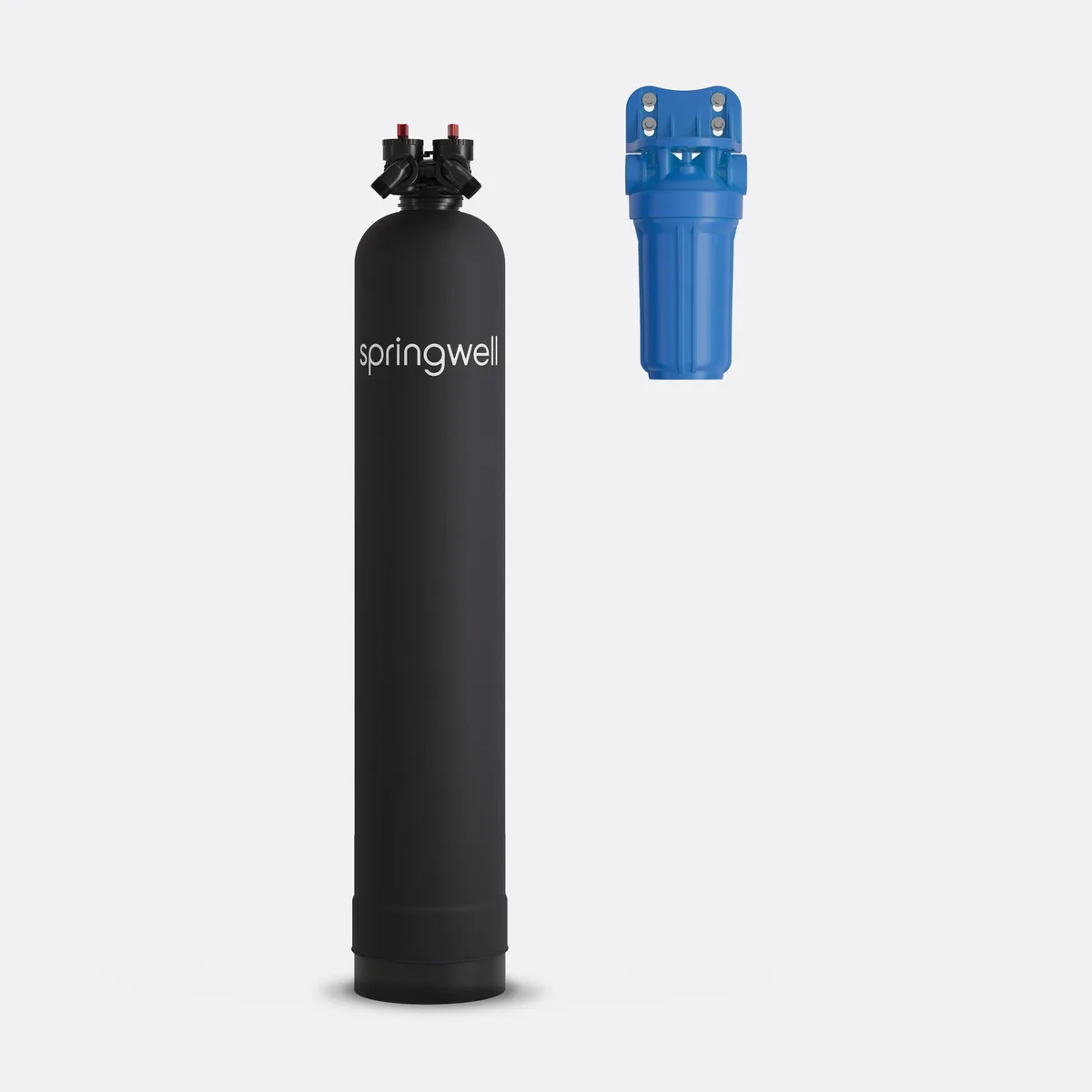
SpringWell's CF1 uses KDF plus catalytic carbon — the media type that handles chloramine better than standard carbon — with a 9 GPM rated flow and the same 1,000,000-gallon / 10-year media life. Upkeep is just a sediment cartridge, about $55 a year. Note that SpringWell's PFAS claim on this unit has no third-party certification behind it.
- List price
- $1,365
- Capacity / flow
- 9 GPM
- Upkeep / yr
- ~$55
- Up-flow KDF + catalytic carbon bed rated 1,000,000 gallons / 10 years, so only a sediment cartridge needs routine changes
- No electricity, drain line or backwash required
- Lifetime defect warranty on tank, head and housings plus a 6-month money-back guarantee
- No NSF/ANSI certification for any contaminant claim, including PFAS
- 9 GPM rated service flow is modest for larger homes (CF4 is 12 GPM)
- Regular (MSRP) price is far above the usual sale price, which makes price comparisons confusing
3. Best budget
iSpring WGB32B 3-Stage Whole House Water Filter
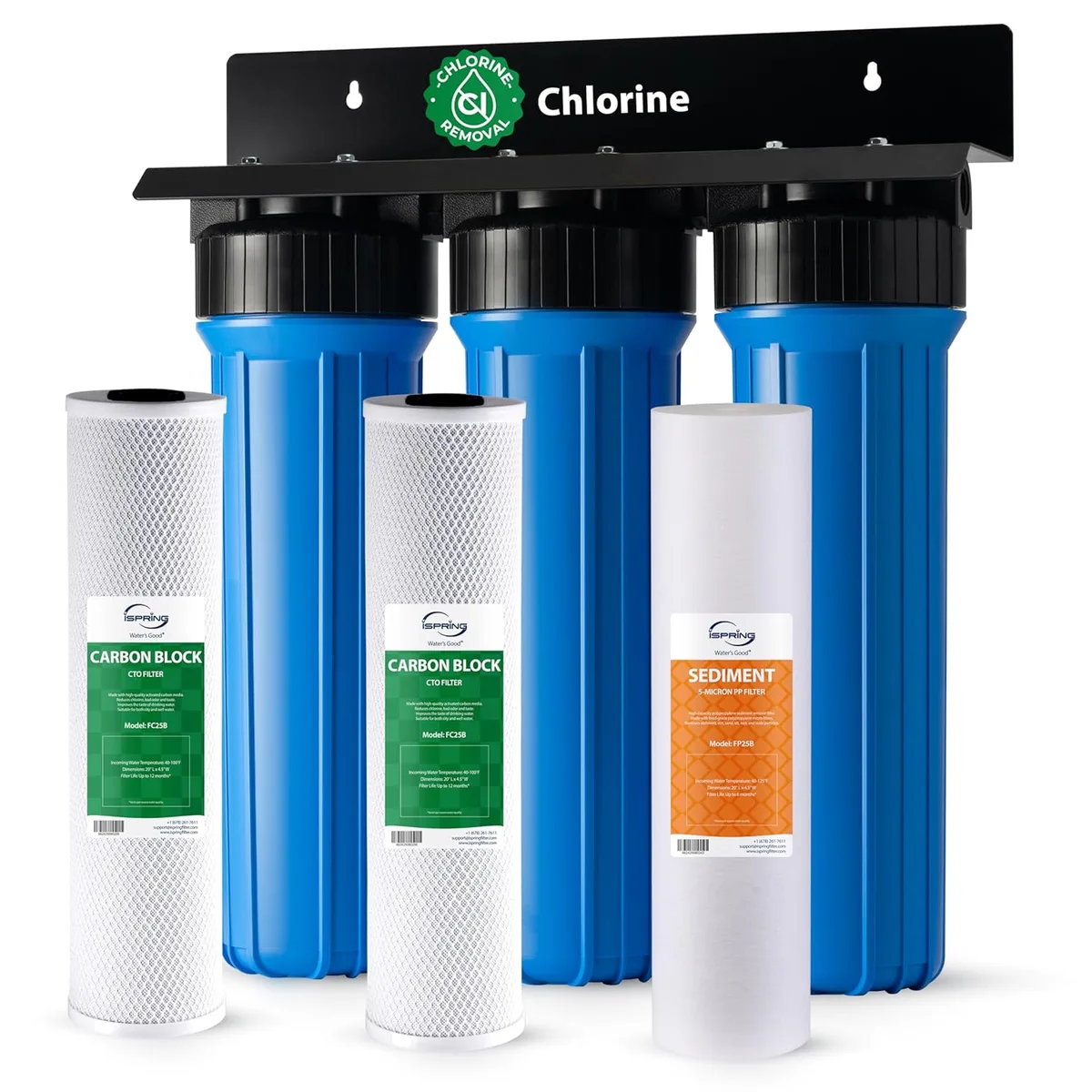
If you mainly want chlorine taste and sediment gone on a tight budget, iSpring's WGB32B is a three-stage, 20-inch "big blue" cartridge system you can maintain yourself. Amazon typically sells it for about $359. It has no third-party certification, and the cartridges need replacing about once a year (~$126), so it costs more to run than a tank system over time.
- List price
- $516.99
- Capacity / flow
- 15 GPM
- Upkeep / yr
- ~$125.99
- Very high 15 GPM rated flow through 20 x 4.5 in cartridges
- Standard Big Blue size, so cheap generic or upgraded (PFAS, lead, KDF) cartridges fit
- Simple DIY-friendly hardware with 1-inch NPT ports
- No NSF/WQA/IAPMO certification for the system or cartridges
- Does nothing for hardness, TDS, chloramine, PFAS or lead
- Cartridge changes mean shutting off water and hand-unscrewing heavy 20-inch housings
4. Best budget with a heavy-metal stage
Express Water 3-Stage Deluxe Whole House Water Filter System - Heavy Metals
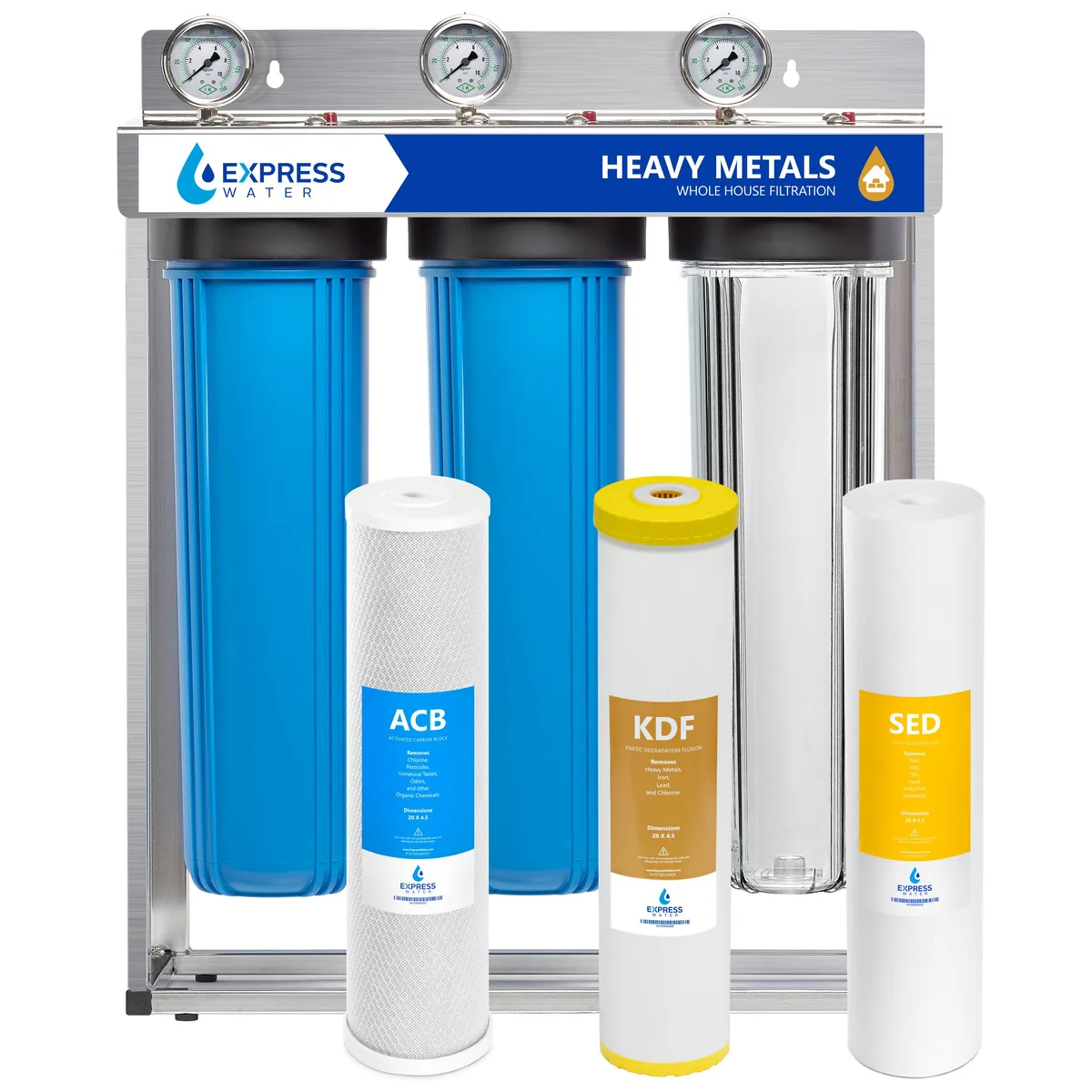
Express Water's WH300SCKS is a three-stage cartridge system — sediment, KDF and carbon — rated at 15 GPM, which is generous for a cartridge unit. It's a step up from basic carbon if you want a KDF stage, but its heavy-metal claims aren't certified, and a full filter set runs about $187 a year (more if you change every six months).
- List price
- $547.99
- Capacity / flow
- 15 GPM
- Upkeep / yr
- ~$187
- Three pressure gauges, pressure-release buttons and a clear first housing make filter changes easy to time
- Large 4.5 x 20 in. cartridges and 1 in. ports; rated 0.25 gal/sec (15 GPM) with no wastewater
- Low entry price (~$384 on sale) and widely available replacement sets
- No third-party certification; heavy-metal/lead/arsenic claims are unverified
- Ongoing cartridge cost of ~$187-$374/yr
- Only a 1-year warranty
5. Best if you also have hard water
SpringWell CSS1 Whole-House Filter & Softener Combo
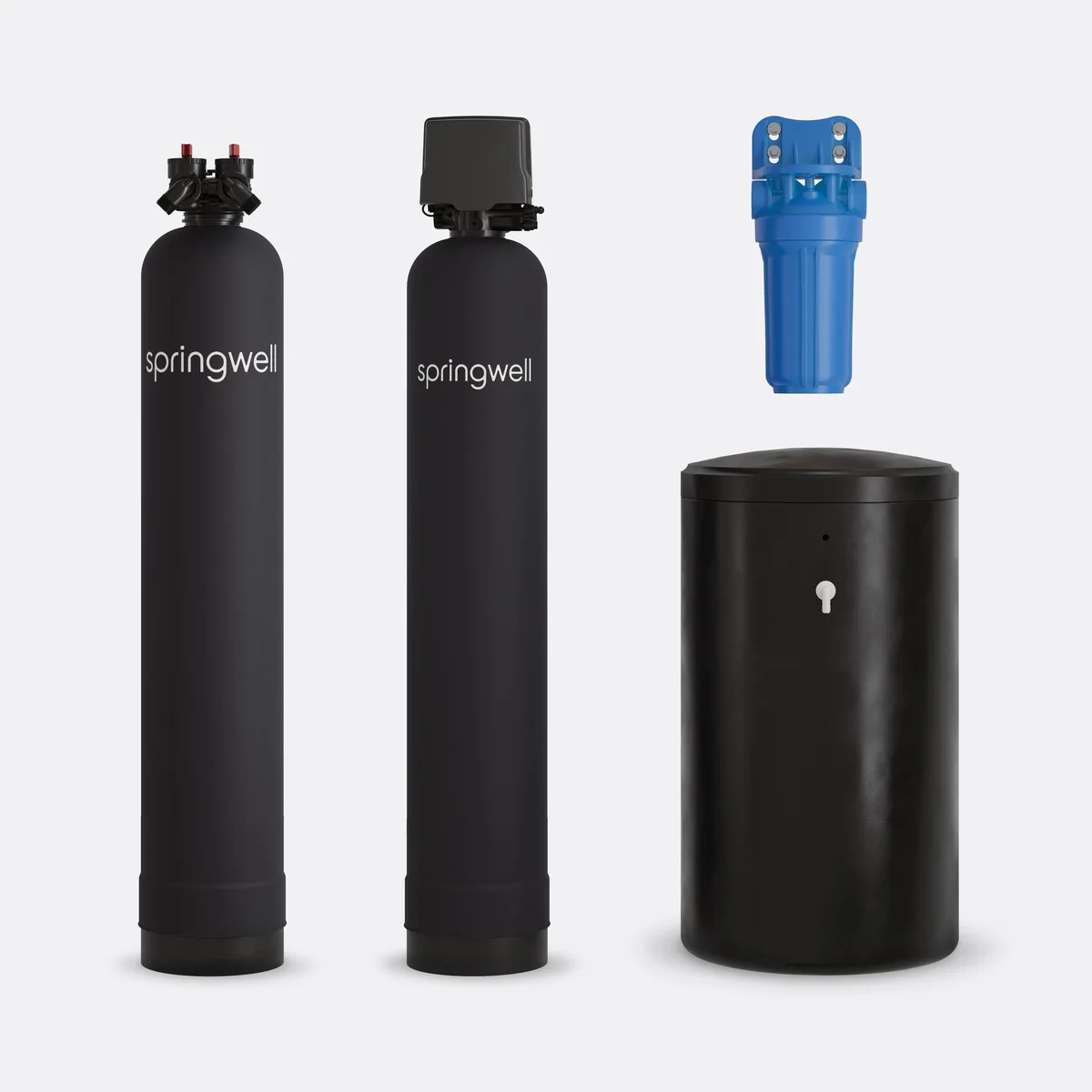
Hard water plus chlorine taste? SpringWell's CSS1 bundles the CF1 filter above with its SS1 salt softener in one install. It's the expensive route, but it's the only option here that fixes both scale and taste.
- List price
- $2,625
- Capacity / flow
- 32,000 gr · 9 GPM
- Upkeep / yr
- ~$145
How to choose the right one
Find out how your city disinfects. If your utility uses chloramine (many large systems do), choose catalytic carbon like the SpringWell CF1. If it's plain chlorine, the Rhino or iSpring work well. Your utility's water quality report — or our water quality pages — will say.
Then match flow to your home: 7 GPM covers most 1–2 bathroom homes; 3+ bathrooms do better at 9 GPM and up. Compare total costs (equipment, install and filters) in the 5-year cost calculator.
Frequently asked questions
- Is a whole-house water filter worth it?
- It's worth it if chlorine or chloramine smell bothers you in the shower and every tap, or if sediment clogs fixtures. If your main worry is drinking-water safety (lead, PFAS), a certified under-sink filter is cheaper and better targeted.
- Do whole-house filters remove PFAS?
- None of the whole-house systems we cover is certified for PFAS reduction. Some brands claim it, but certification for PFOA/PFOS currently comes from drinking-water filters. See best water filters for PFAS.
- Does a whole-house filter reduce water pressure?
- A correctly sized system shouldn't noticeably. Pressure drop rises as flow approaches the rated limit and as sediment filters clog, so change pre-filters on schedule and pick a rated flow above your peak use.
Luke reads the spec sheets, NSF/WQA certification listings, municipal water quality reports and owner feedback so you don't have to, then writes it up in plain English with the trade-offs named. Reviews are research-based, not hands-on lab tests, and an affiliate commission never moves a pick.