

How hard is Miami water?
Miami tap water (Miami-Dade Water and Sewer, PWS ID FL4130871) is softened at the plants with lime and reverse osmosis, and the utility doesn't publish a hardness number. Test your tap before buying a softener. The bigger issue in Miami is PFAS, which measured well above the new federal limits in 2025.
How hard is Miami tap water?
Miami-Dade Water and Sewer doesn't print a hardness number. It does soften at the plants: Alexander Orr and Hialeah use lime treatment to reduce hardness, Preston uses enhanced softening, and the Hialeah plant also runs reverse osmosis. How hard your tap is depends on which plant serves you, so test it before sizing a softener.
| Measure | Value | Source |
|---|---|---|
| Public Water System ID | FL4130871 (Miami-Dade Water and Sewer Department) | From the city's water report |
| Total Hardness (GPG) | Omitted in WASD 2025 Water Quality Data table | From the city's water report |
| Total Hardness (mg/L as CaCO₃) | Not reported — measure tap directly | From the city's water report |
| USGS Hardness Classification | Test at home | USGS scale (<3.5 Soft · 3.5–7.0 Mod · 7.0–10.5 Hard · >10.5 Very Hard) |
| Primary Disinfectant | Chloramine | From the city's water report |
| Water Supply Source | Wells in the Biscayne Aquifer, plus some deep Upper Floridan Aquifer wells for the Hialeah reverse osmosis plant | ~2,377,460 residents served |
| CCR Citation & Period | WASD 2025 Water Quality Data table (dated April 2, 2026); 2024 Water Quality Report | Read the city's report |
How to confirm your water provider on your utility bill
Your bill should say Miami-Dade Water and Sewer. North Miami Beach, Homestead and some other cities run their own water systems.
What size water softener fits a Miami home?
Because Miami-Dade Water and Sewer Department omits hardness in its 2025 CCR, enter your own drop-titration reading below to calculate actual salt-dose operating capacities.
Only have mg/L or ppm? Convert mg/L as CaCO₃ to GPG →
Hardness is omitted from Miami-Dade Water and Sewer Department's WASD 2025 Water Quality Data table (FL4130871).
We leave this input blank rather than guessing. Measure your cold tap with a $10–$15 drop-titration kit (such as a Hach 5-B test) or call your utility water quality line, then enter your GPG reading above.
Enter your water hardness above to see which softeners fit
Use the number from a home test kit, or pick your city if it's listed. Then we'll show what size you need and how each softener we've reviewed would do in your home.
What will a system cost to install and maintain over 5 years?
Compare an online/retail unit plus licensed plumber installation against a turnkey local dealer quote—including 5 years of salt, regeneration water, and maintenance.
Note for Miami owners: The 5-year cost preview below starts with an editable 12 GPG placeholder for salt budgeting until you enter your own drop-test reading in the Hardness field.
- Option A (5-Yr)
- $3,443
- Option B (5-Yr)
- $5,203
- 5-Year Savings
- $1,760
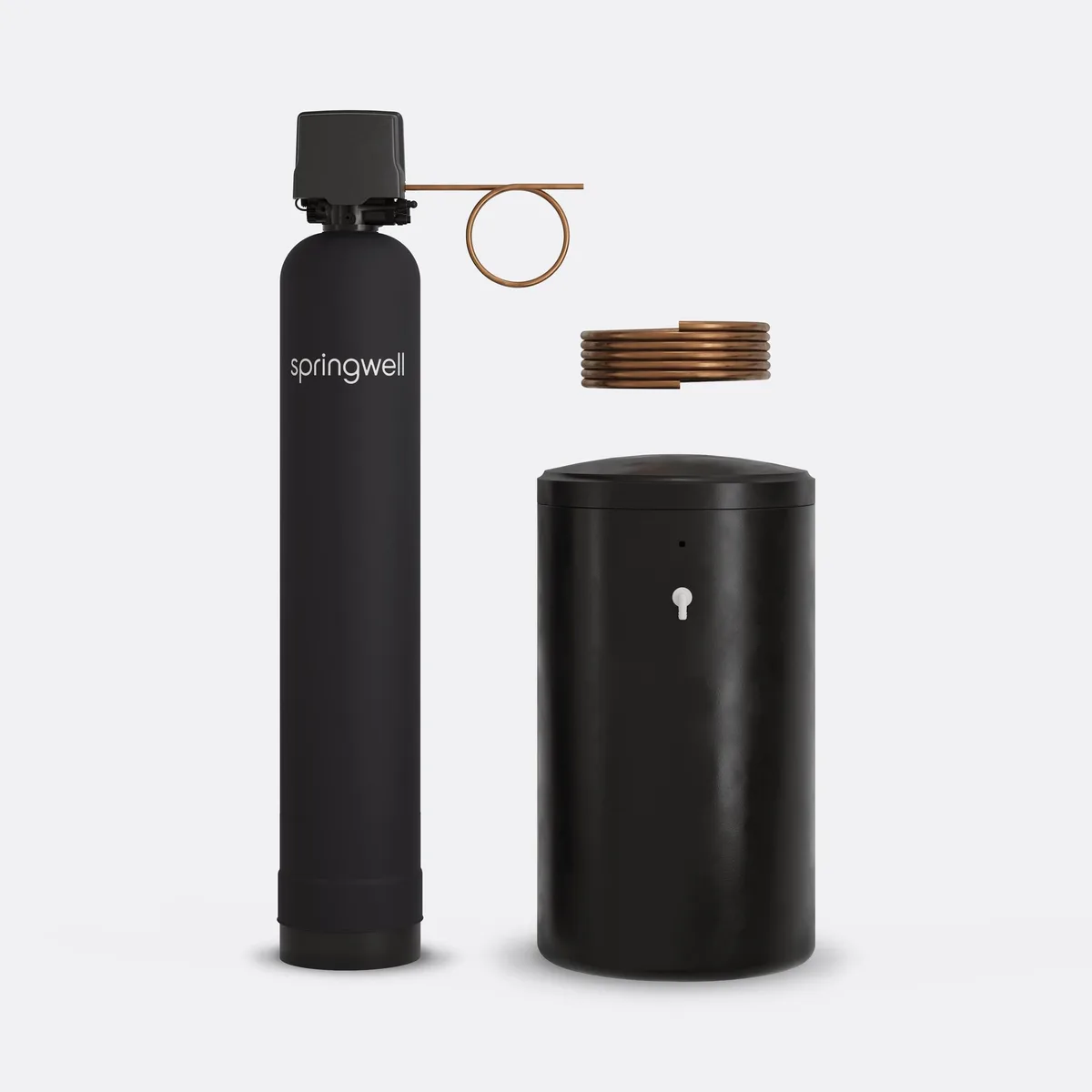
SpringWell SS1 Salt-Based Water Softener · $57/mo
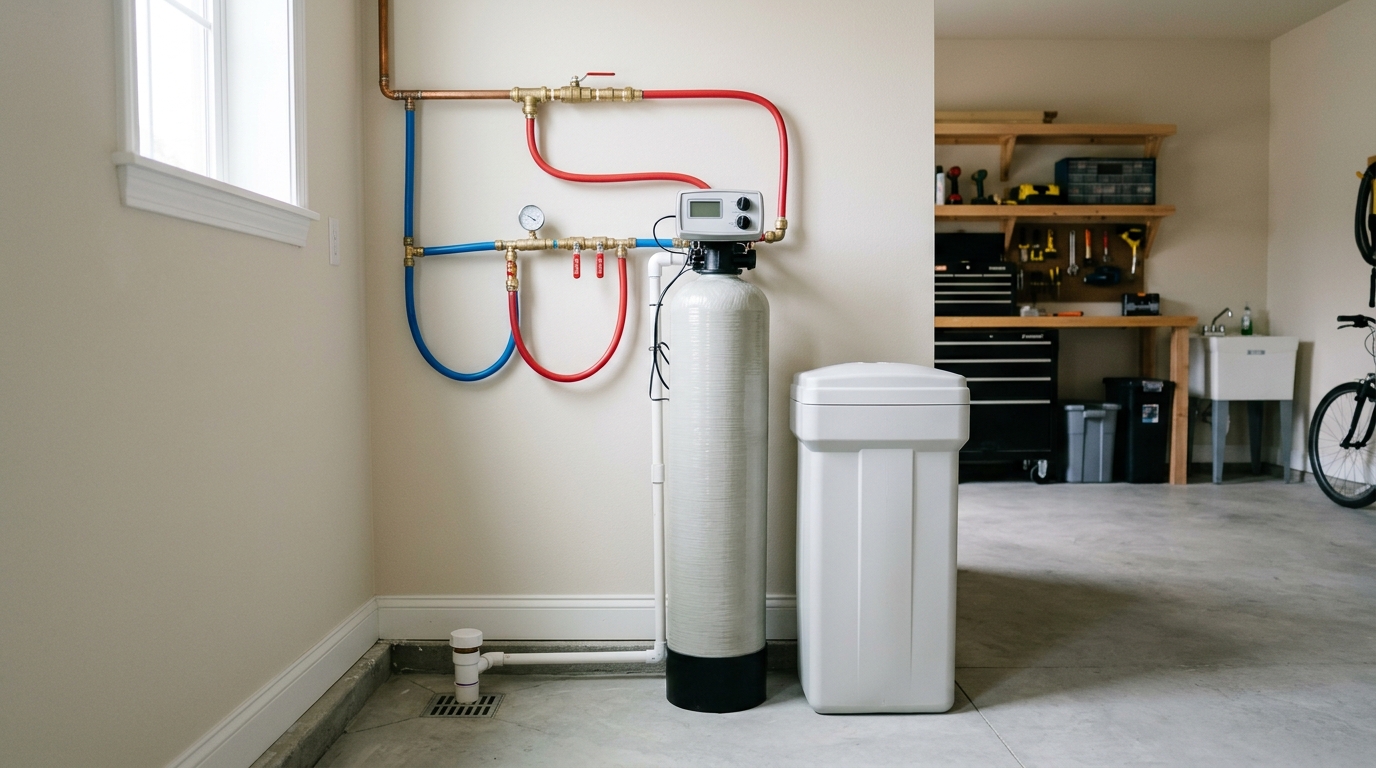
Local Water Dealer Quote · $87/mo
SpringWell SS1 Salt-Based Water Softener saves ~$1,760 over 5 years.
| Cost Component (5-Yr) | Option A: SpringWell SS1 Salt-Based Water Softener | Option B: Local Water Dealer Quote |
|---|---|---|
| Equipment Price(Dealer quote bundles equipment + install) | $1,890 | $3,800 |
| Plumber Installation(existing garage loop) | $750 | Bundled above |
| Upfront Installed Subtotal | $2,640 | $3,800 |
| 5-Year Softener Salt(@ $7.50 / 40-lb bag) | $690~18.4 bags/yr | $690~18.4 bags/yr |
| 5-Year Regeneration Water(@ $11.00 / 1,000 gal) | $113~2,058 gal/yr | $113~2,058 gal/yr |
| 5-Year Cartridges / Media / Service Plan | $0 | $600 |
| 5-Year Total Installed Cost | $3,443 | $5,203 |
| Effective Monthly Ownership Cost | $57.38 / month | $86.72 / month |
Is Miami tap water safe to drink?
Mostly yes, but PFAS is worth acting on. Miami-Dade's water had no violations in 2025 and low lead results, but PFOS measured up to 33 parts per trillion and PFOA up to 13, well above the new 4 ppt federal limits. A reverse osmosis filter certified for PFOA and PFOS at the kitchen tap is a smart step.
Hard water itself isn't a health risk, and a water softener doesn't remove PFAS or lead. Here's what Miami-Dade Water and Sewer Department's own testing shows for both.
PFAS ("forever chemicals")
WASD's 2025 data table shows the Main System at PFOS 7–33 ppt, PFOA 3–13, PFHxS 2–7 and PFNA up to 5 (Hazard Index up to 1). South Dade showed PFOS 16–32 and PFOA up to 13. The federal limits for PFOA and PFOS are 4 ppt, and compliance monitoring is still under way. A filter certified to NSF/ANSI 58 or 53 for PFOA/PFOS reduces these at the tap.
Lead: the city's numbers vs. your own pipes
In the latest testing, the Main System's lead 90th percentile was 3.2 ppb, with 1 of 102 homes over the action level. Lead comes mostly from older home plumbing, so if your home was built before 1986 or you have young children, test your tap or use a filter certified to NSF/ANSI 53. WASD's service line inventory is at miamidade.gov/knowyourpipes.
Not sure what's in your tap or well water? Test it first.
Miami-Dade Water and Sewer Department (FL4130871) doesn't publish a hardness number, and homes on private wells or a neighboring utility can be very different. A $10–$15 drop-titration test gives you an exact grains-per-gallon figure in 2 minutes.
1. Municipal Hardness Check (~$10–$15)
Use a drop-titration kit (such as a Hach 5-B) at your kitchen cold tap. Each drop equals 1 GPG—far more accurate than color dip strips.
2. Well Water, Lead, or PFAS Lab Panel
If you have a private well, pre-1986 plumbing, or want tap-level PFAS/iron data, order an accredited mail-in drinking-water lab test before sizing hardware.
Frequently Asked Questions: Miami Tap Water (FL4130871)
Concise answers grounded in published CCR monitoring data and actual softener sizing math.
- Is Miami tap water safe to drink?
- Mostly yes, but PFAS is worth acting on. Miami-Dade's water had no violations in 2025 and low lead results, but PFOS measured up to 33 parts per trillion and PFOA up to 13, well above the new 4 ppt federal limits. A reverse osmosis filter certified for PFOA and PFOS at the kitchen tap is a smart step.
- How hard is Miami tap water?
- Miami-Dade Water and Sewer doesn't publish a hardness figure. Its plants reduce hardness with lime softening, enhanced softening and reverse osmosis, so tap hardness depends on which plant serves you.
- How do I find out how hard my Miami water is?
- Use a $10–$15 drop-titration hardness kit on your kitchen cold tap; each drop is one grain per gallon, which is more accurate than strips. Or call the utility and ask for the latest hardness for your area in mg/L or grains.
- How much PFAS is in Miami water?
- WASD's 2025 data shows PFOS up to 33 parts per trillion and PFOA up to 13 on the Main System, against new federal limits of 4. Compliance monitoring is still under way, so these aren't violations yet.
- Is there radon in Miami tap water?
- Yes, up to 86 pCi/L in 2025. There's no federal limit, and the utility notes the risk from radon in water is small compared with radon in indoor air.
Other cities
City of Boca Raton Utility Services
City of Cape Coral Utilities
City of Clearwater Public Utilities
City of Fort Lauderdale Utility Services
City of Fort Myers Utilities
Gainesville Regional Utilities (GRU)