
How hard is Jacksonville water?
Jacksonville tap water (JEA, PWS ID FL2161328) runs from about 7 to 22 grains per gallon depending on your ZIP code; most central areas are 11 to 14 grains, which is very hard. Look up your ZIP on JEA's hardness page, then size a softener for that number.
How hard is Jacksonville tap water?
JEA publishes hardness by ZIP code: from about 120 ppm (7 grains) in the Cecil Commerce area to 372 ppm (22 grains) near the St. Johns Forest plant. Most central ZIP codes are 11 to 14 grains (for example 32202 at 14 and 32210 at 11). Look up your ZIP on JEA's hardness page.
| Measure | Value | Source |
|---|---|---|
| Public Water System ID | FL2161328 (JEA (Major Grid)) | From the city's water report |
| Total Hardness (GPG) | 7.0–21.8 GPG(range) | From the city's water report |
| Total Hardness (mg/L as CaCO₃) | 120–372 mg/L as CaCO₃ | From the city's water report |
| USGS Hardness Classification | Very Hard | USGS scale (<3.5 Soft · 3.5–7.0 Mod · 7.0–10.5 Hard · >10.5 Very Hard) |
| Primary Disinfectant | Chlorine | From the city's water report |
| Water Supply Source | Floridan aquifer wells about 1,000 feet deep, aerated to remove sulfur odor (with ozone at two plants) | ~826,664 residents served |
| CCR Citation & Period | JEA hardness by ZIP code; 2025 Water Quality Report (2025 data) | Read the city's report |
How to confirm your water provider on your utility bill
Your bill should say JEA. JEA runs a few small separate systems (such as Ponte Vedra and Mayport), and most of St. Johns County is served by its own county utility.
What size water softener fits a Jacksonville home?
Pre-loaded with JEA (Major Grid)'s verified CCR hardness (7.0–21.8 GPG). You can override the CCR figure anytime with your own tap test.
- Your water From the city's water report
- Very Hard
- Size to look for
- 40,000+ grain
- Salt you'll buy
- ~2 bags / mo
Heavy chalky buildup on faucets and showerheads — a properly sized softener makes a big difference.
Measured: 7.0–21.8 GPG (range)
Sized for the top of your range so you don't get white spots mid-week.
The math: 2,100–6,540 gr/day (14,700–45,780 grains / 7 days)
Roughly $14/month in 40-lb salt pellets.
Based on ~300 gal/day indoor use (4 people)
How each softener would do in your home
Checked at an everyday salt setting, not the number printed on the box.
We may earn a commission when you buy through links on this page, at no extra cost to you. How we make money
 Needs a high salt setting
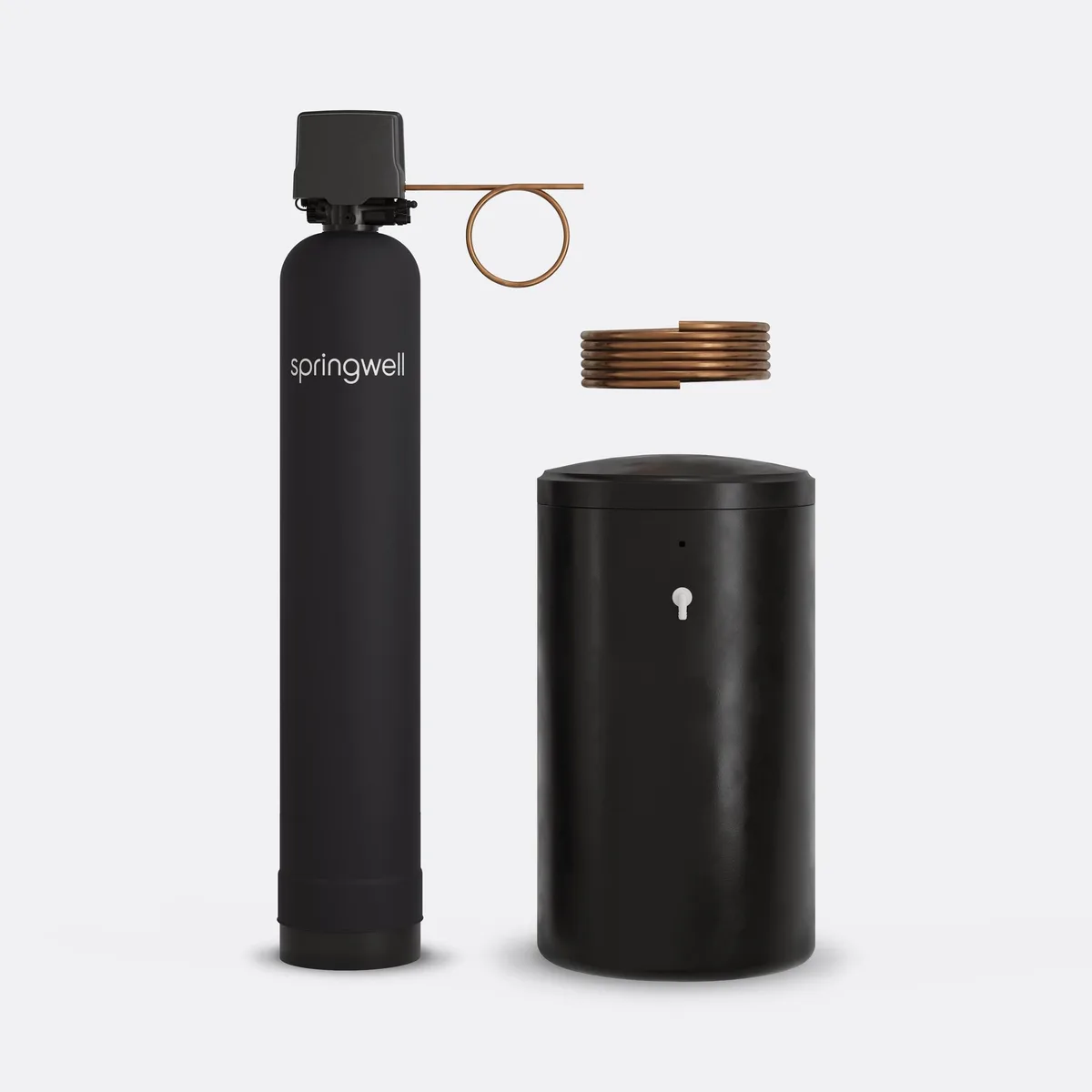
SpringWell SS1 Salt-Based Water Softener
$1,890 · 3–4 bathrooms
It keeps up, but only on its heaviest salt setting (15 lb each time), so you'll buy more salt than with a bigger unit.
- Holds
- 30,000 grains
- on 15.0 lb of salt
- Flow
- 11.0 GPM
- Keeps up with your home
- Cleans itself every
- 4.1–12.9 days
- Salt per year
- ~$164
- 22 bags (40 lb)
 Low flow for your home
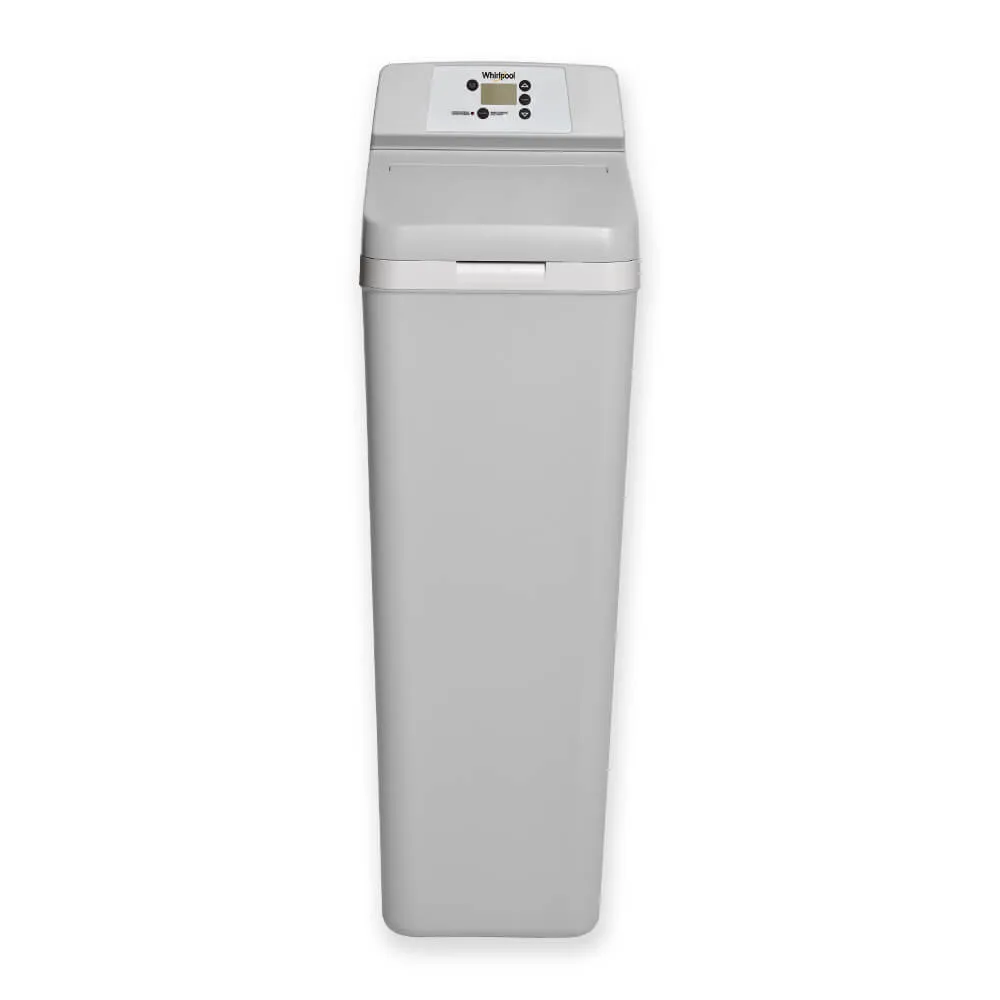
Whirlpool WHES33 33,000-Grain Water Softener
$519 · 1–2 bathrooms
Holds enough, but its flow (8.0 GPM) is a little low for 2.5 bathrooms. Pressure may dip if two showers and the dishwasher run together.
- Holds
- 33,000 grains
- on 14.1 lb of salt
- Flow
- 8.0 GPM
- May dip with two showers on
- Cleans itself every
- 4.5–14.1 days
- Salt per year
- ~$140
- 19 bags (40 lb)
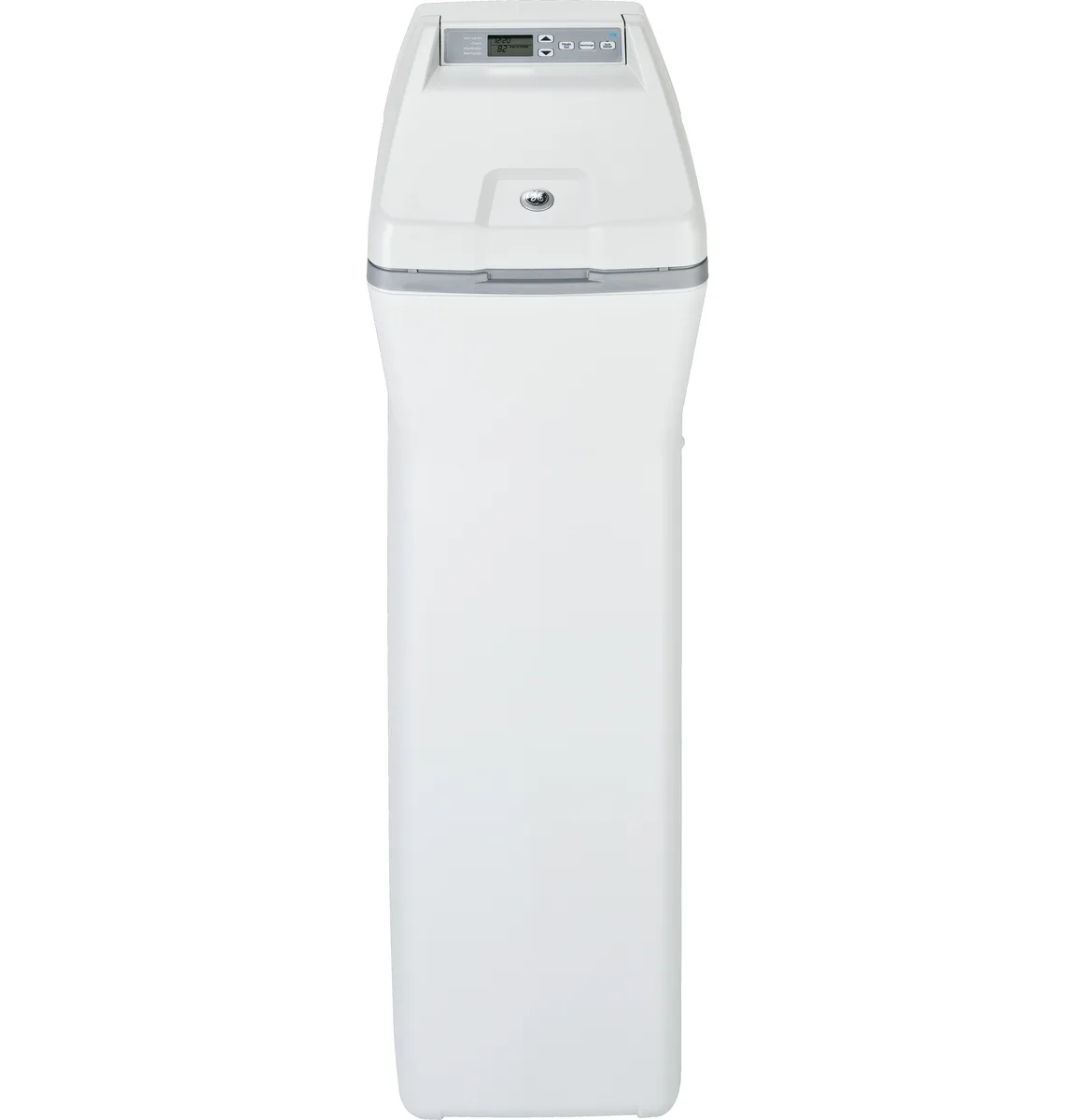 Needs a high salt setting
GE GXSH40V 40,000-Grain Water Softener
$649 · 2–3 bathrooms
It keeps up, but only on its heaviest salt setting (15 lb each time), so you'll buy more salt than with a bigger unit.
- Holds
- 40,000 grains
- on 15.1 lb of salt
- Flow
- 9.5 GPM
- Keeps up with your home
- Cleans itself every
- 5.5–17.1 days
- Salt per year
- ~$125
- 17 bags (40 lb)
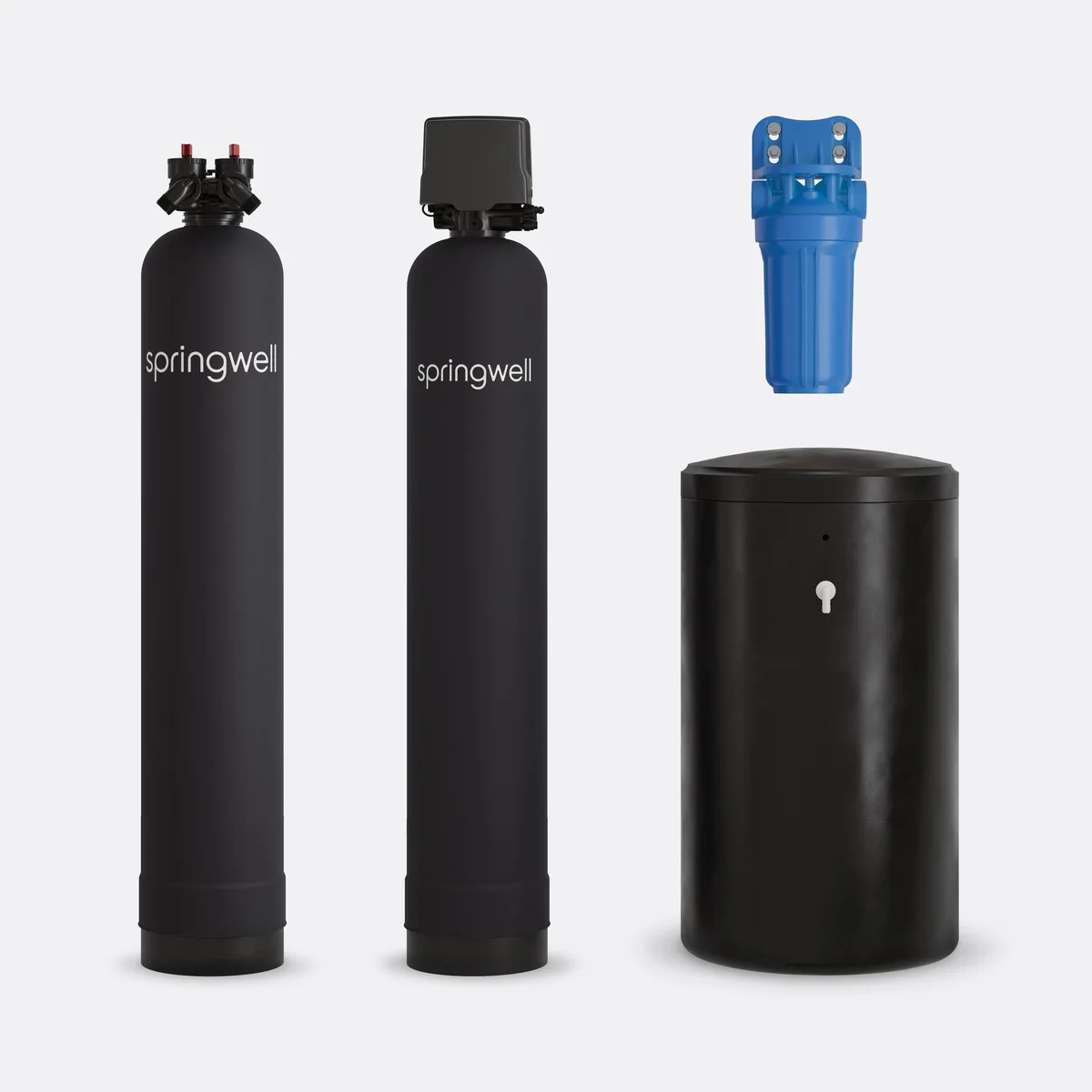 Needs a high salt setting
SpringWell CSS1 Whole-House Filter & Softener Combo
$2,625 · 2–3 bathrooms
It keeps up, but only on its heaviest salt setting (15 lb each time), so you'll buy more salt than with a bigger unit.
- Holds
- 30,000 grains
- on 15.0 lb of salt
- Flow
- 9.0 GPM
- Keeps up with your home
- Cleans itself every
- 4.1–12.9 days
- Salt per year
- ~$164
- 22 bags (40 lb)
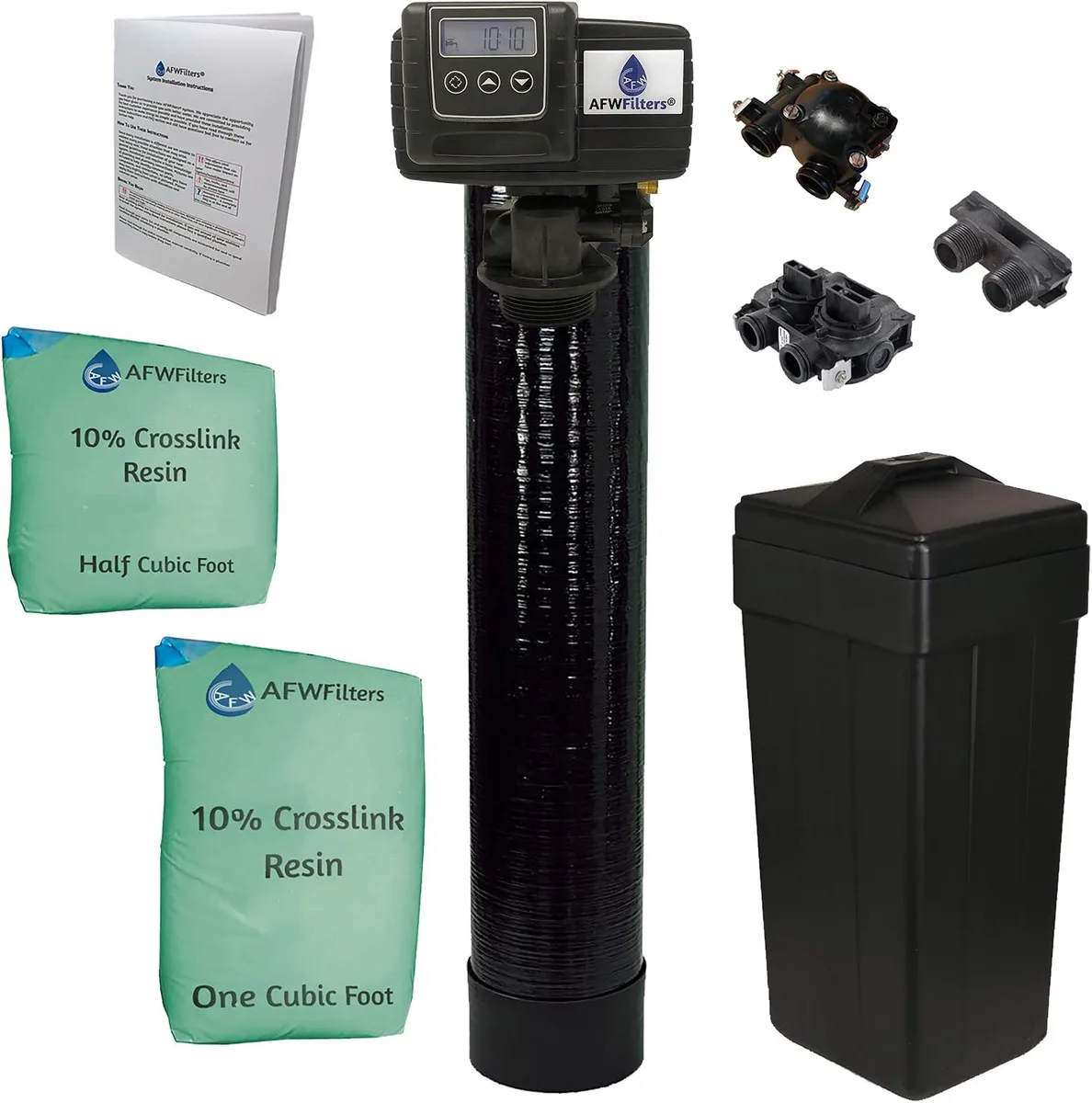 Needs a high salt setting
AFWFilters Fleck 5600SXT 48,000-Grain Water Softener (10% crosslink resin)
$805 · 3–4 bathrooms
It keeps up, but only on its heaviest salt setting (23 lb each time), so you'll buy more salt than with a bigger unit.
- Holds
- 45,000 grains
- on 22.5 lb of salt
- Flow
- 14.0 GPM
- Keeps up with your home
- Cleans itself every
- 6.2–19.3 days
- Salt per year
- ~$164
- 22 bags (40 lb)
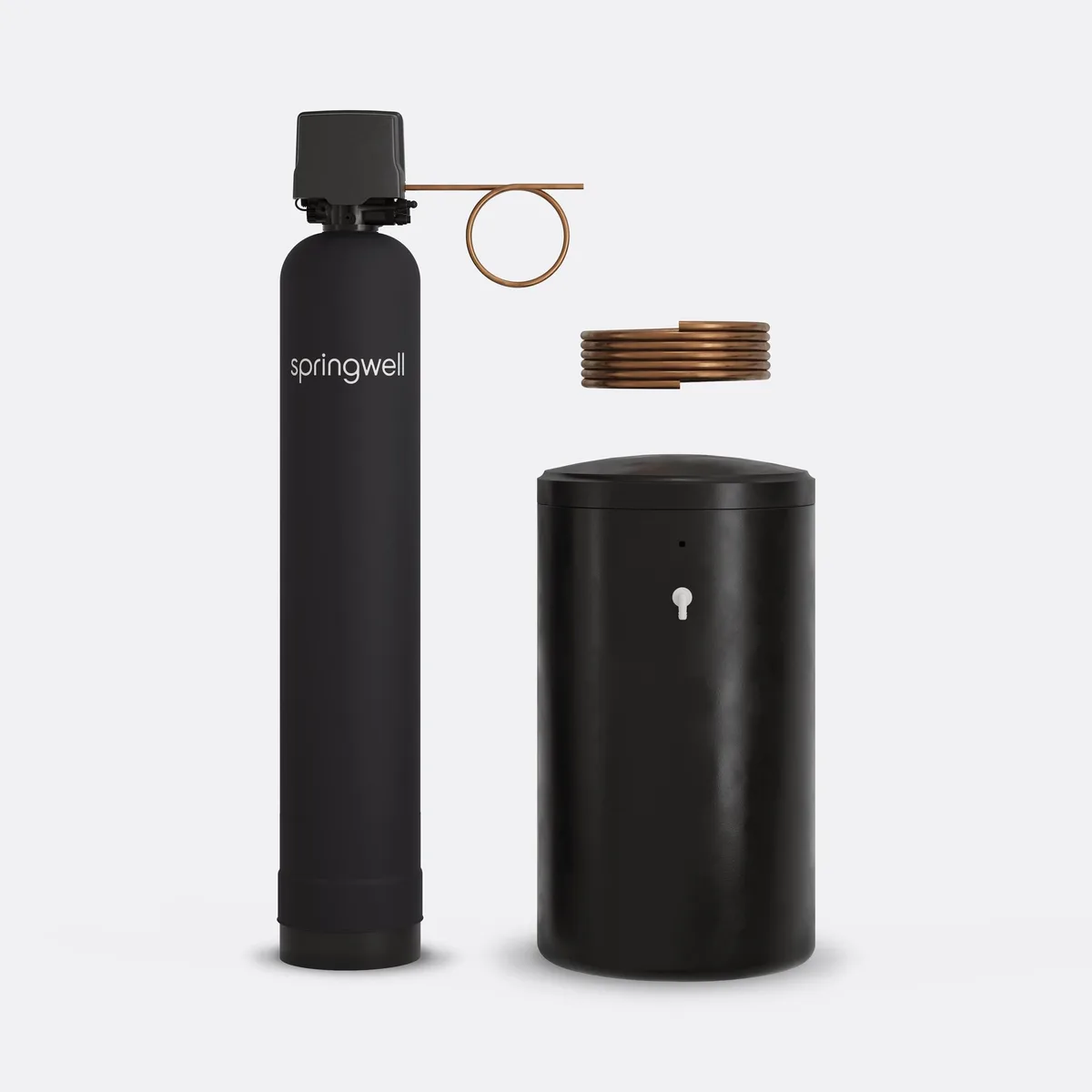 Needs a high salt setting
SpringWell SS4 Salt-Based Water Softener
$2,100 · 3–4 bathrooms
It keeps up, but only on its heaviest salt setting (23 lb each time), so you'll buy more salt than with a bigger unit.
- Holds
- 45,000 grains
- on 22.5 lb of salt
- Flow
- 13.0 GPM
- Keeps up with your home
- Cleans itself every
- 6.2–19.3 days
- Salt per year
- ~$164
- 22 bags (40 lb)
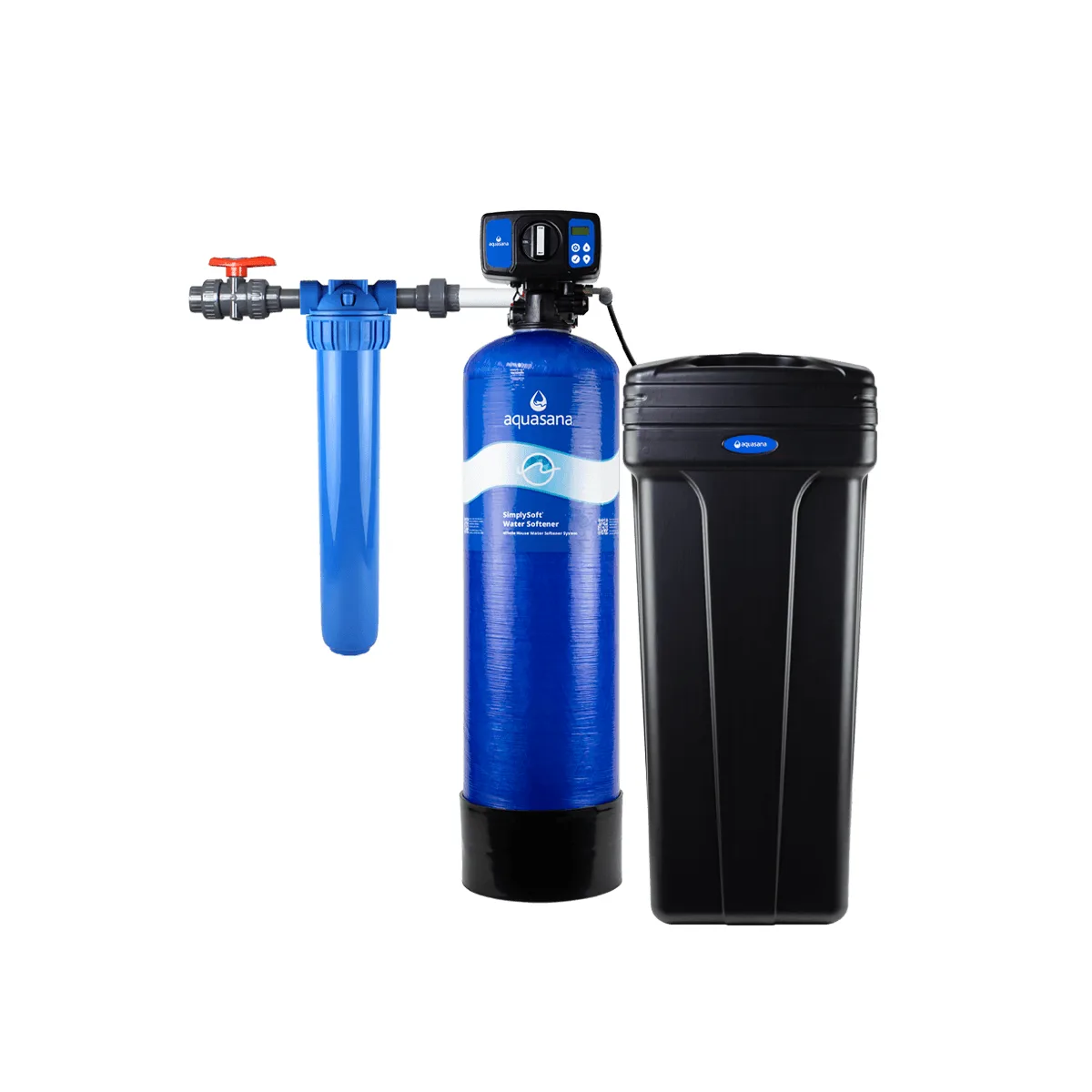 Needs a high salt setting
Aquasana SimplySoft 40,000 Grain Salt-Based Water Softener
$1,698 · 3–4 bathrooms
It keeps up, but only on its heaviest salt setting (15 lb each time), so you'll buy more salt than with a bigger unit.
- Holds
- 30,000 grains
- on 15.0 lb of salt
- Flow
- 11.0 GPM
- Keeps up with your home
- Cleans itself every
- 4.1–12.9 days
- Salt per year
- ~$164
- 22 bags (40 lb)
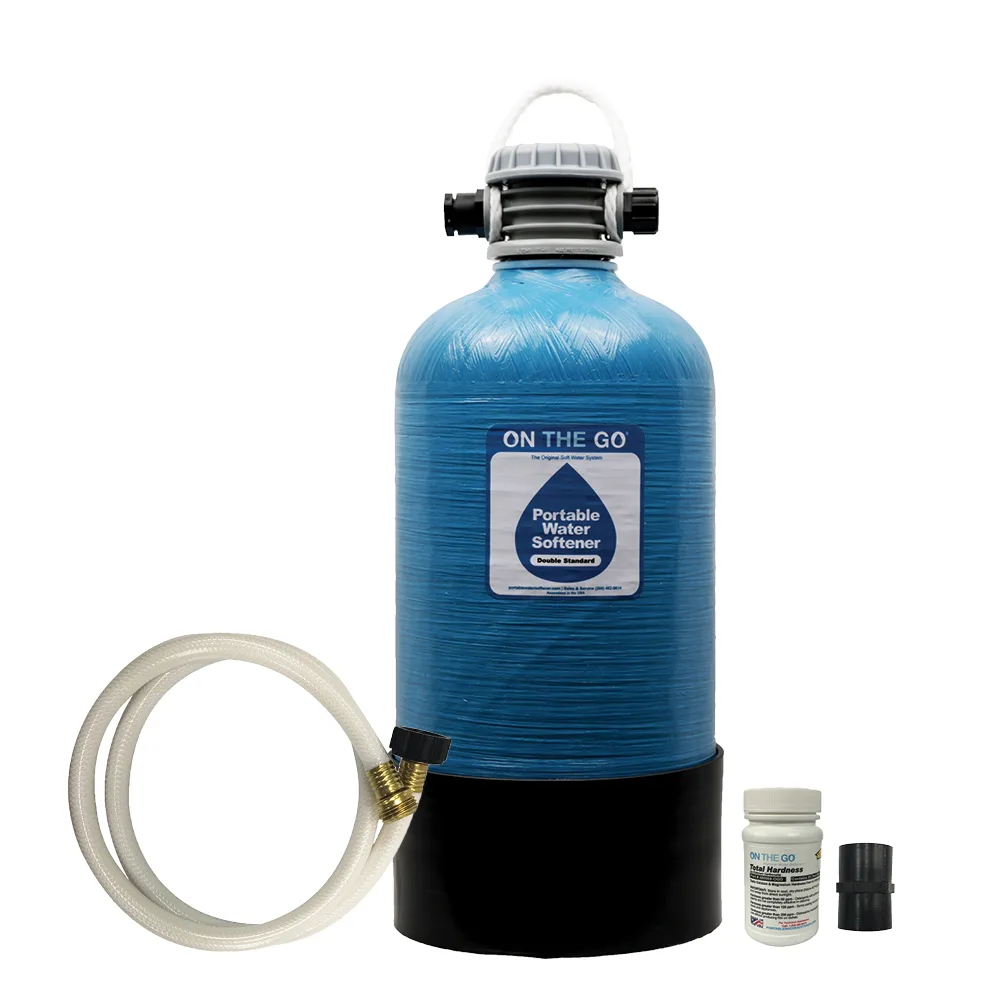 Low flow for your home
On The Go Portable Double Standard Water Softener (16,000 grain)
$205 · 1–2 bathrooms
Holds enough, but its flow (3.0 GPM) is a little low for 2.5 bathrooms. Pressure may dip if two showers and the dishwasher run together.
- Holds
- 15,600 grains
- on 7.8 lb of salt
- Flow
- 3.0 GPM
- May dip with two showers on
- Cleans itself every
- 2.1–6.7 days
- Salt per year
- ~$164
- 22 bags (40 lb)
Systems we'd look at for Jacksonville water
We may earn a commission when you buy through links on this page, at no extra cost to you. How we make money
What will a system cost to install and maintain over 5 years?
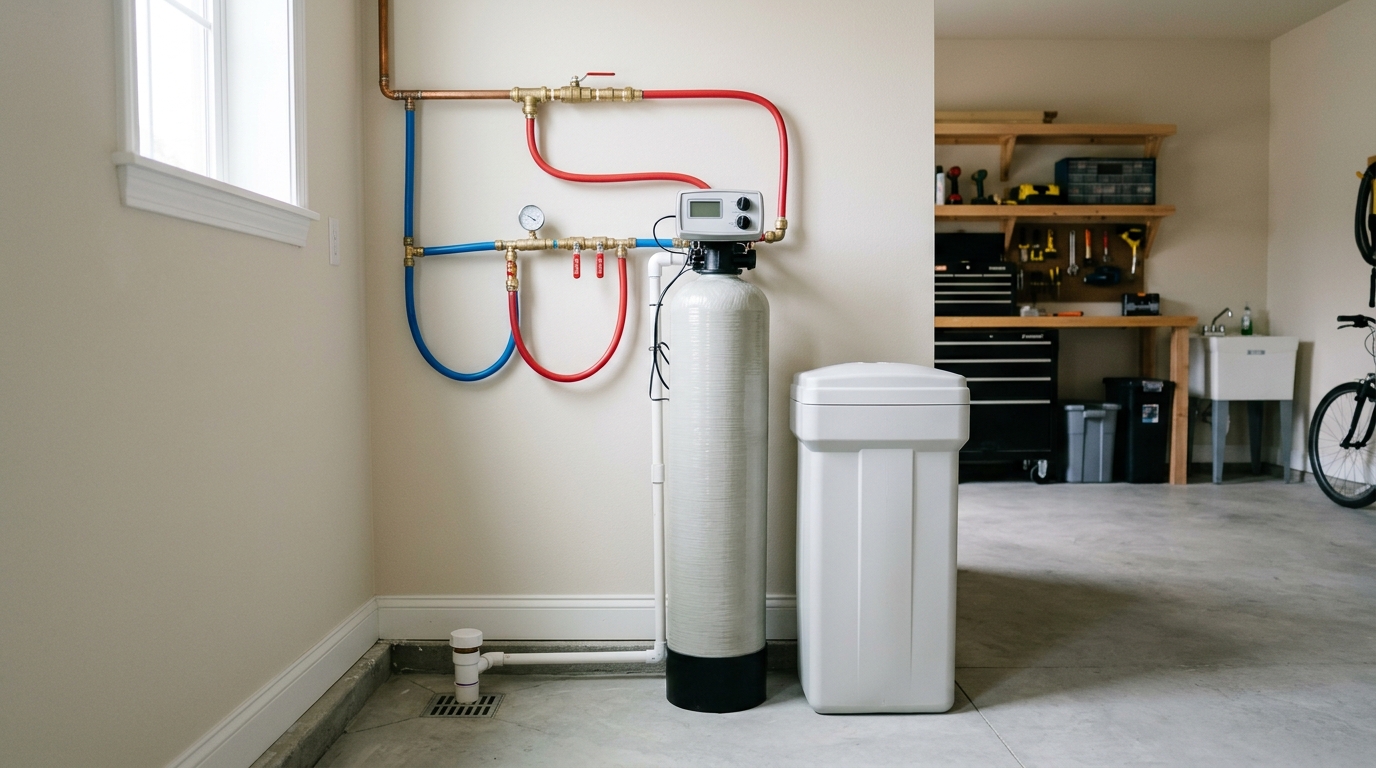
Compare an online/retail unit plus licensed plumber installation against a turnkey local dealer quote—including 5 years of salt, regeneration water, and maintenance.
- Option A (5-Yr)
- $3,594
- Option B (5-Yr)
- $5,354
- 5-Year Savings
- $1,760
SpringWell SS1 Salt-Based Water Softener · $60/mo
Local Water Dealer Quote · $89/mo
SpringWell SS1 Salt-Based Water Softener saves ~$1,760 over 5 years.
| Cost Component (5-Yr) | Option A: SpringWell SS1 Salt-Based Water Softener | Option B: Local Water Dealer Quote |
|---|---|---|
| Equipment Price(Dealer quote bundles equipment + install) | $1,890 | $3,800 |
| Plumber Installation(existing garage loop) | $750 | Bundled above |
| Upfront Installed Subtotal | $2,640 | $3,800 |
| 5-Year Softener Salt(@ $7.50 / 40-lb bag) | $820~21.8 bags/yr | $820~21.8 bags/yr |
| 5-Year Regeneration Water(@ $11.00 / 1,000 gal) | $134~2,436 gal/yr | $134~2,436 gal/yr |
| 5-Year Cartridges / Media / Service Plan | $0 | $600 |
| 5-Year Total Installed Cost | $3,594 | $5,354 |
| Effective Monthly Ownership Cost | $59.90 / month | $89.23 / month |
Is Jacksonville tap water safe to drink?
Yes for most people. JEA's report doesn't cover PFAS, but federal testing found only two less common PFAS in four samples taken on one day, and no PFOA or PFOS. Hardness is a nuisance, not a health risk. Older homes should test for lead at the tap.
Hard water itself isn't a health risk, and a water softener doesn't remove PFAS or lead. Here's what JEA (Major Grid)'s own testing shows for both.
PFAS ("forever chemicals")
JEA's report doesn't include PFAS. EPA's UCMR 5 data for 2024–2025 shows PFPeA (6.2–6.8 parts per trillion) and PFPeS (4.6–5.2) in 4 of 62 samples, all on one day at four plants. PFOA and PFOS were not detected.
Lead: the city's numbers vs. your own pipes
The city's lead results come from a sample of homes across the system, not your tap. Lead usually comes from older service lines, solder and fixtures, so if your home was built before 1986 or you have young children, test your own tap or use a filter certified to NSF/ANSI 53 for lead.
Not sure what's in your tap or well water? Test it first.
Municipal CCRs summarize utility-wide averages and ranges, while private wells have no municipal report at all. Spending $15–$200 on the right test upfront prevents buying an undersized softener or unnecessary treatment stage.
1. Municipal Hardness Check (~$10–$15)
Use a drop-titration kit (such as a Hach 5-B) at your kitchen cold tap. Each drop equals 1 GPG—far more accurate than color dip strips.
2. Well Water, Lead, or PFAS Lab Panel
If you have a private well, pre-1986 plumbing, or want tap-level PFAS/iron data, order an accredited mail-in drinking-water lab test before sizing hardware.
Frequently Asked Questions: Jacksonville Tap Water (FL2161328)
Concise answers grounded in published CCR monitoring data and actual softener sizing math.
- Is Jacksonville tap water safe to drink?
- Yes for most people. JEA's report doesn't cover PFAS, but federal testing found only two less common PFAS in four samples taken on one day, and no PFOA or PFOS. Hardness is a nuisance, not a health risk. Older homes should test for lead at the tap.
- How hard is Jacksonville water?
- It depends on your ZIP code. JEA lists hardness from about 120 ppm (7 grains per gallon) to 372 ppm (22 grains). Hardness is usually highest near the St. Johns Forest plant and lowest in the Cecil Commerce area.
- How do I find the hardness for my Jacksonville address?
- JEA posts hardness by ZIP code at jea.com/hardness, averaged from the wells serving each plant. You can also ask JEA to test your water by calling (904) 665-4521; results take about two weeks.
- What size water softener do I need in Jacksonville?
- At 14 grains a family of four uses about 29,000 grains a week, so a 32,000 to 40,000-grain softener fits. In ZIP codes near 20 grains, look at a 48,000-grain class unit.
- Does JEA recommend a water softener?
- JEA calls softening a personal choice. It notes softened water has more sodium and can be slightly more corrosive to pipes, so many owners keep an unsoftened kitchen tap for drinking.
Other cities
City of Boca Raton Utility Services
City of Cape Coral Utilities
City of Clearwater Public Utilities
City of Fort Lauderdale Utility Services
City of Fort Myers Utilities
Gainesville Regional Utilities (GRU)