

How hard is Aurora water?
Aurora, Colorado tap water (Aurora Water, PWS ID CO0103005) averaged 136 ppm of hardness in 2025, about 8 grains per gallon, ranging from 5.1 to 11.6. That's hard on average, so a 32,000-grain softener set to about 12 grains suits most families of four.
How hard is Aurora tap water?
Aurora Water's 2026 report lists hardness averaging 136 ppm (about 8 grains per gallon), ranging 87–198 ppm (5.1 to 11.6 grains) from daily samples in 2025. That's hard on average, and it varies with the mix of mountain and Prairie Waters supply.
| Measure | Value | Source |
|---|---|---|
| Public Water System ID | CO0103005 (Aurora Water) | From the city's water report |
| Total Hardness (GPG) | 5.1–11.6 GPG(range) | From the city's water report |
| Total Hardness (mg/L as CaCO₃) | 87–198 mg/L as CaCO₃ | From the city's water report |
| USGS Hardness Classification | Hard | USGS scale (<3.5 Soft · 3.5–7.0 Mod · 7.0–10.5 Hard · >10.5 Very Hard) |
| Primary Disinfectant | Chloramine | From the city's water report |
| Water Supply Source | Mountain snowmelt from the South Platte, Colorado and Arkansas river basins stored in 12 reservoirs, plus South Platte water recaptured through the Prairie Waters wells | ~477,608 residents served |
| CCR Citation & Period | 2026 Water Quality Report (2025 data) | Read the city's report |
How to confirm your water provider on your utility bill
Your bill should say Aurora Water. Parts of Aurora are served by East Cherry Creek Valley, Arapahoe County Water & Wastewater Authority or Denver Water instead.
What size water softener fits an Aurora home?
Pre-loaded with Aurora Water's verified CCR hardness (5.1–11.6 GPG). You can override the CCR figure anytime with your own tap test.
- Your water From the city's water report
- Very Hard
- Size to look for
- 32,000–40,000 grain
- Salt you'll buy
- ~1 bag / mo
Heavy chalky buildup on faucets and showerheads — a properly sized softener makes a big difference.
Measured: 5.1–11.6 GPG (range)
Sized for the top of your range so you don't get white spots mid-week.
The math: 1,530–3,480 gr/day (10,710–24,360 grains / 7 days)
Roughly $8/month in 40-lb salt pellets.
Based on ~300 gal/day indoor use (4 people)
How each softener would do in your home
Checked at an everyday salt setting, not the number printed on the box.
We may earn a commission when you buy through links on this page, at no extra cost to you. How we make money
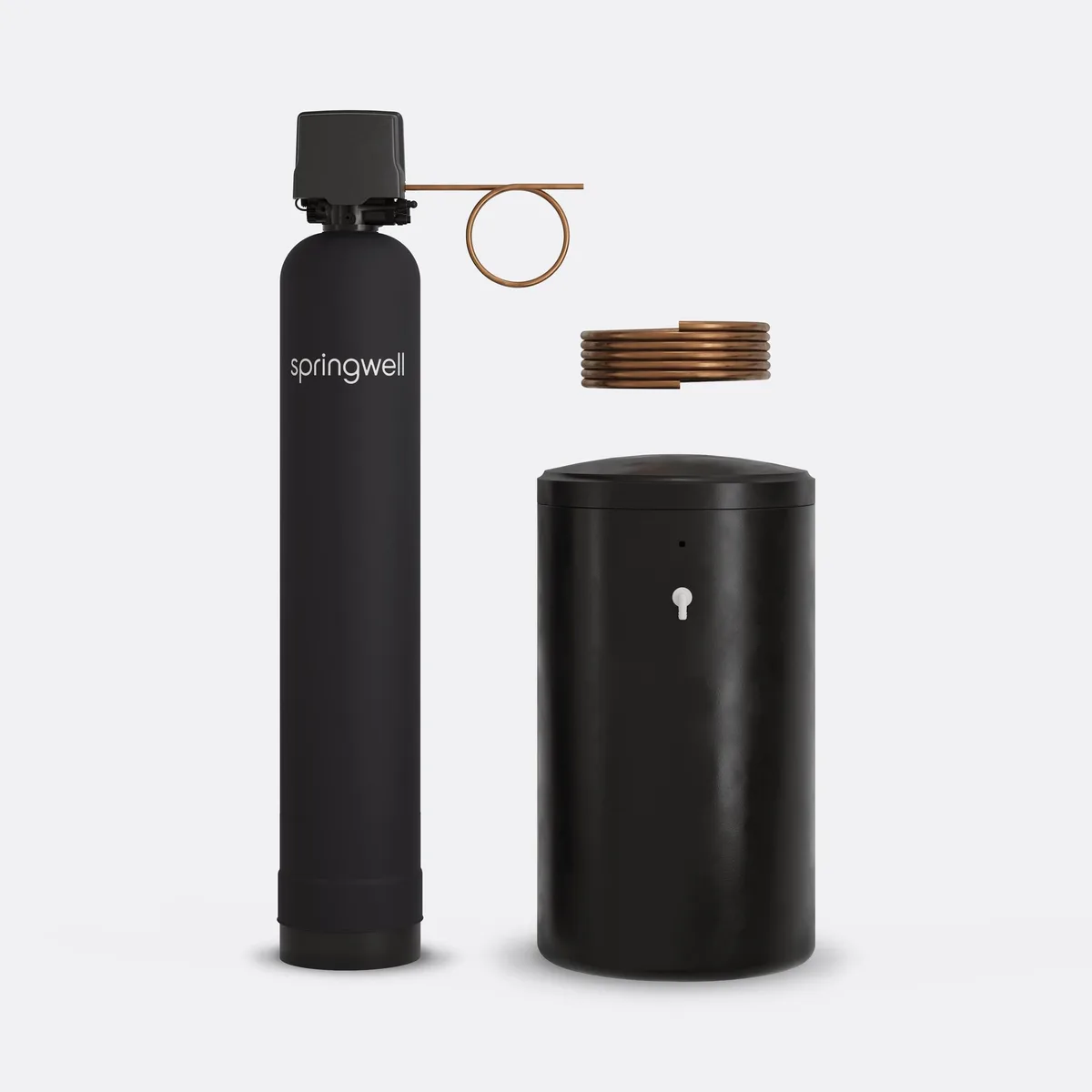 Needs a high salt setting
SpringWell SS1 Salt-Based Water Softener
$1,890 · 3–4 bathrooms
It keeps up, but only on its heaviest salt setting (15 lb each time), so you'll buy more salt than with a bigger unit.
- Holds
- 30,000 grains
- on 15.0 lb of salt
- Flow
- 11.0 GPM
- Keeps up with your home
- Cleans itself every
- 7.8–17.6 days
- Salt per year
- ~$96
- 13 bags (40 lb)
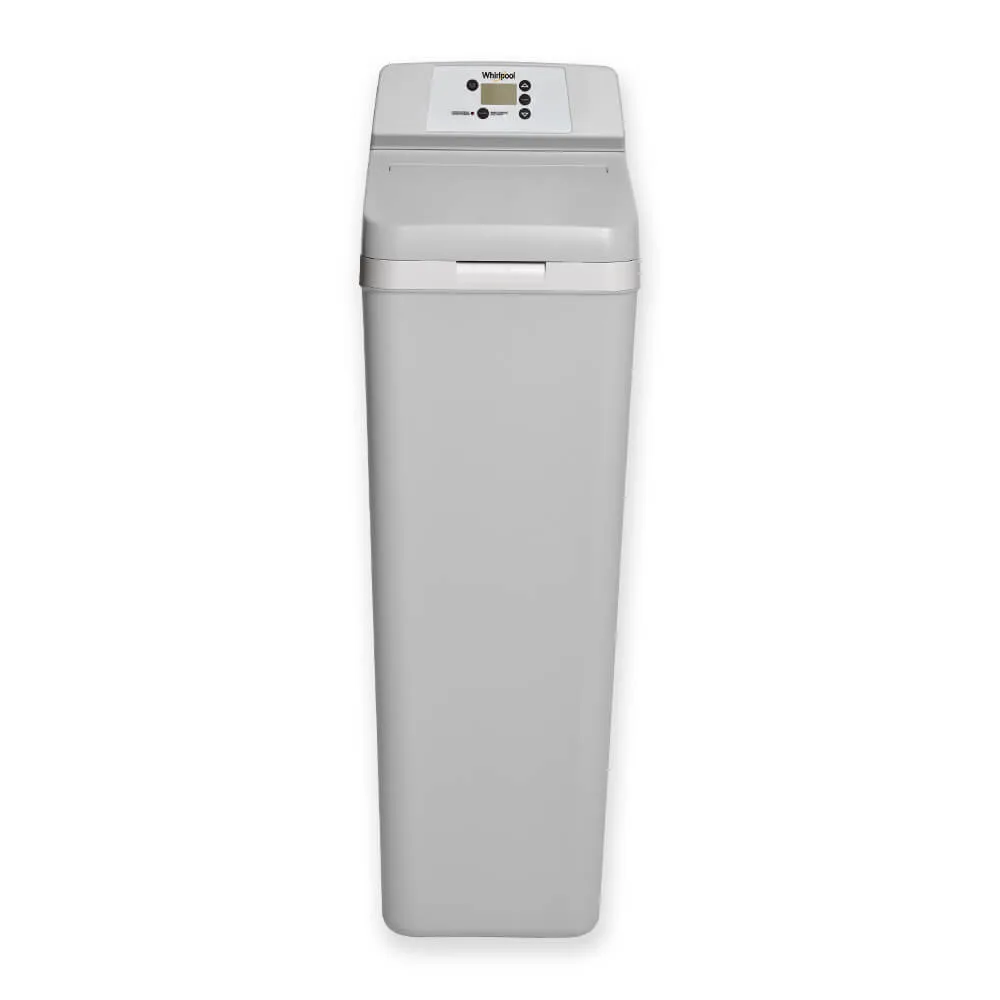 Low flow for your home
Whirlpool WHES33 33,000-Grain Water Softener
$519 · 1–2 bathrooms
Holds enough, but its flow (8.0 GPM) is a little low for 2.5 bathrooms. Pressure may dip if two showers and the dishwasher run together.
- Holds
- 27,600 grains
- on 8.3 lb of salt
- Flow
- 8.0 GPM
- May dip with two showers on
- Cleans itself every
- 7.1–16.2 days
- Salt per year
- ~$58
- 8 bags (40 lb)
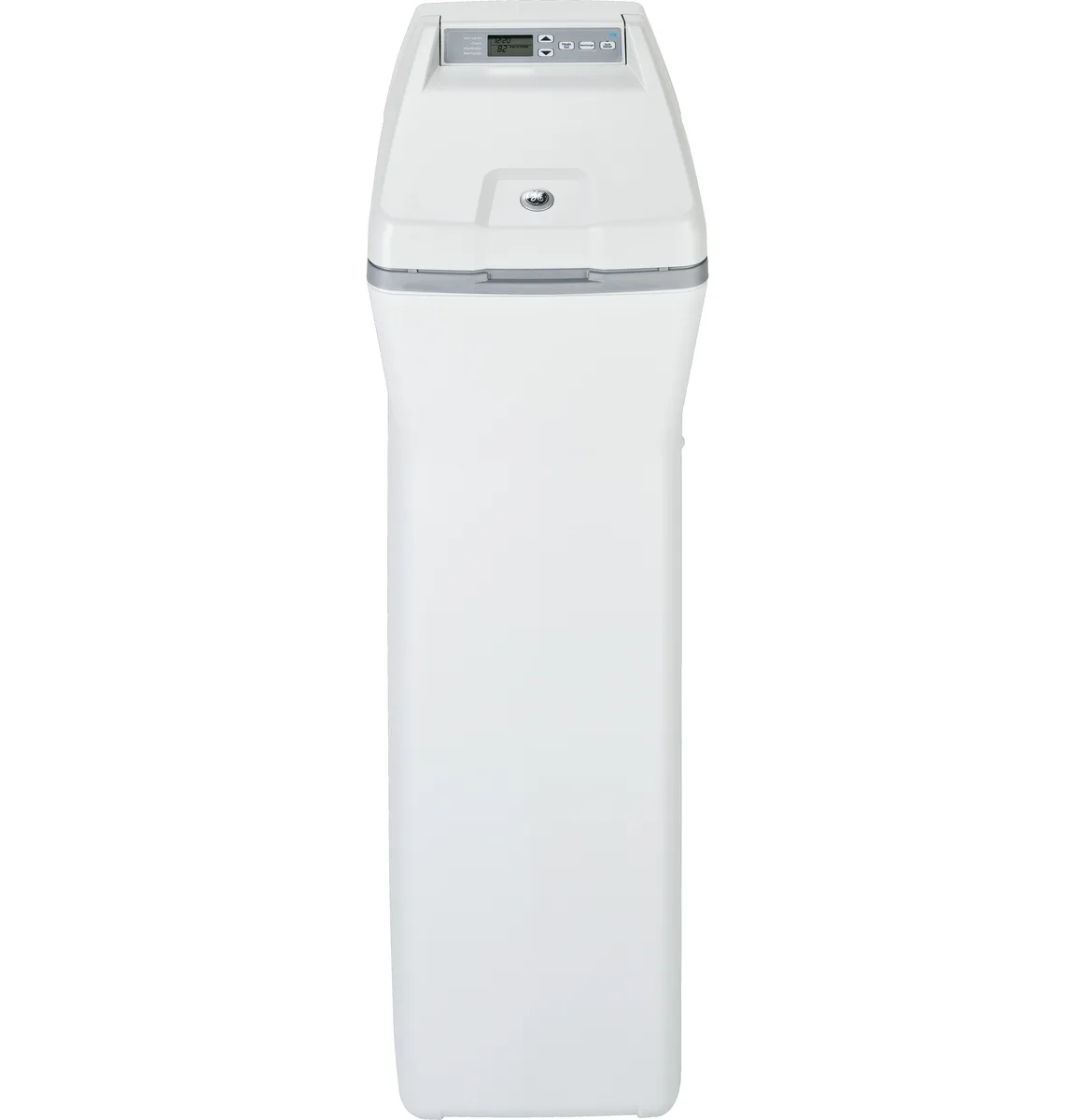 Good fit
GE GXSH40V 40,000-Grain Water Softener
$649 · 2–3 bathrooms
Big enough for your household on an everyday salt setting, and it keeps up with 2.5 bathrooms in use at once.
- Holds
- 31,500 grains
- on 8.7 lb of salt
- Flow
- 9.5 GPM
- Keeps up with your home
- Cleans itself every
- 8.1–18.5 days
- Salt per year
- ~$53
- 7 bags (40 lb)
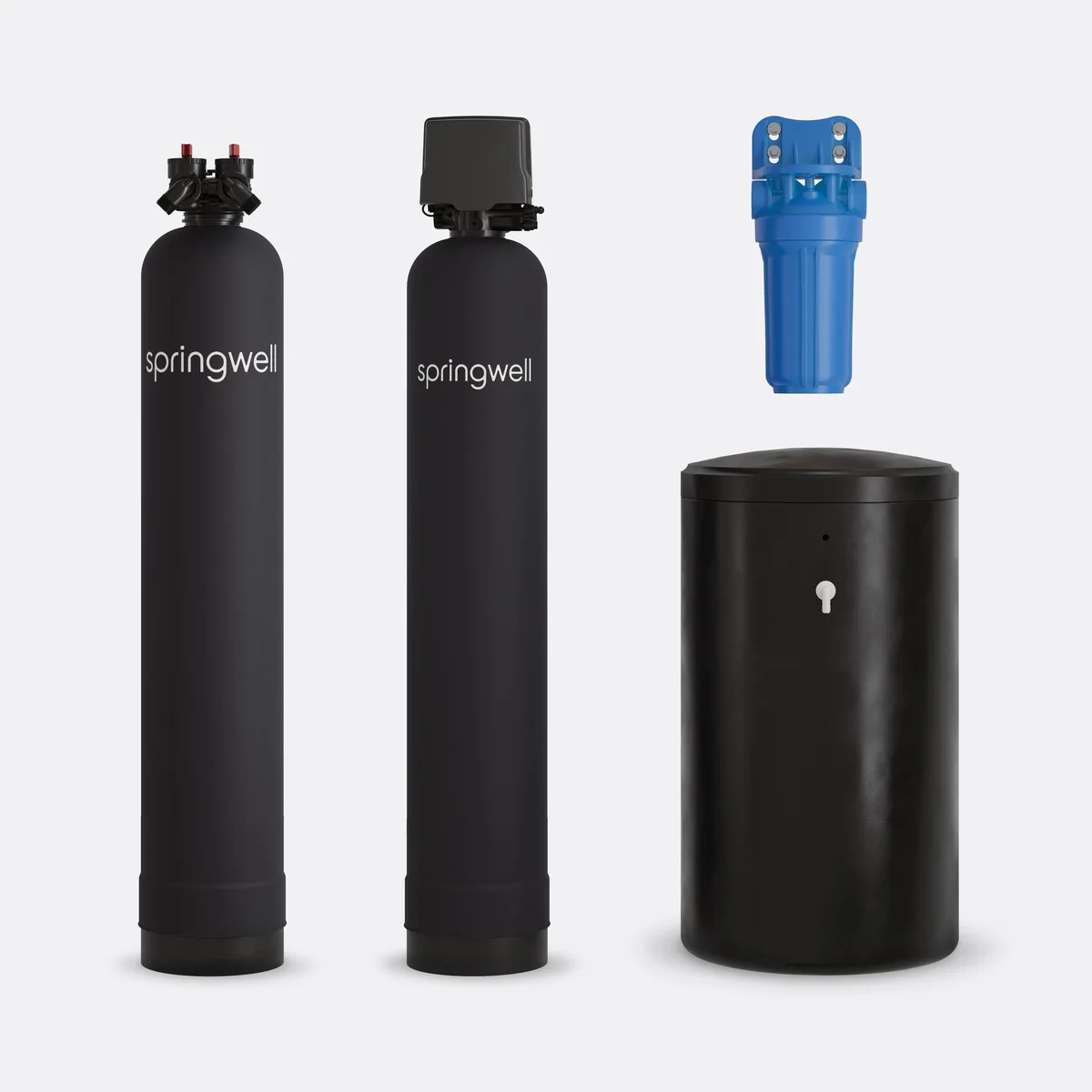 Needs a high salt setting
SpringWell CSS1 Whole-House Filter & Softener Combo
$2,625 · 2–3 bathrooms
It keeps up, but only on its heaviest salt setting (15 lb each time), so you'll buy more salt than with a bigger unit.
- Holds
- 30,000 grains
- on 15.0 lb of salt
- Flow
- 9.0 GPM
- Keeps up with your home
- Cleans itself every
- 7.8–17.6 days
- Salt per year
- ~$96
- 13 bags (40 lb)
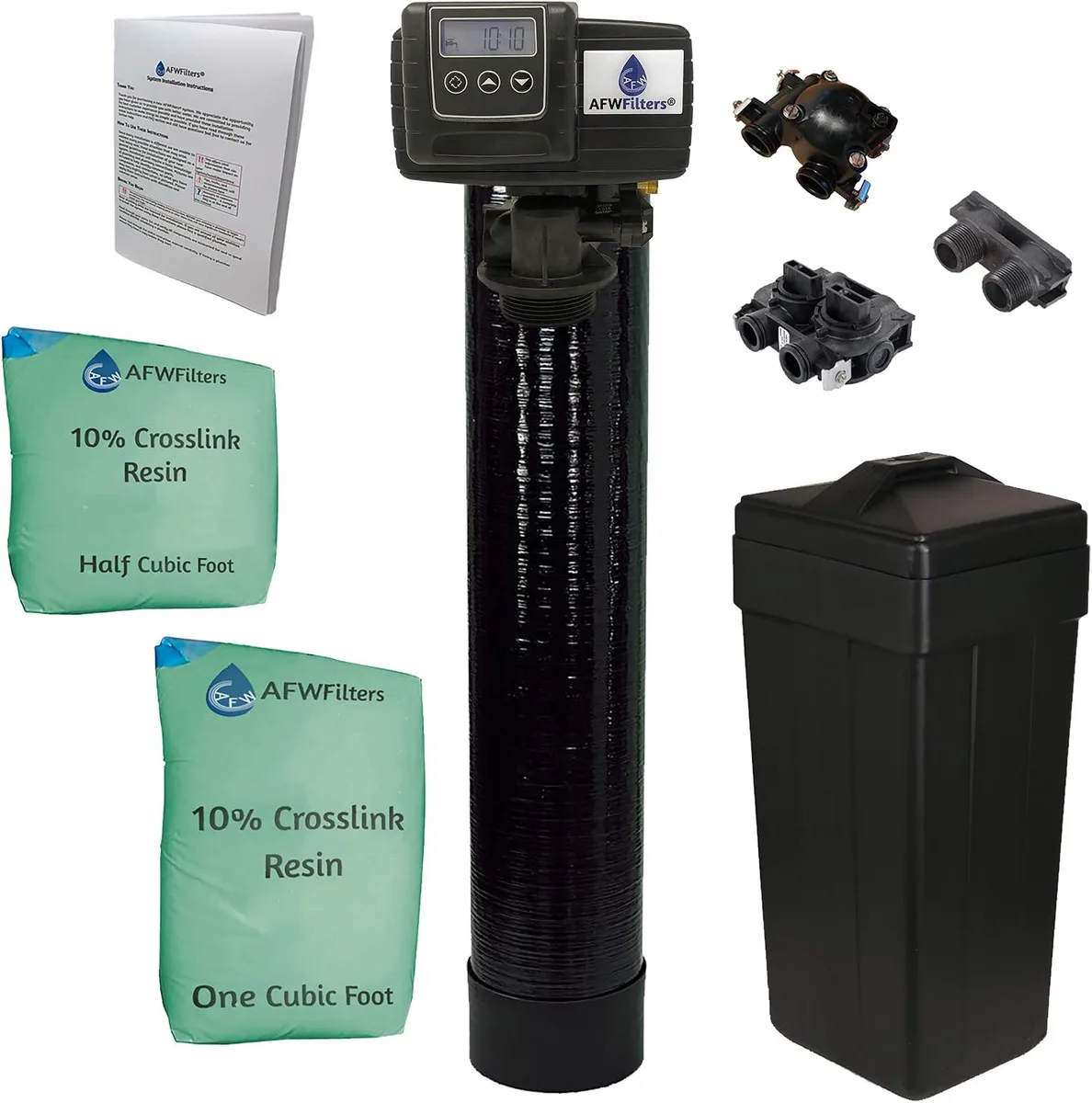 Good fit
AFWFilters Fleck 5600SXT 48,000-Grain Water Softener (10% crosslink resin)
$805 · 3–4 bathrooms
Big enough for your household on an everyday salt setting, and it keeps up with 2.5 bathrooms in use at once.
- Holds
- 30,000 grains
- on 9.0 lb of salt
- Flow
- 14.0 GPM
- Keeps up with your home
- Cleans itself every
- 7.8–17.6 days
- Salt per year
- ~$58
- 8 bags (40 lb)
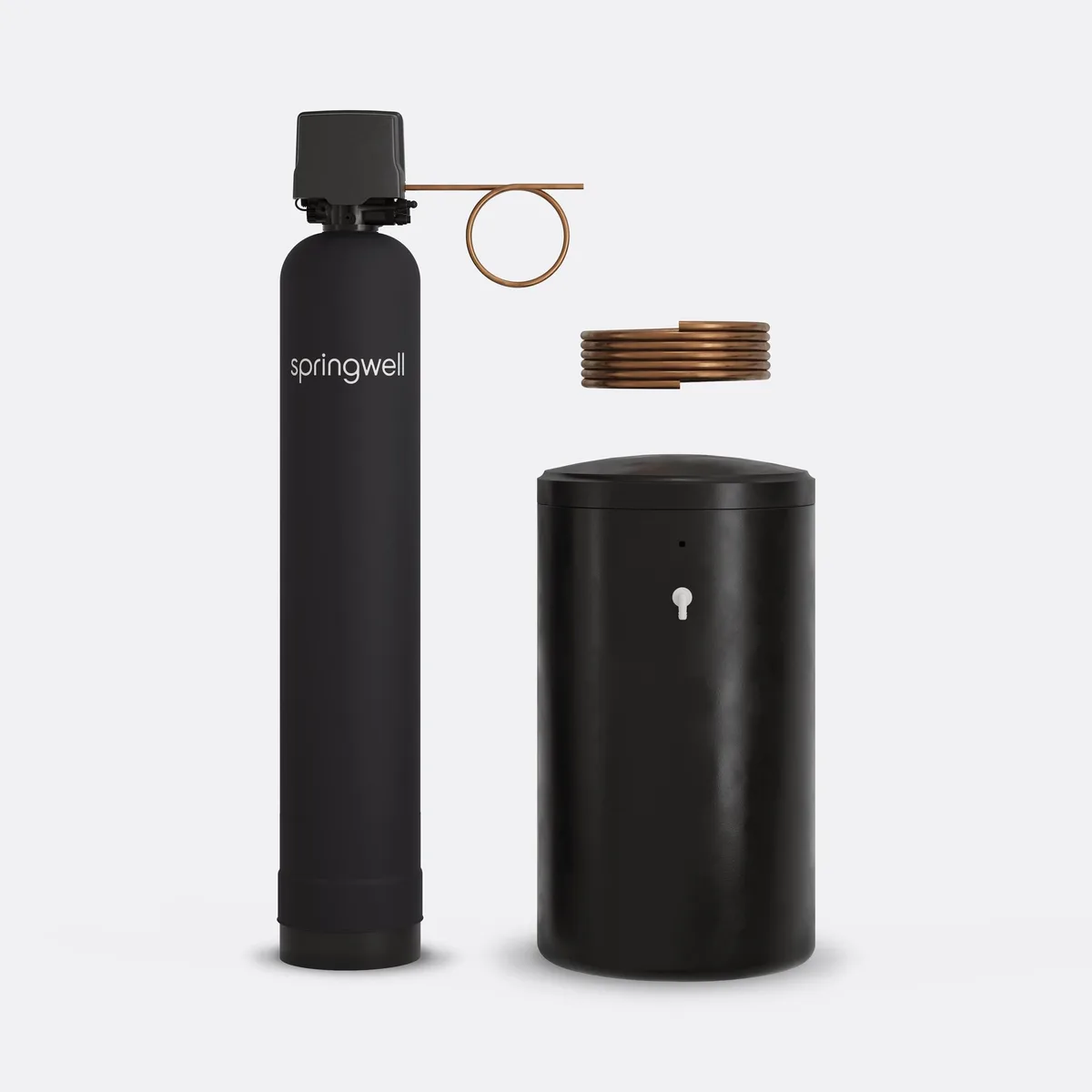 Good fit
SpringWell SS4 Salt-Based Water Softener
$2,100 · 3–4 bathrooms
Big enough for your household on an everyday salt setting, and it keeps up with 2.5 bathrooms in use at once.
- Holds
- 30,000 grains
- on 9.0 lb of salt
- Flow
- 13.0 GPM
- Keeps up with your home
- Cleans itself every
- 7.8–17.6 days
- Salt per year
- ~$58
- 8 bags (40 lb)
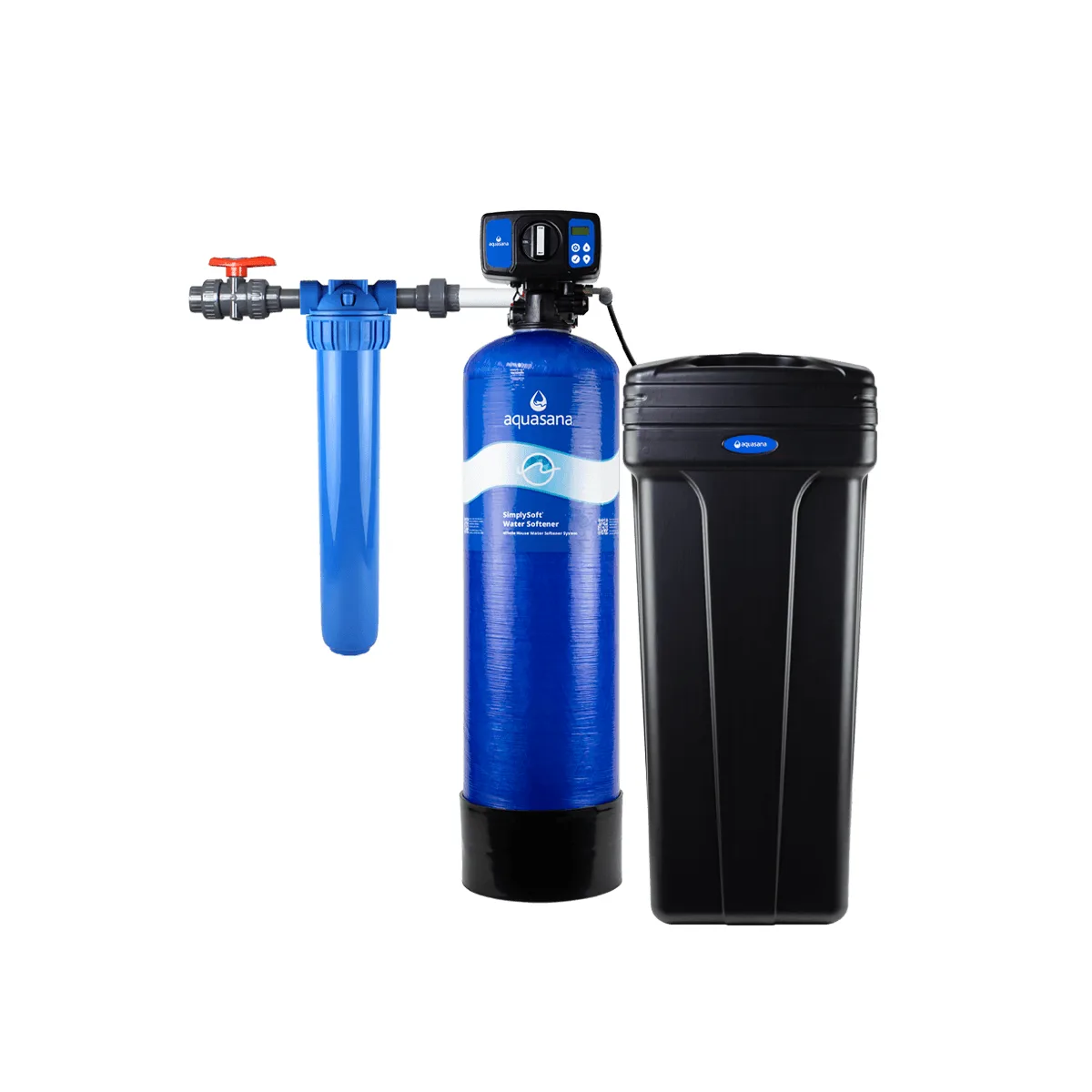 Needs a high salt setting
Aquasana SimplySoft 40,000 Grain Salt-Based Water Softener
$1,698 · 3–4 bathrooms
It keeps up, but only on its heaviest salt setting (15 lb each time), so you'll buy more salt than with a bigger unit.
- Holds
- 30,000 grains
- on 15.0 lb of salt
- Flow
- 11.0 GPM
- Keeps up with your home
- Cleans itself every
- 7.8–17.6 days
- Salt per year
- ~$96
- 13 bags (40 lb)
 Low flow for your home
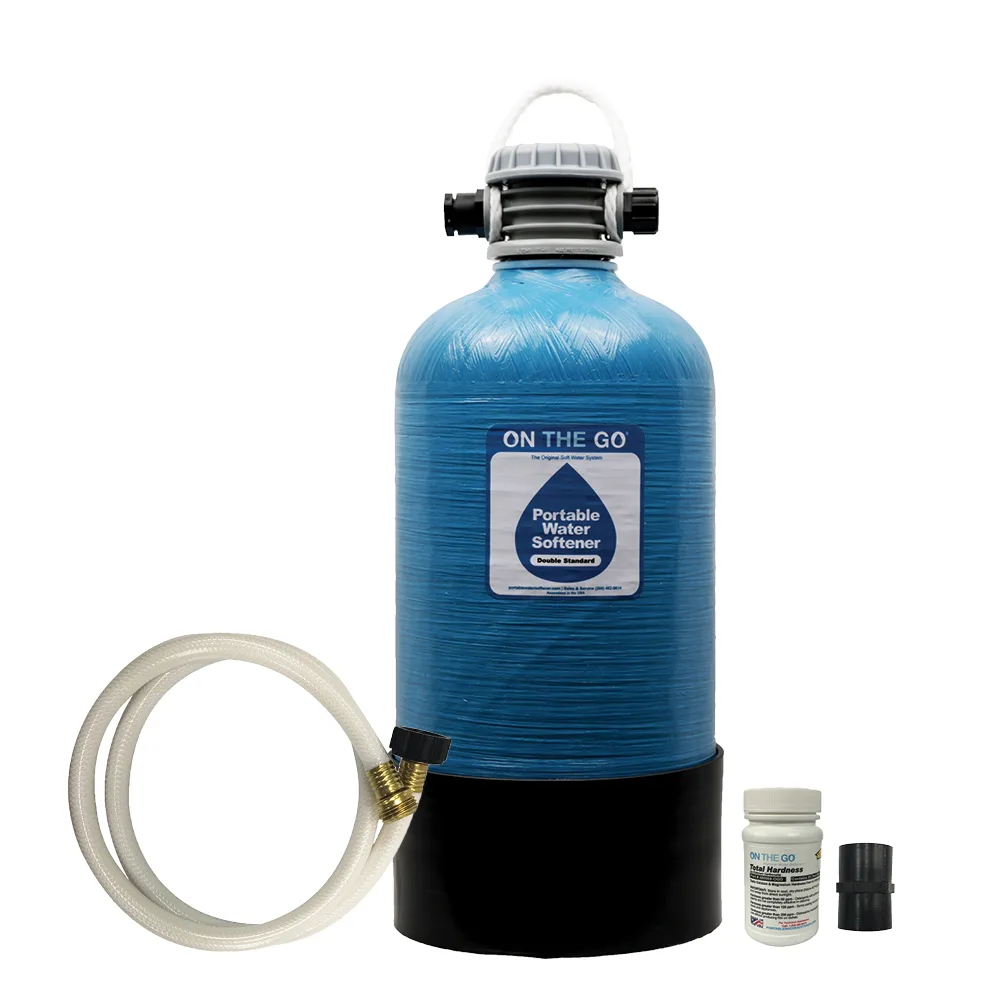
On The Go Portable Double Standard Water Softener (16,000 grain)
$205 · 1–2 bathrooms
Holds enough, but its flow (3.0 GPM) is a little low for 2.5 bathrooms. Pressure may dip if two showers and the dishwasher run together.
- Holds
- 15,600 grains
- on 7.8 lb of salt
- Flow
- 3.0 GPM
- May dip with two showers on
- Cleans itself every
- 4.0–9.2 days
- Salt per year
- ~$95
- 13 bags (40 lb)
Systems we'd look at for Aurora water
We may earn a commission when you buy through links on this page, at no extra cost to you. How we make money
What will a system cost to install and maintain over 5 years?
Compare an online/retail unit plus licensed plumber installation against a turnkey local dealer quote—including 5 years of salt, regeneration water, and maintenance.
- Option A (5-Yr)
- $3,008
- Option B (5-Yr)
- $4,768
- 5-Year Savings
- $1,760
SpringWell SS1 Salt-Based Water Softener · $50/mo
Local Water Dealer Quote · $79/mo
SpringWell SS1 Salt-Based Water Softener saves ~$1,760 over 5 years.
| Cost Component (5-Yr) | Option A: SpringWell SS1 Salt-Based Water Softener | Option B: Local Water Dealer Quote |
|---|---|---|
| Equipment Price(Dealer quote bundles equipment + install) | $1,890 | $3,800 |
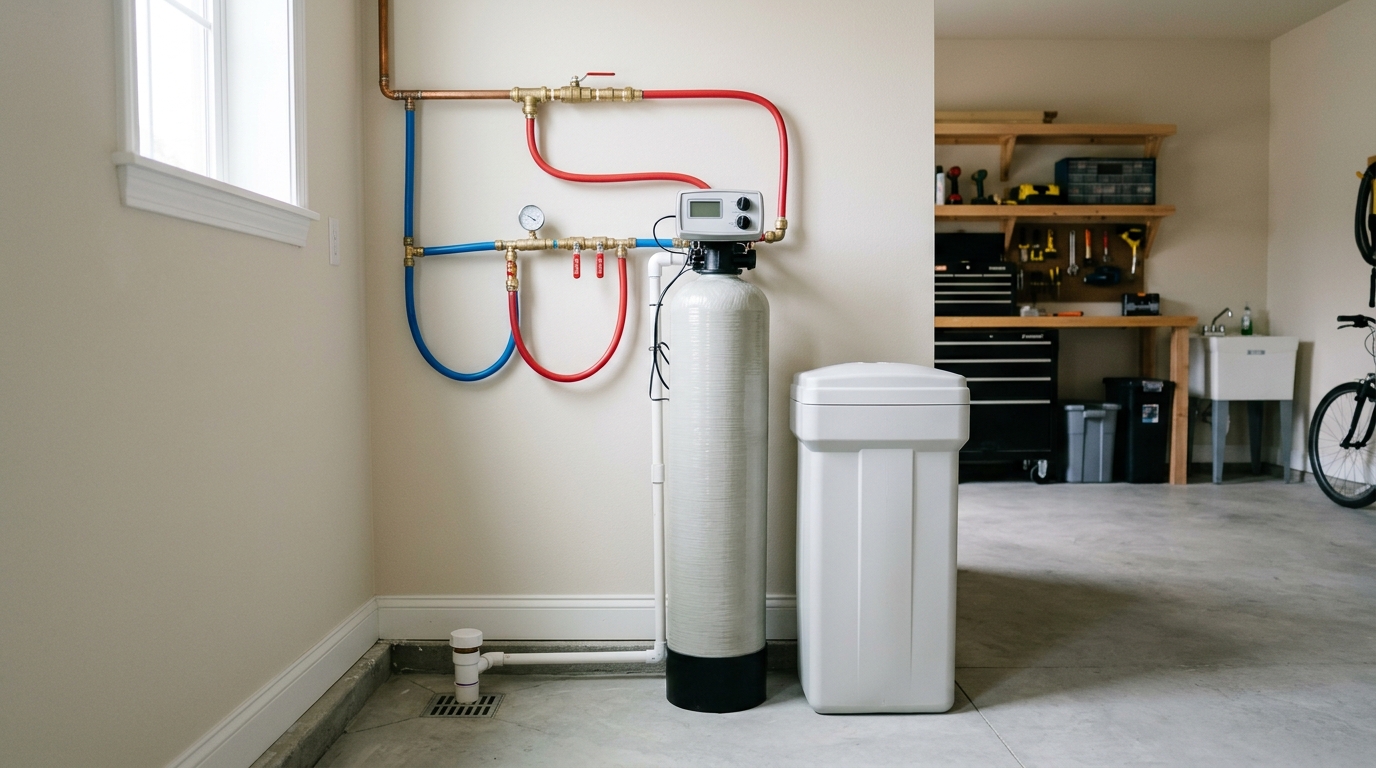
| Plumber Installation(existing garage loop) | $750 | Bundled above |
| Upfront Installed Subtotal | $2,640 | $3,800 |
| 5-Year Softener Salt(@ $7.50 / 40-lb bag) | $280~7.5 bags/yr | $280~7.5 bags/yr |
| 5-Year Regeneration Water(@ $11.00 / 1,000 gal) | $88~1,600 gal/yr | $88~1,600 gal/yr |
| 5-Year Cartridges / Media / Service Plan | $0 | $600 |
| 5-Year Total Installed Cost | $3,008 | $4,768 |
| Effective Monthly Ownership Cost | $50.13 / month | $79.47 / month |
Is Aurora tap water safe to drink?
Yes for most people. Aurora's PFAS results are all below federal limits, with averages under 3 parts per trillion for each compound, and its Binney plant is built to remove emerging contaminants. The water uses chloramine, so treat it before it goes in a fish tank. Older homes should test for lead at the tap.
Hard water itself isn't a health risk, and a water softener doesn't remove PFAS or lead. Here's what Aurora Water's own testing shows for both.
PFAS ("forever chemicals")
2025 averages (ranges) in ppt: PFBS 1.74 (<2–4.4), PFOA 0.37 (<2–2.4), PFOS 0.50 (<2–2.9), PFBA 2.46 (<2–7.9), PFHxA 1.08 (<2–5.5), PFPeA 1.39 (<2–6.2). GenX, PFHxS and PFNA were below 2. Hazard Index 0.
Lead: the city's numbers vs. your own pipes
The city's lead results come from a sample of homes across the system, not your tap. Lead usually comes from older service lines, solder and fixtures, so if your home was built before 1986 or you have young children, test your own tap or use a filter certified to NSF/ANSI 53 for lead.
Not sure what's in your tap or well water? Test it first.
Municipal CCRs summarize utility-wide averages and ranges, while private wells have no municipal report at all. Spending $15–$200 on the right test upfront prevents buying an undersized softener or unnecessary treatment stage.
1. Municipal Hardness Check (~$10–$15)
Use a drop-titration kit (such as a Hach 5-B) at your kitchen cold tap. Each drop equals 1 GPG—far more accurate than color dip strips.
2. Well Water, Lead, or PFAS Lab Panel
If you have a private well, pre-1986 plumbing, or want tap-level PFAS/iron data, order an accredited mail-in drinking-water lab test before sizing hardware.
Frequently Asked Questions: Aurora Tap Water (CO0103005)
Concise answers grounded in published CCR monitoring data and actual softener sizing math.
- Is Aurora tap water safe to drink?
- Yes for most people. Aurora's PFAS results are all below federal limits, with averages under 3 parts per trillion for each compound, and its Binney plant is built to remove emerging contaminants. The water uses chloramine, so treat it before it goes in a fish tank. Older homes should test for lead at the tap.
- How hard is Aurora, Colorado water?
- Aurora Water's 2026 report lists an average of 136 ppm, about 8 grains per gallon, with daily samples from 87 to 198 ppm in 2025.
- Is Aurora water harder than Denver water?
- Usually, yes. Aurora blends in Prairie Waters well water from the South Platte, which is harder than Denver Water's mountain supply. Denver's own figures are on its city page.
- Does Aurora use chloramine?
- Yes. Aurora disinfects with chloramine, which matters for fish tanks and home brewing. A catalytic carbon filter reduces the taste at the tap.
- Is there PFAS in Aurora water?
- Low levels, all below federal limits. 2025 averages were under 3 parts per trillion for each compound, with PFOA up to 2.4 and PFOS up to 2.9.
Other cities
Denver Water
City of Chandler Public Works & Utilities
City of Glendale Water Services
City of Mesa Water Resources
City of Phoenix Water Services Department
Scottsdale Water