

How hard is Riverside water?
Riverside tap water (Riverside Public Utilities, PWS ID CA3310031) averages 197 mg/L of hardness, about 12 grains per gallon, with a range of 180 to 210 mg/L. That's hard to very hard, so most families of four should look at a 32,000 to 40,000-grain softener.
How hard is Riverside tap water?
Riverside's 2025 report lists hardness averaging 197 mg/L, ranging 180–210 mg/L, and describes it as about 12 grains per gallon. That's hard to very hard, and fairly steady because the city blends its wells before delivery.
| Measure | Value | Source |
|---|---|---|
| Public Water System ID | CA3310031 (Riverside Public Utilities) | From the city's water report |
| Total Hardness (GPG) | 10.5–12.3 GPG(range) | From the city's water report |
| Total Hardness (mg/L as CaCO₃) | 180–210 mg/L as CaCO₃ | From the city's water report |
| USGS Hardness Classification | Very Hard | USGS scale (<3.5 Soft · 3.5–7.0 Mod · 7.0–10.5 Hard · >10.5 Very Hard) |
| Primary Disinfectant | Chlorine | From the city's water report |
| Water Supply Source | Groundwater from the Bunker Hill and Riverside basins, pumped from about 45 wells and blended before delivery | ~302,776 residents served |
| CCR Citation & Period | 2025 Water Quality Report (2025 data) | Read the city's report |
How to confirm your water provider on your utility bill
Your bill should say Riverside Public Utilities. Parts of the Riverside area are served by Western Municipal Water District or other agencies instead.
What size water softener fits a Riverside home?
Pre-loaded with Riverside Public Utilities' verified CCR hardness (10.5–12.3 GPG). You can override the CCR figure anytime with your own tap test.
- Your water From the city's water report
- Very Hard
- Size to look for
- 32,000–40,000 grain
- Salt you'll buy
- ~1 bag / mo
Heavy chalky buildup on faucets and showerheads — a properly sized softener makes a big difference.
Measured: 10.5–12.3 GPG (range)
Sized for the top of your range so you don't get white spots mid-week.
The math: 3,150–3,690 gr/day (22,050–25,830 grains / 7 days)
Roughly $11/month in 40-lb salt pellets.
Based on ~300 gal/day indoor use (4 people)
How each softener would do in your home
Checked at an everyday salt setting, not the number printed on the box.
We may earn a commission when you buy through links on this page, at no extra cost to you. How we make money
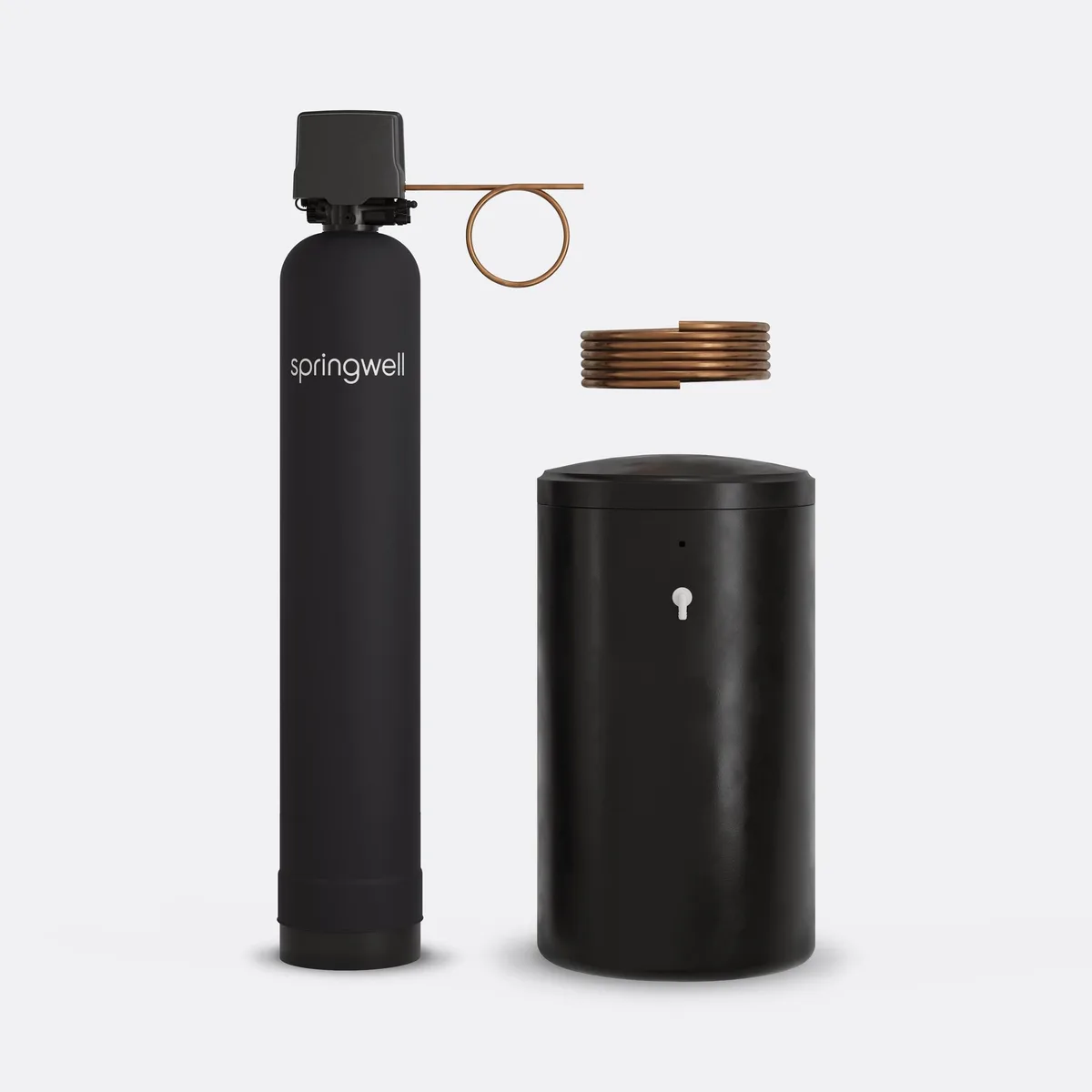 Needs a high salt setting
SpringWell SS1 Salt-Based Water Softener
$1,890 · 3–4 bathrooms
It keeps up, but only on its heaviest salt setting (15 lb each time), so you'll buy more salt than with a bigger unit.
- Holds
- 30,000 grains
- on 15.0 lb of salt
- Flow
- 11.0 GPM
- Keeps up with your home
- Cleans itself every
- 7.3–8.6 days
- Salt per year
- ~$130
- 17 bags (40 lb)
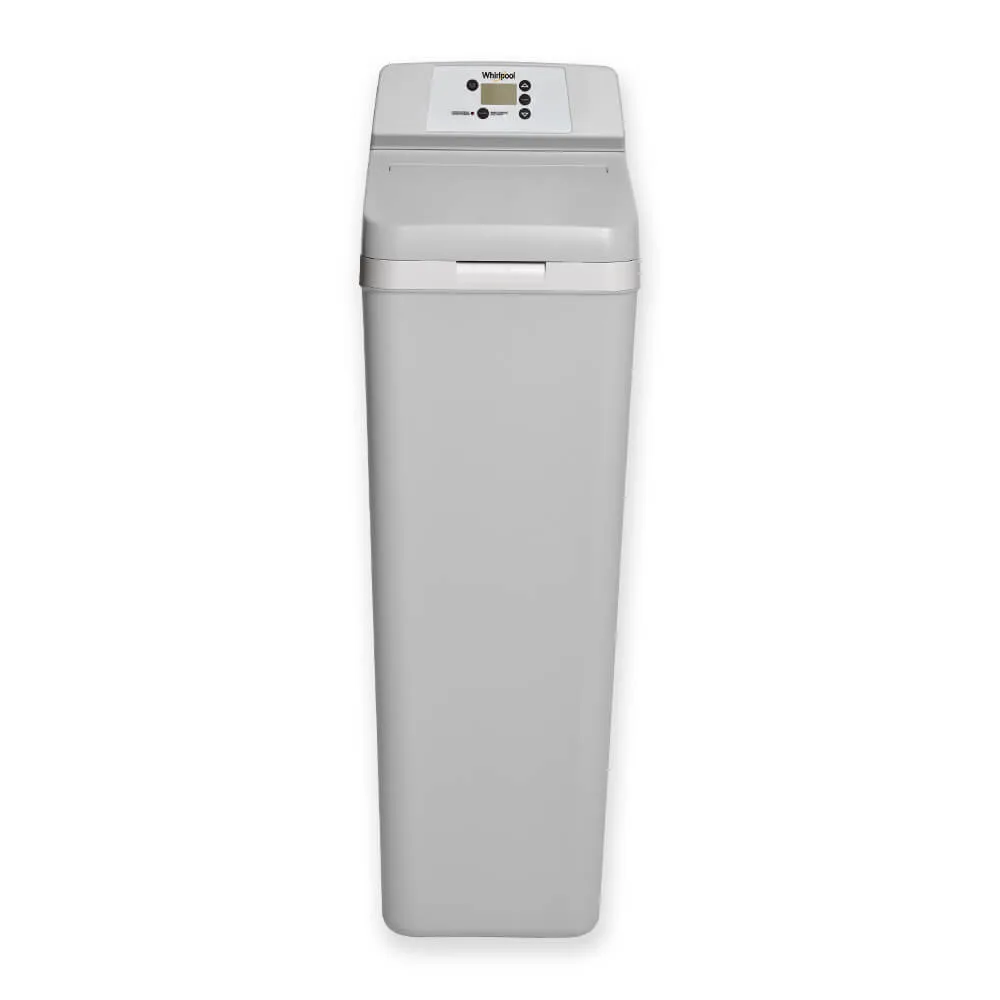 Low flow for your home
Whirlpool WHES33 33,000-Grain Water Softener
$519 · 1–2 bathrooms
Holds enough, but its flow (8.0 GPM) is a little low for 2.5 bathrooms. Pressure may dip if two showers and the dishwasher run together.
- Holds
- 27,600 grains
- on 8.3 lb of salt
- Flow
- 8.0 GPM
- May dip with two showers on
- Cleans itself every
- 6.7–7.9 days
- Salt per year
- ~$78
- 10 bags (40 lb)
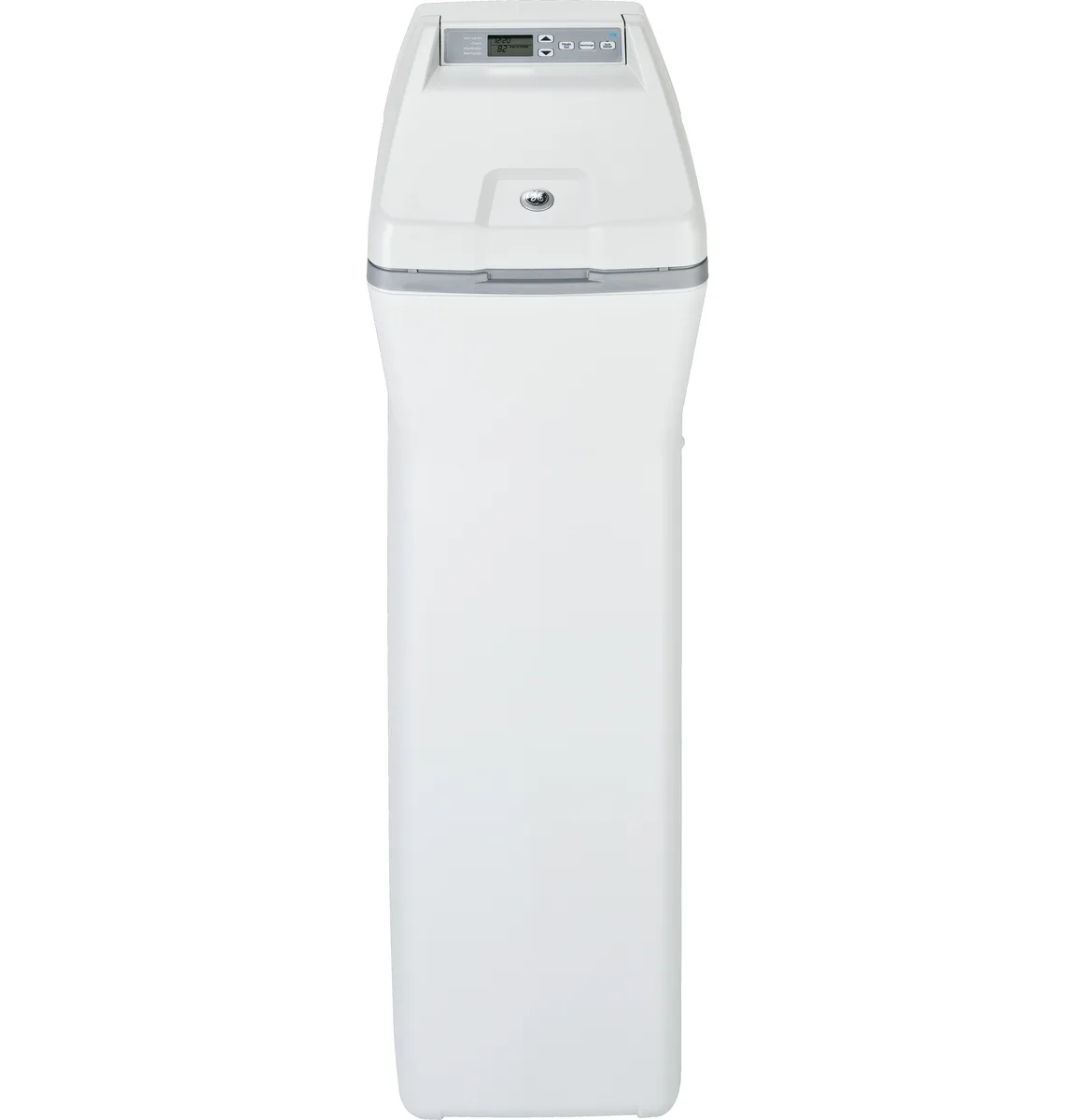 Good fit
GE GXSH40V 40,000-Grain Water Softener
$649 · 2–3 bathrooms
Big enough for your household on an everyday salt setting, and it keeps up with 2.5 bathrooms in use at once.
- Holds
- 31,500 grains
- on 8.7 lb of salt
- Flow
- 9.5 GPM
- Keeps up with your home
- Cleans itself every
- 7.7–9.0 days
- Salt per year
- ~$72
- 10 bags (40 lb)
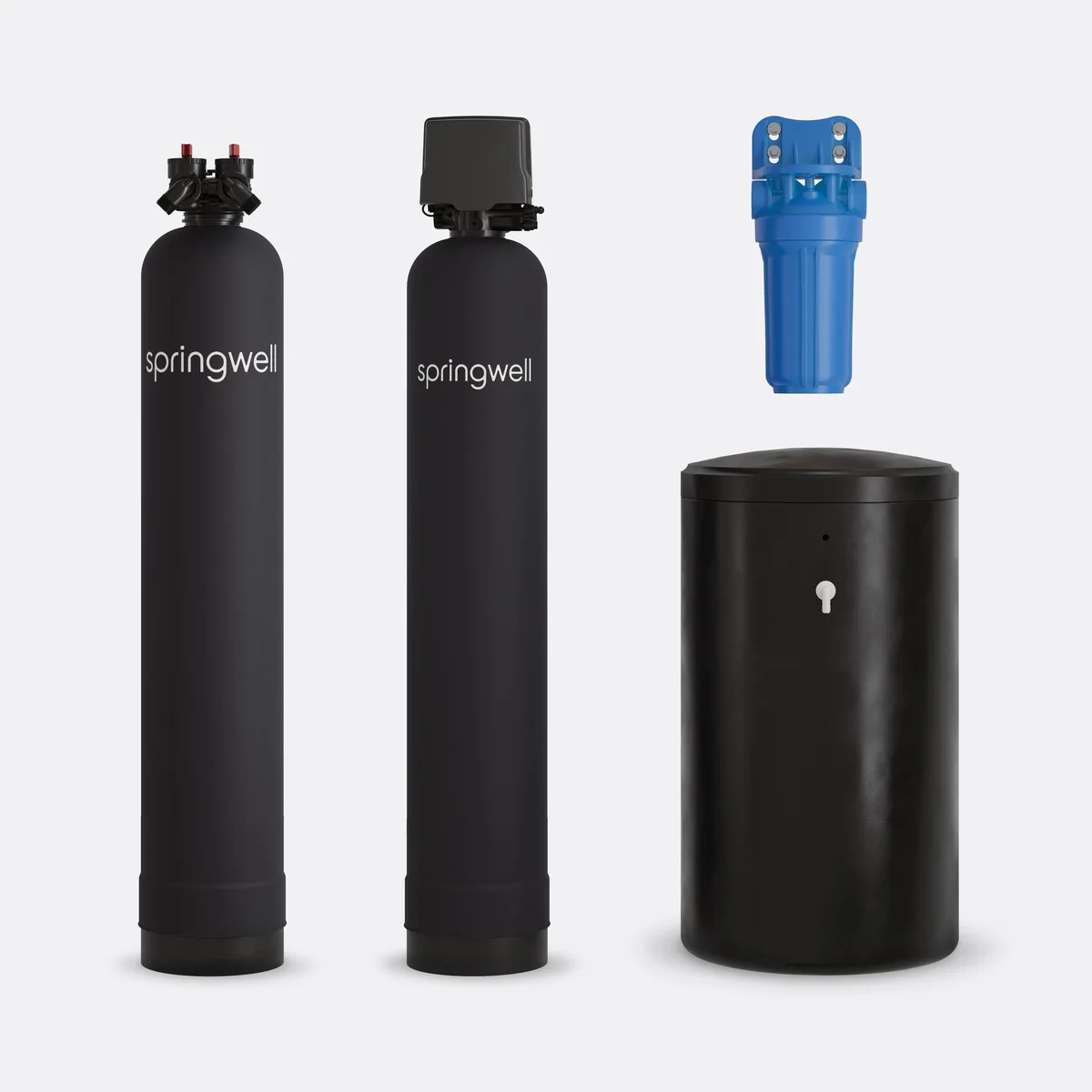 Needs a high salt setting
SpringWell CSS1 Whole-House Filter & Softener Combo
$2,625 · 2–3 bathrooms
It keeps up, but only on its heaviest salt setting (15 lb each time), so you'll buy more salt than with a bigger unit.
- Holds
- 30,000 grains
- on 15.0 lb of salt
- Flow
- 9.0 GPM
- Keeps up with your home
- Cleans itself every
- 7.3–8.6 days
- Salt per year
- ~$130
- 17 bags (40 lb)
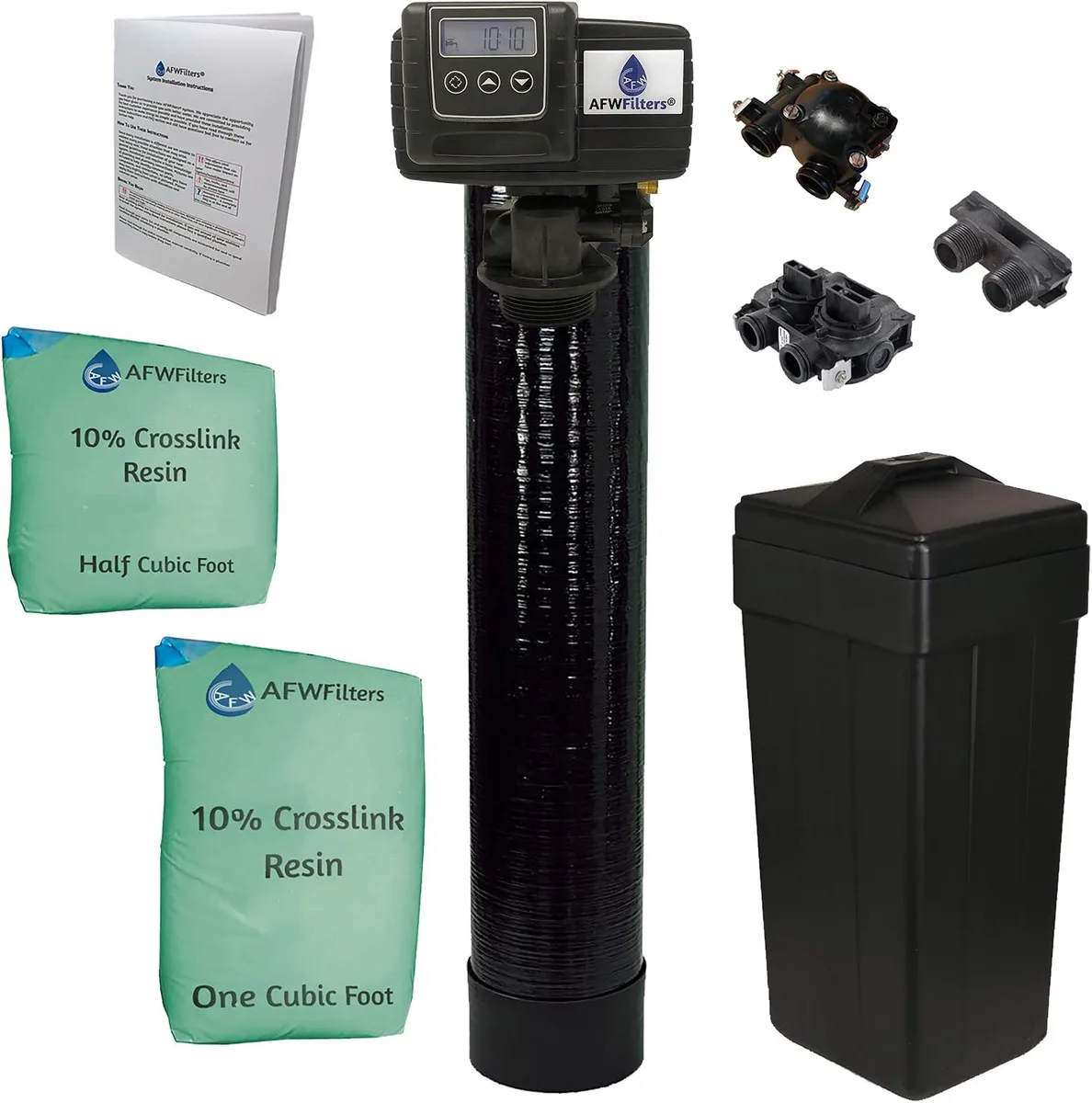 Good fit
AFWFilters Fleck 5600SXT 48,000-Grain Water Softener (10% crosslink resin)
$805 · 3–4 bathrooms
Big enough for your household on an everyday salt setting, and it keeps up with 2.5 bathrooms in use at once.
- Holds
- 30,000 grains
- on 9.0 lb of salt
- Flow
- 14.0 GPM
- Keeps up with your home
- Cleans itself every
- 7.3–8.6 days
- Salt per year
- ~$77
- 10 bags (40 lb)
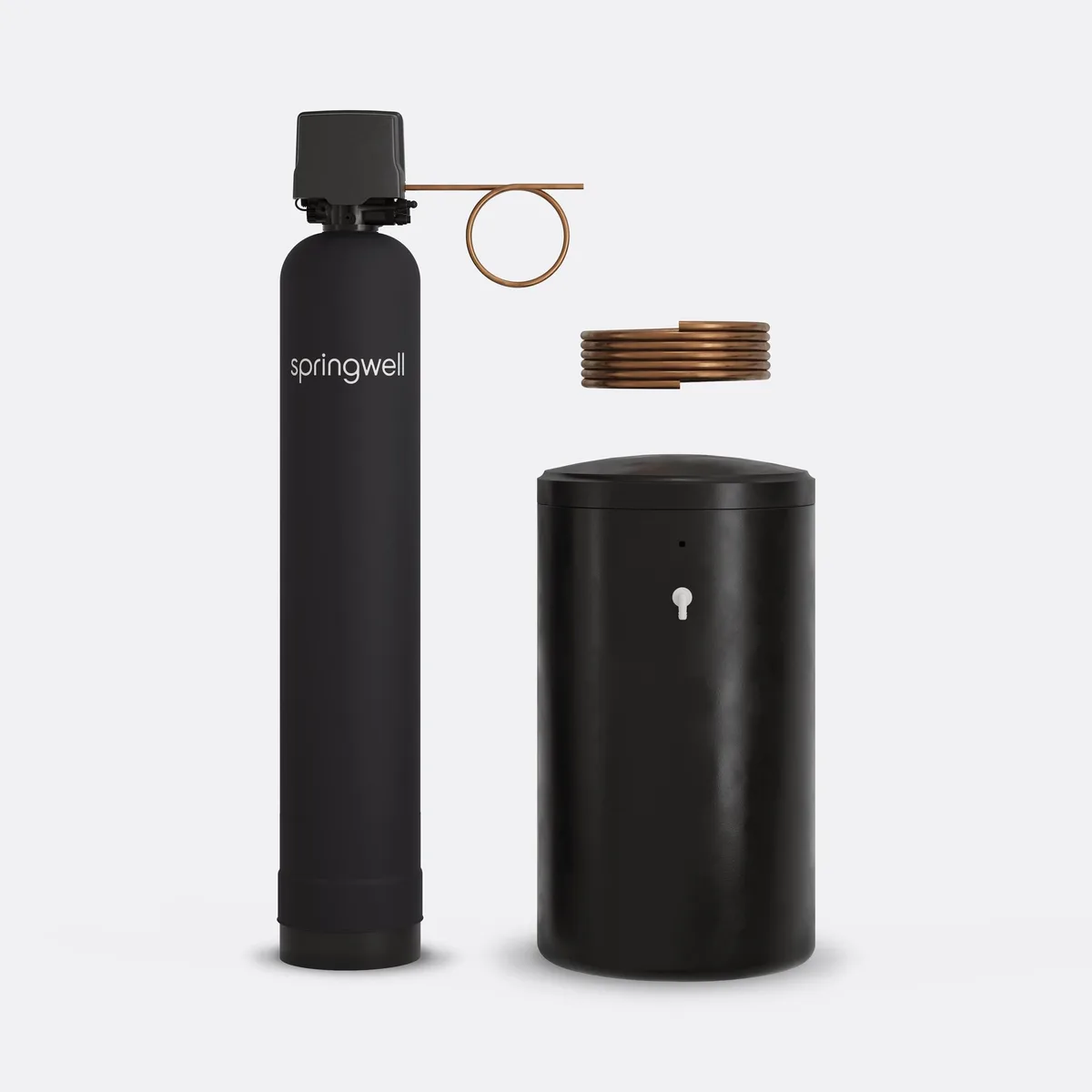 Good fit
SpringWell SS4 Salt-Based Water Softener
$2,100 · 3–4 bathrooms
Big enough for your household on an everyday salt setting, and it keeps up with 2.5 bathrooms in use at once.
- Holds
- 30,000 grains
- on 9.0 lb of salt
- Flow
- 13.0 GPM
- Keeps up with your home
- Cleans itself every
- 7.3–8.6 days
- Salt per year
- ~$77
- 10 bags (40 lb)
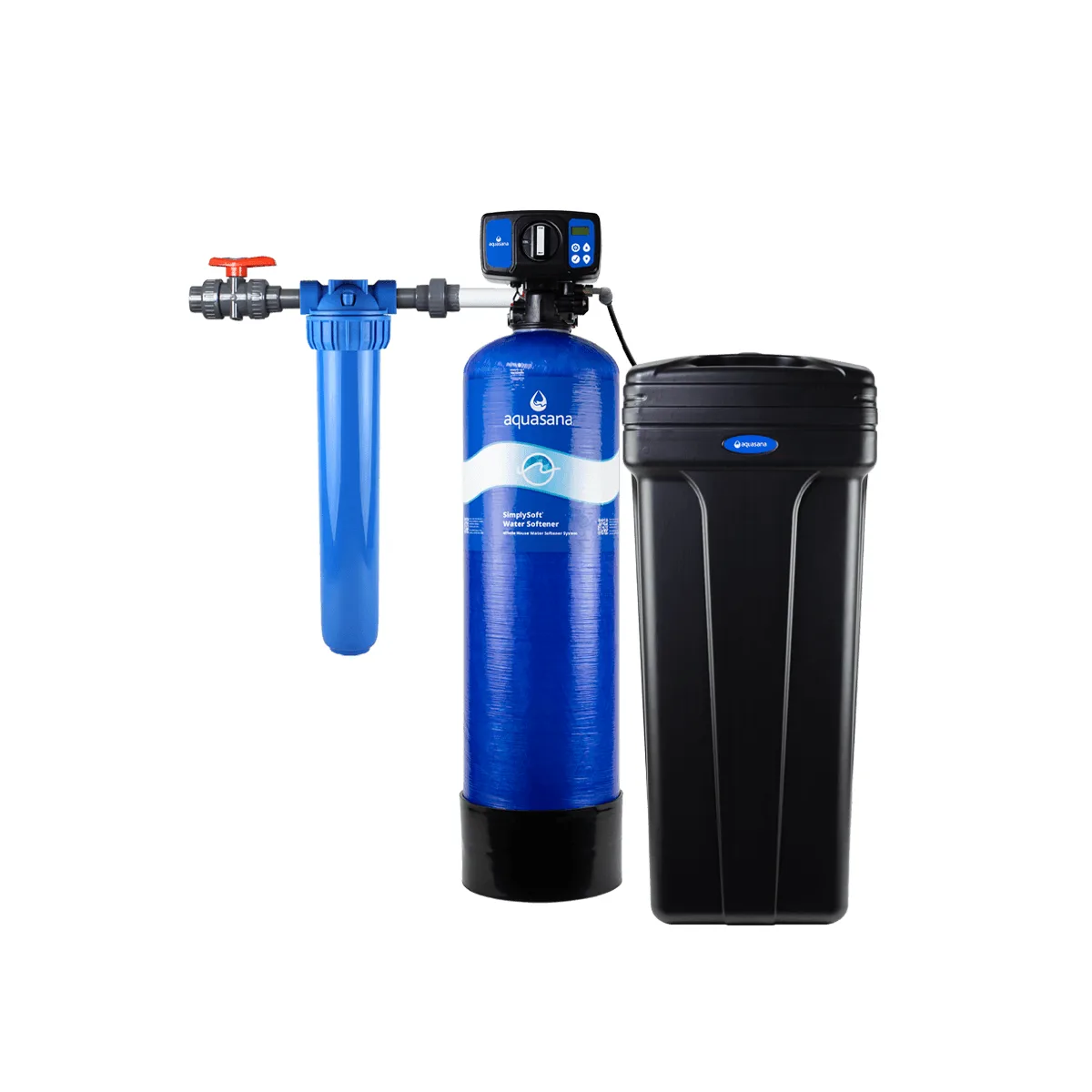 Needs a high salt setting
Aquasana SimplySoft 40,000 Grain Salt-Based Water Softener
$1,698 · 3–4 bathrooms
It keeps up, but only on its heaviest salt setting (15 lb each time), so you'll buy more salt than with a bigger unit.
- Holds
- 30,000 grains
- on 15.0 lb of salt
- Flow
- 11.0 GPM
- Keeps up with your home
- Cleans itself every
- 7.3–8.6 days
- Salt per year
- ~$130
- 17 bags (40 lb)
 Low flow for your home
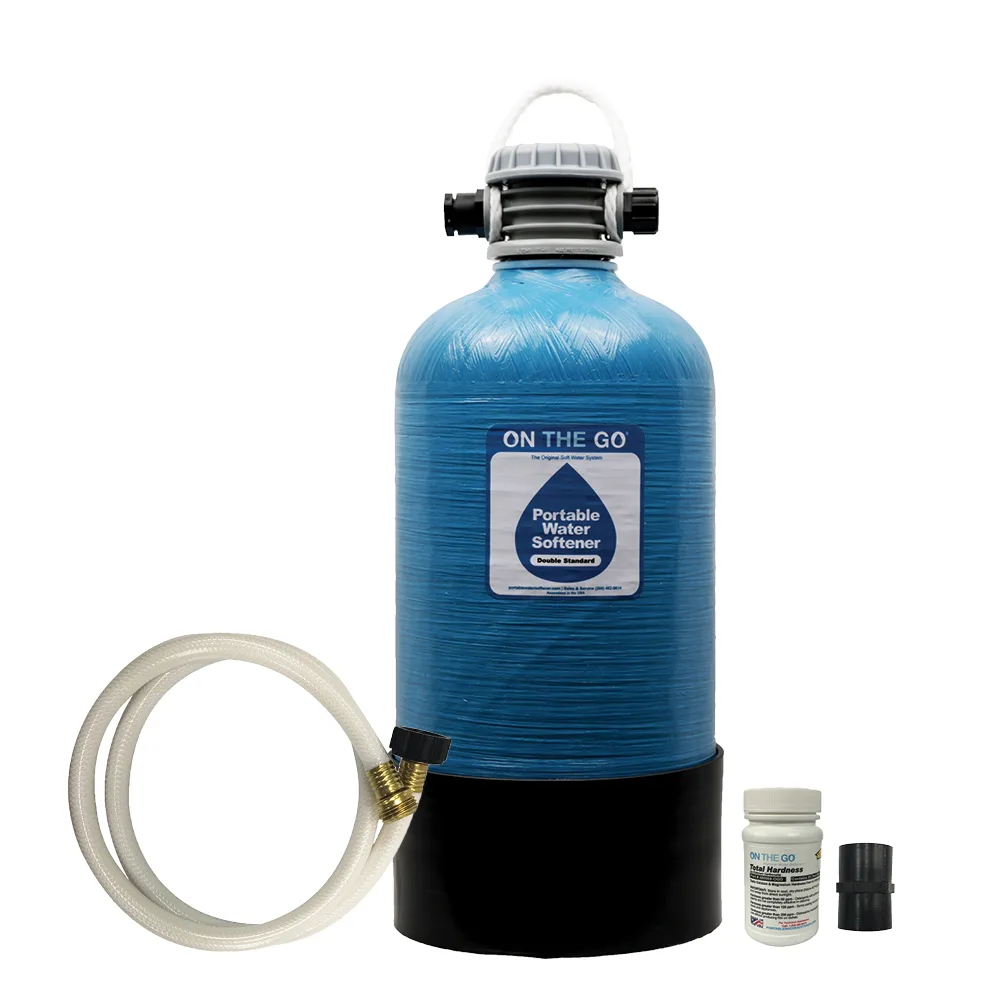
On The Go Portable Double Standard Water Softener (16,000 grain)
$205 · 1–2 bathrooms
Holds enough, but its flow (3.0 GPM) is a little low for 2.5 bathrooms. Pressure may dip if two showers and the dishwasher run together.
- Holds
- 15,600 grains
- on 7.8 lb of salt
- Flow
- 3.0 GPM
- May dip with two showers on
- Cleans itself every
- 3.8–4.5 days
- Salt per year
- ~$131
- 17 bags (40 lb)
Systems we'd look at for Riverside water
We may earn a commission when you buy through links on this page, at no extra cost to you. How we make money
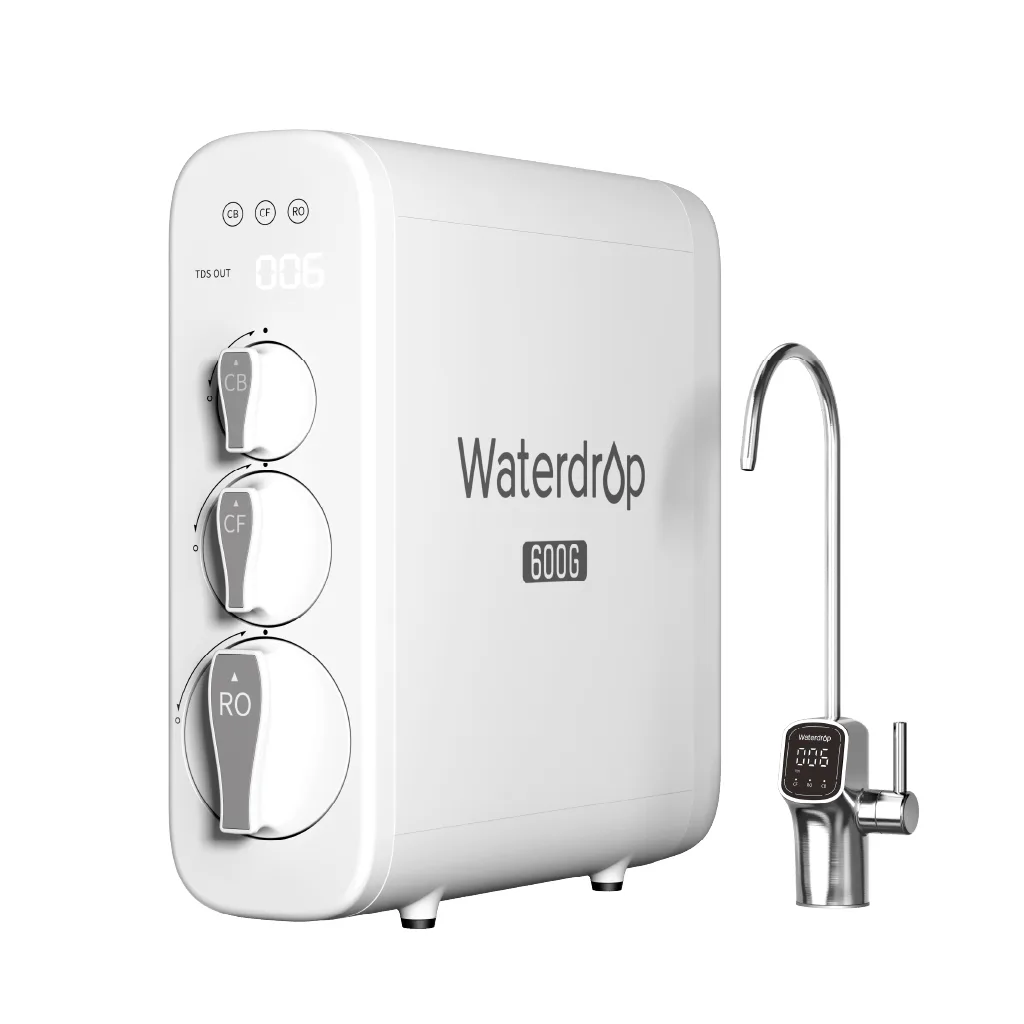
What will a system cost to install and maintain over 5 years?
Compare an online/retail unit plus licensed plumber installation against a turnkey local dealer quote—including 5 years of salt, regeneration water, and maintenance.
- Option A (5-Yr)
- $3,190
- Option B (5-Yr)
- $4,950
- 5-Year Savings
- $1,760
SpringWell SS1 Salt-Based Water Softener · $53/mo
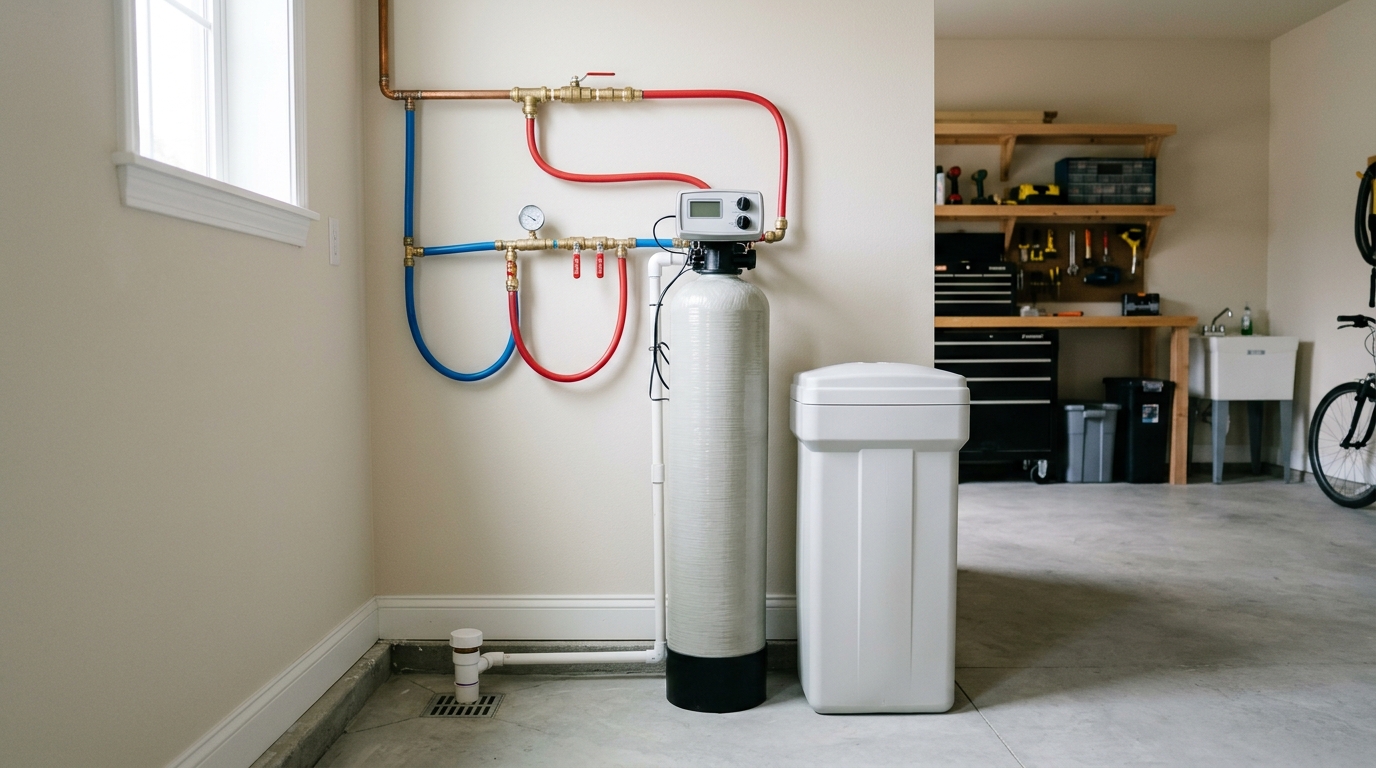
Local Water Dealer Quote · $83/mo
SpringWell SS1 Salt-Based Water Softener saves ~$1,760 over 5 years.
| Cost Component (5-Yr) | Option A: SpringWell SS1 Salt-Based Water Softener | Option B: Local Water Dealer Quote |
|---|---|---|
| Equipment Price(Dealer quote bundles equipment + install) | $1,890 | $3,800 |
| Plumber Installation(existing garage loop) | $750 | Bundled above |
| Upfront Installed Subtotal | $2,640 | $3,800 |
| 5-Year Softener Salt(@ $7.50 / 40-lb bag) | $435~11.6 bags/yr | $435~11.6 bags/yr |
| 5-Year Regeneration Water(@ $11.00 / 1,000 gal) | $115~2,088 gal/yr | $115~2,088 gal/yr |
| 5-Year Cartridges / Media / Service Plan | $0 | $600 |
| 5-Year Total Installed Cost | $3,190 | $4,950 |
| Effective Monthly Ownership Cost | $53.17 / month | $82.50 / month |
Is Riverside tap water safe to drink?
Yes for most people. Riverside says it meets current PFAS rules. Federal testing found low levels of PFHxA and PFPeA, and PFOS at 4.0 parts per trillion in one 2023 sample. Hardness is a nuisance, not a health risk. A certified filter covers PFAS if you want extra margin.
Hard water itself isn't a health risk, and a water softener doesn't remove PFAS or lead. Here's what Riverside Public Utilities' own testing shows for both.
PFAS ("forever chemicals")
Riverside's report lists 2023 UCMR 5 results of PFHxA (average 3.6 parts per trillion) and PFPeA (average 6.3). EPA's UCMR 5 data also shows PFOS at 4.0 ppt in one August 2023 sample, with the other samples below the reporting limit. PFOA was not detected. The city says it complies with current PFAS rules.
Lead: the city's numbers vs. your own pipes
The city's lead results come from a sample of homes across the system, not your tap. Lead usually comes from older service lines, solder and fixtures, so if your home was built before 1986 or you have young children, test your own tap or use a filter certified to NSF/ANSI 53 for lead.
Not sure what's in your tap or well water? Test it first.
Municipal CCRs summarize utility-wide averages and ranges, while private wells have no municipal report at all. Spending $15–$200 on the right test upfront prevents buying an undersized softener or unnecessary treatment stage.
1. Municipal Hardness Check (~$10–$15)
Use a drop-titration kit (such as a Hach 5-B) at your kitchen cold tap. Each drop equals 1 GPG—far more accurate than color dip strips.
2. Well Water, Lead, or PFAS Lab Panel
If you have a private well, pre-1986 plumbing, or want tap-level PFAS/iron data, order an accredited mail-in drinking-water lab test before sizing hardware.
Frequently Asked Questions: Riverside Tap Water (CA3310031)
Concise answers grounded in published CCR monitoring data and actual softener sizing math.
- Is Riverside tap water safe to drink?
- Yes for most people. Riverside says it meets current PFAS rules. Federal testing found low levels of PFHxA and PFPeA, and PFOS at 4.0 parts per trillion in one 2023 sample. Hardness is a nuisance, not a health risk. A certified filter covers PFAS if you want extra margin.
- How hard is Riverside water?
- Riverside Public Utilities' 2025 report lists hardness of 180–210 mg/L, averaging 197 mg/L, which the city describes as about 12 grains per gallon.
- What size water softener do I need in Riverside?
- At 12.3 grains a family of four uses about 3,700 grains a day, roughly 26,000 a week. A 32,000 to 40,000-grain softener on an everyday salt setting covers it.
- Does Riverside water have chlorine?
- Yes. Riverside disinfects with chlorine, averaging 0.58 mg/L. The city suggests a carbon filter if you'd like to remove the chlorine taste.
- Is there PFAS in Riverside water?
- Low levels. Riverside's report lists PFHxA and PFPeA at a few parts per trillion. EPA's UCMR 5 data also shows one PFOS reading of 4 ppt in 2023, with other samples below the reporting limit. PFOA was not detected.
Other cities
California Water Service, Bakersfield District
City of Fresno Water Division
Long Beach Utilities
Los Angeles Department of Water and Power (LADWP)
City of San Diego Public Utilities Department
City of Chandler Public Works & Utilities